Showing posts with label revising your novel. Show all posts

Monday, February 17, 2020

Don't Give Your Readers a Reason to Reject Your Novel

by Jodie Renner, editor & author 

Have your trusted friends or beta readers told you your WIP novel is too long, confusing, or just doesn’t grab them? Here are some typical “big-picture” weaknesses to watch out for in your fiction and correct before sending it to an editor, publishing it, or pitching it to an agent.
These types of glaring gaffes in writing, pacing, plot, or structure will bog down your story and invite bad reviews, which could sink your reputation as a novelist. Fortunately, they can all be remedied at the revision and self-editing stages.

~ Overwriting. Not enough self-editing will give people a reason to reject your novel

Today’s bestselling novels are mostly between 70,000 and 90,000 words long. Unless you’re an absolutely brilliant writer, and experts in the business have told you so, if your manuscript is over 95,000 words long, it definitely needs tightening up.
Cut way back on explanations and descriptions, and trim down long, convoluted sentences to their essence. Make every word count.

~ Meandering writing – the main story question / problem is fuzzy or buried.

What’s the protagonist’s main goal and fear, and his/her main problem? 
Continue reading this post on Anne R. Allen's award-winning blog HERE.
https://annerallen.com/2020/02/dont-reject-your-novel/


Click HERE for options to receive email alerts of new posts published on this blog.


Jodie Renner is a freelance fiction editor and the award-winning author of three craft-of-writing guides in her series An Editor’s Guide to Writing Compelling Fiction: FIRE UP YOUR FICTION,  CAPTIVATE YOUR READERS, and WRITING A KILLER THRILLER, as well as two clickable time-saving e-resources, QUICK CLICKS: Spelling List and QUICK CLICKS: Word Usage. She has also organized two anthologies for charity: VOICES FROM THE VALLEYS – Stories and Poems about Life in BC’s Interior, and CHILDHOOD REGAINED – Stories of Hope for Asian Child Workers. You can find Jodie on her Amazon Author Page, at www.JodieRenner.com, and on Facebook. 

Thursday, August 29, 2019

15 Questions for Your Beta Readers – and to focus your own revisions

by Jodie Renner, editor & author  

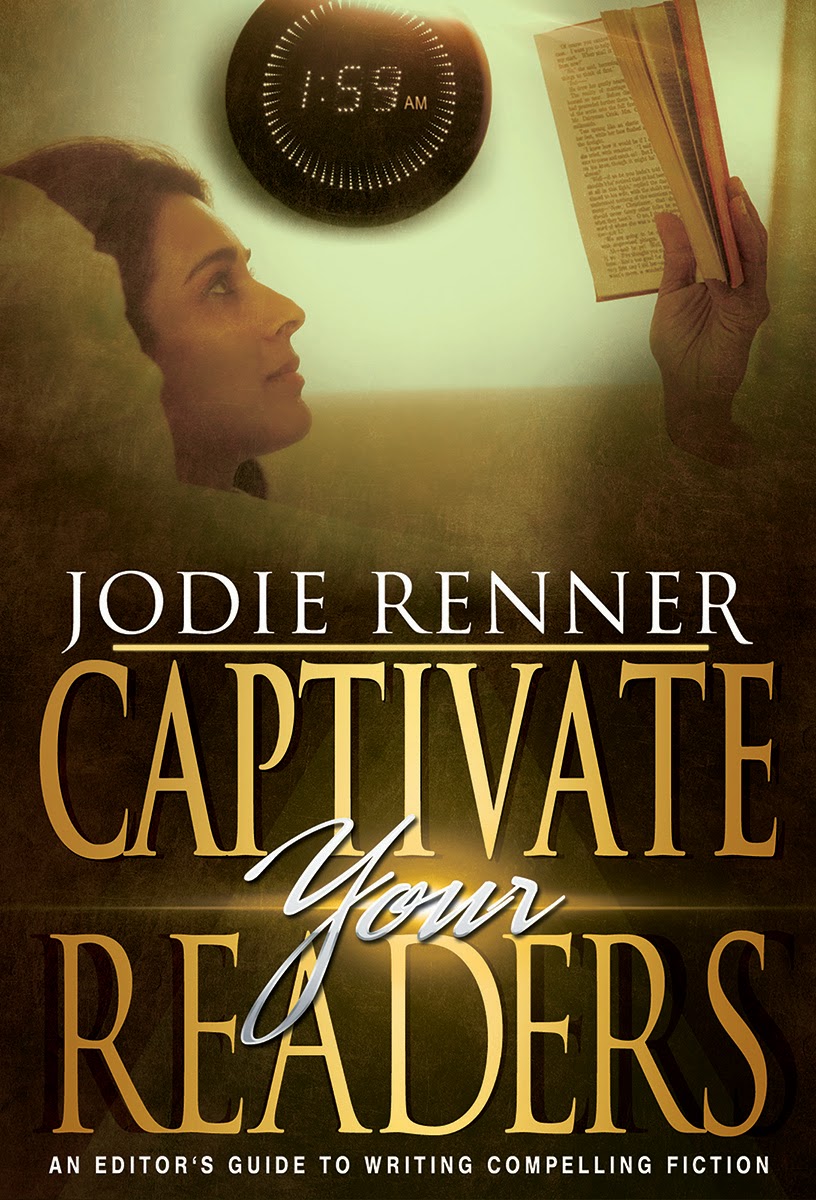
(Excerpted from Jodie Renner's award-winning Captivate Your Readers - An Editor's Guide to Writing Compelling Fiction.)

So you’ve completed the first draft of your novel? Congratulations! Now it’s time to start the all-important revision process. Be sure not to shoot yourself in the foot by sending it off to agents or self-publishing it too soon. That’s the biggest mistake of unsuccessful novelists – being in too much of a hurry to get their book out, when it still needs (major or minor) revisions and final polishing.

To start, put it aside for a week or more, then change the font and print it up and read it in a different location, where you don’t write. Or, to save paper, change the font and formatting, then put it on your tablet or e-reader and take it outside to a park or a (different) coffee shop to read. That way, you can approach it with fresh eyes and a bit of distance, as a reader, rather than in too close as the writer.

Using the questions below to guide you, go through the whole manuscript, making notes as you go. Then go back to the computer and type in your changes.

Now it’s time to seek out about 3 to 6 avid readers to give you some feedback. It’s best not to ask your parent, child, significant other, sibling, or bff to do this “beta” reading, as they probably won’t want to tell you what they really think, for fear of jeopardizing your relationship. Or they may be so critical it actually will hurt your relationship! Your volunteers should be smart, discerning readers who enjoy and read your genre and are willing to give you honest feedback.

So how do you find your beta readers? Perhaps through a critique group, writing class, workshop, book club, writers’ organization, or online networking such as Facebook, Twitter, or Instagram. In the case of a YA novel or children’s book, look around for age-appropriate relatives, neighborhood kids, or the children of your friends – or perhaps you know a teacher or librarian who would be willing to read some or all of it aloud to students and collect feedback.

To avoid generic (and generally useless) responses like “I liked it,” “It was good,” or “It was okay,” it’s best to guide your readers with specific questions. Here’s a list to choose from. And of course, if you first use these questions as a guideline during your revisions, the responses from your beta readers should be much more positive, or of a nature to take your story and your skills up a level or two.

Questions for your Beta Readers:

1. Did the story hold your interest from the very beginning? If not, why not?

2. Did you get oriented fairly quickly at the beginning as to whose story it is, and where and when it’s taking place? If not, why not?

3. Could you relate to the main character? Did you feel her/his pain or excitement?

4. Did the setting interest you, and did the descriptions seem vivid and real to you?

5. Was there a point at which you felt the story started to lag or you became less than excited about finding out what was going to happen next? Where, exactly?

6. Were there any parts that confused you? Or even frustrated or annoyed you? Which parts, and why?

7. Did you notice any discrepancies or inconsistencies in time sequences, places, character details, or other details?

8. Were the characters believable? Are there any characters you think could be made more interesting or more likeable?

9. Did you get confused about who’s who in the characters? Were there too many characters to keep track of? Too few? Are any of the names or characters too similar?

10. Did the dialogue keep your interest and sound natural to you? If not, whose dialogue did you think sounded artificial or not like that person would speak?

11. Did you feel there was too much description or exposition? Not enough? Maybe too much dialogue in parts?

12. Was there enough conflict, tension, and intrigue to keep your interest?

13. Was the ending satisfying? Believable?

14. Did you notice any obvious, repeating grammatical, spelling, punctuation or capitalization errors? Examples?

15. Do you think the writing style suits the genre? If not, why not?

Additional questions:

If you have eager readers or other writers in your genre who are willing to go the extra mile for you, you could add some of the more specific questions below. These are also good for critiquing a short story.

– Which scenes/paragraphs/lines did you really like?

– Which parts did you dislike or not like as much, and why?

– Are there parts where you wanted to skip ahead or put the book down?

– Which parts resonated with you and/or moved you emotionally?

– Which parts should be condensed or even deleted?

– Which parts should be elaborated on or brought more to life?

– Are there any confusing parts? What confused you?

– Which characters did you really connect to?

– Which characters need more development or focus?

Once you’ve received feedback from all your beta readers, it’s time to consider their comments carefully. Ignore any you really don’t agree with, but if two or more people say the same thing, be sure to seriously consider that comment or suggestion. Now go through and revise your story, based on the comments you felt were insightful and helpful.

Also, see my post, “12 Essential Steps from Idea to Published Novel” on The Kill Zone blog

And also, "To Beta or Not to Beta" by Dave Butler.

Click HERE for options to receive email alerts of new posts published on this blog.

Jodie Renner is a freelance fiction editor and the award-winning author of three craft-of-writing guides in her series An Editor’s Guide to Writing Compelling Fiction: WRITING A KILLER THRILLER, FIRE UP YOUR FICTION, and CAPTIVATE YOUR READERS, as well as two clickable time-saving e-resources, QUICK CLICKS: Spelling List and QUICK CLICKS: Word Usage. She has also organized two anthologies for charity: VOICES FROM THE VALLEYS – Stories and Poems about Life in BC’s Interior, and CHILDHOOD REGAINED – Stories of Hope for Asian Child Workers. You can find Jodie on her Amazon Author Page, at www.JodieRenner.com, and on Facebook. 

Sunday, August 25, 2013

REVISE FOR SUCCESS - A Stress-Free, Concrete Plan of Action for Revising, Editing, and Polishing Your Novel


by Jodie Renner, editor & author

New authors often underestimate the importance of revising your novel before publishing. As Ernest Hemingway said, “The first draft of anything is sh*t.” While the first draft of your novel is definitely not crap, it’s likely a long way from being as powerful and compelling and polished as it could be.

But where to start and how to proceed? A lot of writers feel overwhelmed about the revision and self-editing process as it just seems too daunting a task. The best thing to do is break it down into specific tasks. But to save time, energy, and frustration, the order of the tasks is critical. There’s no point in spending hours polishing up a scene or chapter if you later realize that scene/chapter doesn’t drive the story forward so it needs to be cut -- or at least significantly rewritten.
First, put your story aside for at least a week – two or three weeks or a month is even better.

Try not to think about it during that time. Focus on other things and just let it percolate in the back of your mind. Maybe have beta readers (savvy volunteer readers who don’t need to be writers) go through it and comment on what excited them, bored them, or confused them.

Then:
STEP 1. LOOK AT BIG-PICTURE ISSUES: premise, plot, POV, structure, characterization, pacing.
- Does the main premise your story is built on stand up to scrutiny? Will it actually work? Ask a few smart trusted friends if they think your main story idea/challenge/obstacle/dilemma is logical and believable. If not, revise it so readers won’t pick it apart later - in negative reviews. An example of this might be in a romance where the main obstacle keeping the heroine and hero apart is a simple misunderstanding that could be resolved by a quick conversation or even basic reasoning - that kind of skimpy premise will irritate readers rather than intrigue them.
 
- Is your plot interesting enough? Does your protagonist have strong motivations and a clear, critical goal? What’s preventing him/her from reaching this goal? Is there enough at stake? Enough conflict and tension?
 
- Is your main character multidimensional or flat like cardboard? Is he charismatic and appealing, with inner conflict and some regrets and baggage? In other words, interesting enough to hold readers’ attention through a whole novel? And do his decisions and actions fit with his personality, goals, and motivations? See my article, Creating Compelling Characters.

- Ditto with other important characters. Go for contrast among the main characters.

- POV: Are you staying firmly in the point of view of the viewpoint character for each scene? Or are you hovering above or head-hopping? See my posts on point of view:

~ POV 101: Get into Your Protagonist’s Head and Stay There (for most of the novel)

~ POV 102 – How to Avoid Head-Hopping

~ POV 103 – Engage Your Readers with Deep Point of View
 
- What about structure and the order of chapters and scenes? Create a scene outline, with just a few words about each chapter or scene. Include the POV character for each scene and the main conflict or source of tension for that scene, and what changes in that scene. Cut them apart and play with the order of them. Be sure to save the biggest conflict/dilemma the MC faces for the climax. 

- Length: If your story is over 90,000 words, look for ways you can tighten it. Maybe your writing style is rambling and overly wordy, or you have too many characters or too many sub-plots. Or too much time spent on transitions and quiet scenes where not much happens. Spark up or delete any parts that seem boring or repetitive. For concrete tips on tightening up your story without losing any of the good stuff, see my post, How to Slash Your Word Count by 20-40%.

If your writing style is sparse, show important scenes through action, reactions, dialogue, and thoughts, instead of summarizing or telling, and add sensory details, visual clues, and character reactions.
 
- Are there chapters or scenes that drag, that could be condensed or eliminated? Every scene needs conflict and a change. If a scene doesn’t drive the plot forward or contribute to characterization, revise it, shorten it, or take it out.
 
- Is your opening compelling? Does it hook the reader, and situate them as to whose story it is (best to start out in the point of view of the main character right away) and where and when it's taking place? Should you start your story later? Or earlier?
 
- Are there places where the writing gets bogged down in explanations, description or backstory ("info dumps")? Trim these way down. Avoid interrupting the story to explain things to the readers.
 
- Are you telling the reader about important scenes instead of showing them in real time, with action, reaction, and dialogue? When it comes to important scenes, “show, don’t tell.” But skip past unimportant scenes and transitions.

STEP 2. WORK ON YOUR WRITING STYLE AND PACING.

See my book, Fire up Your Fiction, for concrete tips, with examples, on revising and polishing your fiction or nonfiction writing.

- Look at your paragraphs. Do you have any really long paragraphs? Break them down into shorter ones. Have you said the same thing twice or more? Cut out the repetitions to make the original statement stronger.

- Streamline your writing. Trim down long, convoluted sentences to make them tighter and more to-the-point.

- Amp up your word choices. Use strong, specific verbs and nouns that bring the scenes and characters to life.

- Cut out most -ly adverbs and replace tired, generic verbs like “walked” and “went” with strong, specific, evocative verbs, like "stomped" or "strode" or "shuffled."

- Add in lots of character reactions and sensory details to bring your characters to life on the page.

- Does your dialogue sound natural? Read it out loud or role-play with others, each taking a character’s dialogue to read aloud. Each character should sound different, not like the author. And their speaking style should vary according to to their gender, age, background, education, social situation, personality, etc.

STEP 3. GO THROUGH THE REVISED COPY FOR A FINAL PROOFREADING.

This is the last step. You’re wasting your time if you do this too early, and you’re wasting your money if you pay anyone for proofreading or a light final edit before you’ve eliminated or condensed unneeded or boring chapters, scenes, and paragraphs, and trimmed down sentences.

Proofread for typos, spelling, punctuation, and missing words, and keep an eye out for repetitions and places where the prose lacks sparkle. You’ll catch these when you read it out loud.

To see things you’ve missed in prior passes:

- Change the font and print out your story on paper or send it to your e-reader.

- Read it in a different location than where you wrote it.

- Read it through out loud. Underline or make note of any parts where you stumble or that sound unnatural or overly wordy - that don't have an easy flow.

- To look for small errors, read through it with a piece of paper under the line, and keep moving it down. You can also try reading it from the end to the beginning, but read each sentence from beginning to end.

- Then make the changes on your Word document.

Good luck with this process! I look forward to seeing your novel in print! My award-winning writing guide, Fire up Your Fiction, is full of concrete tips for revising your novel, with lots of before-and-after examples.

Jodie Renner is a freelance fiction editor and the award-winning author of three writing guides in her series An Editor’s Guide to Writing Compelling Fiction: FIRE UP YOUR FICTION, CAPTIVATE YOUR READERS, and WRITING A KILLER THRILLER, as well as two clickable time-saving e-resources, QUICK CLICKS: Spelling List and QUICK CLICKS: Word Usage. She has also organized and edited two anthologies. Website: https://www.jodierenner.com/, Facebook, Amazon Author Page.


Sunday, November 18, 2012

Honing Your Craft


by Jodie Renner, editor & author

Follow Jodie on Twitter.
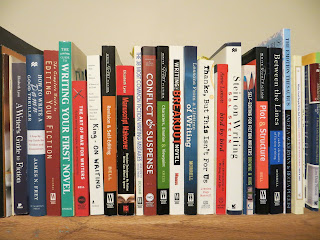
A small section of Jodie's bookcase

Want to succeed as a writer? There’s only one sure way: Roll up your sleeves, hone your fiction-writing skills, and start rereading and revising!
Ask any successful writer, and they’ll tell you that the first drafts of their novels were just the beginning, and that it was only after many revisions that the story and characters took shape to their satisfaction and they polished their writing style to a point where they could submit it to their agent or an editor, who then put them through several more rounds of editing before the story was ready for publication.
“Writing is Rewriting.” ~ Stephen King
For years, I’ve been helping writers become authors, offering concrete advice and guidance to take manuscripts up a level or three. I’m always amazed when occasionally someone contacts me about editing their novel, then gets offended when I suggest ways in which it can be improved. (Fortunately, the vast majority of my clients want to succeed and sell their books, so they welcome my suggestions.)
“Amateurs fall in love with every word they write.” ~ William Bernhardt
If you’re looking for someone to tell you your novel manuscript is perfect as it is, save your money and just ask your mom! (Or your spouse or best friend.) Authors of best-sellers aren’t afraid to admit that they revised their novel numerous times, often going through it and making changes thirty or forty times, then had agents’ and editors’ input and revised it again.
“Manuscript: something submitted in haste and returned at leisure.” ~ Oliver Herford
Maybe you’ve got a story you’re itching to tell and you think nobody should mess with it or tell you how to write it. That’s okay – get your story down first. But then, if you want to get it published, it’s important to be open to input and ideas on how to make it more compelling so it grabs the readers – and agents and acquiring editors, if you’re going that route. As you’re revising and learning, you’re honing your craft and getting closer to producing a best-seller. And you can always keep your early drafts, in case you want to go back to them, or pick out bits here and there to use.
“The beautiful part of writing is that you don’t have to get it right the first time, unlike, say, a brain surgeon.” ~ Michael Crichton

Remember, there are hundreds of effective, compelling ways to tell a story, and thousands of ineffective / boring / confusing ways to tell that same story.
“There is no way of writing well and also of writing easily.” ~ Anthony Trollope
 
If you decided to build a house and you’d never built one before, you probably wouldn’t just buy a bunch of lumber and start building it without first consulting experts, reading books, googling info, asking carpenter friends for advice, etc. So chances are high that you, as an aspiring author, won’t yet have acquired the skills to write a novel that sells, without doing some research into the fiction-writing techniques that make a story effective, compelling and publish-worthy.
“When something can be read without effort, great effort has gone into its writing.”  ~Enrique Jardiel Poncela
And as a freelance manuscript editor, specializing in fiction, that’s what I – and other editors like me – am here for: to point out not only your story’s strengths, but also areas that would benefit from rethinking, reworking, revision and maybe even – gasp! – cutting and/or rewriting. Writing workshops, craft-of-fiction resource books, and reputable blogs on writing fiction, as well as articles in magazines like Writer’s Digest, and of course freelance book editors like me, can all guide you and inform you of the latest effective fiction-writing techniques for crafting your opening, point of view, plot, characterization, dialogue, etc., with a natural flowing style and pacing that keep readers turning the pages.
“No author dislikes to be edited as much as he dislikes not to be published.”
~Russell Lynes

I find that I give the most advice and suggest the most revisions on the first few chapters (and prologue, if there is one), because the opening of your story is incredibly important. It’s what will make or break your novel. If the story hasn’t grabbed your readers in the first five pages or so, most readers will put it down and never pick it up again. In fact, if the first half page is weak, most agents or acquiring editors will chuck it. Your first page is critical – it sets the tone for the whole novel and introduces your protagonist and his dilemma – or at least hints at it.
“I try to leave out the parts that people skip.”  ~Elmore Leonard
A typical fault among novice fiction writers (even if they’re technically excellent writers and have published nonfiction books) is to spend too much time revving their engines at the beginning of their novel, setting the scene with description and providing background on the main character and his situation. Today’s readers don’t have the patience for all this long-winded meandering around and explaining at the beginning – they want to be swept up with your story and main character and his problems right away. You can always add in background details as your story progresses, on a “need to know” basis.
“I’m not a very good writer, but I am a good rewriter.” ~ James Michener
So if you’ve contacted me about editing your fiction manuscript, and I jump right in with advice on how to make your first pages more compelling and effective, which may well be to cut out all or most of your prologue and some or even most of your chapter one, don’t be insulted or alarmed. Remember that we both have the same goal in mind – to get your story published and read by a lot of people. So some deadwood may need to be trimmed at the beginning so you can start your story at a more compelling moment, with your protagonist, if not in hot water already, on the verge of it. Then you can work in that backstory little by little, as you go along.
“Sit down, and put down everything that comes into your head and then you're a writer.  But an author is one who can judge his own stuff's worth, without pity,
and destroy most of it.”  ~Colette, Casual Chance, 1964 

I find that typically, once the beginning is pared down to delete some of that excess description and “cut to the chase,” the rest of the novel goes much more smoothly, with way fewer major revisions.
“The wastebasket is a writer’s best friend.”  ~Isaac Bashevis Singer
An “okay” novel can often be turned into a remarkable one by:
~ Adding more conflict and intrigue. See my book, Writinga Killer Thriller – An Editor’s Guide to Writing Compelling Fiction. 
~ Deepening the characters to make them more compelling. See Creating Compelling Characters.
~ Doing more “showing” and less “telling” (“Show, Don’t Tell”)
~ Revising stilted dialogue so it sounds more natural and authentic: Tips for Writing Effective Dialogue.

~ Writing tighter. If your novel is more than 95,000 words long, you should be looking for ways to tighten it up and shorten it. See my book, Fire up Your Fiction (Style that Sizzles and Pacing for Power) for lots of tips for eliminating flab and writing tighter.
“My first draft is not even recognizable by the time I get to the last draft. I change everything. I consider myself at Square Zero when I finish the first draft. It’s almost like I use that draft to think through my plot. My hard copy of each draft will be dripping with ink by the time I finish, and I’ll do that several times.” ~ Terri Blackstock
But you don’t have to take my word for it – there are all kinds of great books on writing and revising fiction out there, not to mention articles in magazines like Writer’s Digest, blog posts by writers, agents, and editors, creative writing classes, and writers’ conferences and workshops. See the Resources page of my website for a list of excellent books on writing fiction and other resources that I recommend to my clients.
Keep on writing! And remember, writing is rewriting! Or as my mom (and probably yours too) used to say, “Rome wasn’t built in a day.”
© Jodie Renner, November 2012   www.jodierennerediting.com
Also, see my articles, "How to Save a Bundle on Editing Costs" and "It's All About the Writing," both on Crime Fiction Collective, and Revising and Polishing Your Novel on this
blog.


Jodie Renner has published two books to date in her series, An Editor’s Guide to Writing Compelling Fiction: Writing a Killer Thriller and Fire up Your Fiction (Style That Sizzles & Pacing for Power), which has won two book awards so far. Look for her third book, Immerse the Readers in Your Story World, out soon. For more info, please visit Jodie’s author website or editor website, her blogs, Resources for Writers and The Kill Zone, or find her on Facebook, Twitter, and Google+. And sign up for her newsletter.


Thursday, July 5, 2012

REVISING AND POLISHING YOUR NOVEL

by Jodie Renner, freelance editor    

Congratulations! You’ve finally finished the first draft of your novel! Give yourself a huge pat on the back and go out and celebrate! Then put it away for at least two weeks while you concentrate on other things, before going back and starting on revisions.

—Yes, revisions — starting with big-picture issues, like plot, characters, point of view and pacing. It’s highly unlikely that your first draft is ready for proofreading, or even line editing yet — save that for the last step of the revision process, after any large issues are detected and dealt with. If you’re unable to hire a freelance developmental editor and/or a copy editor, this is where your critique group (online or in-person) or acquaintances who read a lot of fiction come in.

Based on my own experience and advice from writing gurus, I’ve compiled a recommended approach to the revision process:

1.    After you’ve finished your first draft, put your story away and concentrate on other things for a few weeks or even a month. Let the story percolate in your subconscious for a while.

2.    Meanwhile send/give the manuscript to “beta readers” — savvy people who read a lot of fiction, in your genre. For suggestions and a list of possible questions, see my blog post, “Questions for Your Beta Readers” on Crime Fiction Collective (and Publetariat.com). Get at least two volunteer readers, but no more than five, as too many contradictory opinions could get overwhelming. Stress to your readers that at this point you’re looking for big issues only — parts where they felt excited, curious, delighted, scared, worried, confused, bored, etc.

3.    After your break of a few weeks or so, collect the reactions of your volunteer readers or critique group. Go through them and note any that you really like; perhaps ask for clarification of suggestions, or more details.

4.    Change the font of your manuscript to one you really like and print it up to read, rather than on the screen. (A different medium to help you look at it with fresh eyes. Or you can save this step until you’ve incorporated some changes.)

5.    Reread your manuscript from start to finish, making separate notes only on big-picture changes you’d like to make, such as plot, characterization, point of view, pacing, etc. Cross out, delete or condense any boring scenes. Don’t get bogged down on wording or punctuation, etc. at this point.

6.    Update your story outline and “to-do list” or plan of action to take into account advice from your beta readers, and/or critique group, as well as your own new ideas.

7.    Save a new version of your manuscript under the current date and go through the whole thing, revising on-screen for big-picture changes only. Is your opening compelling enough? (See my blog posts on your first pages: “Act First, Explain Later” and “Those Crucial First Five Pages.”) Do all of the major plot points make sense? Do you see any inconsistencies in timing, setting, character or plot? Does the story drag in places? Is there enough conflict and tension? Suspense? (Check out my book, Writing a Killer Thriller.) Are your characters complex enough? Is your protagonist likeable? (“Creating Compelling Characters”) Do you have too many characters? Is your point of view all over the place? Anchor it in one of the main characters most of the time. (See my 3 articles on DP Lyle's blog, POV 101, POV 102, & POV 103.) Maybe rewrite a scene from the viewpoint of a different key character? Rearrange some chapters or scenes? Or change the chapter breaks to earlier or later?

8.    Now would be a good time to send your revised story to a freelance editor or to a few more volunteer readers — ones who haven’t read an earlier version.

9.    Incorporate any new suggestions you like, and resave each new version as you go along, using the current date in the file name.

10. Go back to the beginning and start editing for voice, style, and flow. Slash excess wording and repetitions, or overexplaining. Streamline your sentences. Take out whole sentences and paragraphs — even scenes or chapters — if they don’t add anything new or drive the story forward. Take out unneeded adverbs and adjectives, eliminate clichés, and pump up your verbs to bring the action to life. See my popular book, Style that Sizzles & Pacing for Power.

11. Read just the dialogue out loud, maybe role-playing with a buddy or two. Do the conversations sound natural? Or stilted or even boring in parts. Amp up the tension and cut down on those empty phrases, overly wordy monologues, complete sentences, too-perfect grammar, etc. See my article, Writing Effective Dialogue.

12. Go through and do a basic line edit for grammar, spelling, and punctuation — or better yet, hire a freelance fiction editor to do it.

13.  Change the font to one you like, and print up the manuscript, double-spaced. Sit down with it and read it through out loud, crossing out excess words and sentences, and noting changes and suggestions between the lines, in the margins, or on the back.

14.  Open up the screen version and type these new changes into your document; resave with today’s date.

15. Go over the whole thing again, on screen or on paper, looking for any new issues that crop up. Changes very often create new errors, so watch for those.

16. Repeat above steps as needed, until your manuscript is compelling and polished, before sending it off to a literary agent or acquiring editor, or self-publishing. This whole revision process could easily take several months. Don’t shoot yourself in the foot by publishing it or sending it off too soon.

17. Better yet, at some point along this process, send it to a reputable freelance fiction editor so you can get a professional, unbiased look at it, from someone familiar with both the genre and industry standards.
 

18. Finally, if you’re seeking an agent, take as much care with that all-important query letter. See my blog post, “Don’t Shoot Yourself in the Foot” on Blood-Red Pencil BlogSpot.

Copyright © Jodie Renner, www.JodieRennerEditing.com

Jodie Renner, a freelance fiction editor specializing in thrillers and other fast-paced fiction, has published two books to date in her series, An Editor’s Guide to Writing Compelling Fiction: WRITING A KILLER THRILLER and STYLE THAT SIZZLES & PACING FOR POWER (Silver Medalist in the FAPA Book Awards, 2013). 

Both titles are available in e-book and paperback. For more info, please visit Jodie’s author website or editor website, or find her on Facebook or Twitter.