Showing posts with label revision and self-editing. Show all posts

Tuesday, July 13, 2021

Q&A with Jodie Renner on Kay DiBianca's blog, The Craft of Writing

Today I was interviewed by Kay DiBianca over at her excellent blog, The Craft of Writing. We talk about some of the advice in my Editor's Guide to Writing Compelling Stories, FIRE UP YOUR FICTION, including revising and editing your own work, viewpoint, showing instead of telling, writing with "attitude", working with an editor, and submitting your story to writing contests.

Here's the beginning of the Q&A session, with a link at the end to the whole interview.

THE CRAFT OF WRITING — JULY 2021

VISION AND REVISION

One of the great things about hosting the Craft of Writing blog is getting to meet so many accomplished professionals, and I’m thrilled to welcome craft expert Jodie Renner to the blog for the first time.

I titled this blog interview VISION AND REVISION since we’ll be talking about Jodie’s award-winning book Fire Up Your Fiction. Much of that book has to do with revising your first draft. However, it’s also a wonderful guide to read *before* you start that new novel.

So grab your literary blowtorch and let’s add some spark to our stories.


Welcome to the Craft of Writing blog, Jodie Renner. Thank you for joining us!

JR: Thanks so much for inviting me, Kay. I’m honored to be in the same company as some of my favorite writing craft gurus – James Scott Bell, Randy Ingermanson, Steven James, K.M. Weiland, Renni Browne, and Dave King, among others. 

How important is the revision process when writing a novel?

JR: The revision process is an indispensable step in the creation of an engrossing novel or short story. Of course, first, it’s important to just write with wild abandon. Get your ideas down without thinking about word choice or making the sentences perfect. But then, once you’ve written your first draft (or are at a point where your muse is taking a break), it’s time to go back and reread, revise, and polish.

Did you use the best word there? Would a different word choice bring the scene to life more vividly? Have you varied your sentence structure and included short, medium, and long sentences? Look at pacing. Are you keeping readers interested and intrigued? Is your writing bland or rambling and repetitive in places? It may be time to do some weeding and tighten it up by deleting excessive words, combining and shortening sentences, etc. Are some of your paragraphs too long? Condense them or break them up for more white space. Have you included a balance of narration and dialogue, not too much of one or the other?

Read your dialogue out loud. Does it sound natural, like that character would actually speak? Or stilted, too correct, overly wordy, or more like the author would speak? In dialogue, cut many of those complete sentences down to a few words or even one word or a silence.

And of course, there are macro issues that may need to be considered, such as premise, plot, characterization, point of view, pacing, inconsistencies, discrepancies, and more. As writers, we’re too close to our work, so we don’t see what might confuse others. Often a fresh set of eyes will help with those. 

How important is it for an author to work with a professional editor?

JR: If you’re serious about getting your book published, selling well, and garnering great reviews, it’s essential. But never send an editor your first draft. You run the risk of having it rejected, or the editor could get bogged down on correcting basic errors and won’t have time to address bigger issues and really take it up several notches. Go through your manuscript several times, fine-tuning and polishing. Also, read writing craft books, as there may be several important fiction-writing techniques you’re not even aware of or have not yet mastered; for example, head-hopping, showing instead of telling, and info dumps.

Then try to find some volunteer beta readers ...

For the rest of this interview with numerous tips on writing compelling fiction, CLICK ON THIS LINK.


Jodie Renner is a freelance fiction editor and the award-winning author of three writing guides in her series An Editor’s Guide to Writing Compelling Fiction: FIRE UP YOUR FICTION, CAPTIVATE YOUR READERS, and WRITING A KILLER THRILLER, as well as two clickable time-saving e-resources, QUICK CLICKS: Spelling List and QUICK CLICKS: Word Usage. She has also organized and edited two anthologies. Website: https://www.jodierenner.com/, Facebook, Amazon Author Page.


Sunday, March 7, 2021

REVISE FOR SUCCESS – Concrete Tips for Revising and Editing Your Fiction

by Jodie Renner, editor & author 

After you’ve finished the first draft of your popular fiction novel or short story – or even if you’re only a third or halfway into it but have some nagging doubts about the viability of various aspects of the story – take a short break. Put your manuscript aside for a week or three and concentrate on other things. Then come back to it with a bit of distance, as a reader.

Here's a step-by-step guide to looking for any possible weaknesses in your premise, plot, characterization, and writing style. This is a pretty detailed list, so my suggestion is to copy and paste it and save it in a doc (the links will still work) in a file called "Writing Advice," then just tackle the tips one step at a time, over days and weeks, maybe even months. Click on the links after each point for more in-depth suggestions on that topic.

STEP 1: LOOK FOR ANY BIG-PICTURE ISSUES.  


~ PREMISE: Is it intriguing and solid? Will the foundation of your story stand up to scrutiny? Does your main character face significant challenges that he/she must overcome?

~ CHARACTERIZATION: Is your protagonist charismatic, multi-dimensional, conflicted, and at least somewhat sympathetic and likeable? Does he/she change as a result of what he/she goes through in the course of the story? (character arc)

Click to read: Create a Complex, Charismatic Main Character.

Does your protagonist have significant, meaningful goals and motivations? What is driving him or her?

Do your characters’ decisions and actions seem realistic and authentic?

Click on this link: Make Sure Your Characters Act in Character

Also, are your supporting characters different from each other and the protagonist, for interesting contrast and tension?

~ POINT OF VIEW: Are you staying firmly in the head of the viewpoint character for each scene, or are there places where you’re hovering above or inadvertently slipping into the thoughts of other characters (head-hopping)? Click on the links below.

POV 101: Get into Your Protagonist’s Head and Stay There 

POV 102 – How to Avoid Head-Hopping 

POV 103 – Engage Your Readers with Deep Point of View 

~ PLOT: Does your protagonist have a significant challenge or dilemma that’s difficult to solve? Are you piling on the problems as the story goes on? Make sure every plot point directly affects the character and his journey. See Writing a Killer Thriller for essential tips that apply to all popular fiction.

~ STRUCTURE: Should you start your story or any of your scenes later? Or earlier? Would it be more effective to change the order of some chapters or scenes? Shorten some or expand others? Or even delete a few?

~ SCENES: Does every scene have some tension and conflictDoes every scene end with a question or dilemma that drives the story forward? See

Every Scene Needs Tension and a Change.  

Make brief scene outlines, using this template:

   Scene:  Chapter:  Place:
   - Date/Month/Season:  Year (approx.):
   - POV character for this scene:
   - Other main characters here:
   - POV character’s goal here:
   - Motivation for their goal (why do they want that?):
   - Main problem/conflict – Who/What is preventing POV character from reaching his/her goal:
  - Outcome – Usually a setback / new problem:

Revise any scenes that don’t have conflict and a change and don’t advance the story. 

~ CONFLICT, TENSION and INTRIGUE: Every novel, no matter the genre, needs conflict, tension, and intrigue -- and a certain amount of suspense. For practical advice on how to keep readers turning the pages, see my writer's guide, Writing a Killer Thriller and this article:

 Add Tension, Suspense, and Intrigue.

~ POTENTIAL PLOT HOLES, inconsistencies, or discrepancies: Ask others to watch out for any accidental bloopers in your story that will erode reader confidence.

~ OPENING: Will your opening paragraphs and first pages hook the readers and entice them to keep reading? Don’t warm up your engines with backstory or start with lengthy description – get right into the story from the first line, in the head of your protagonist.

12 Dos and Don’ts for a Riveting Opening.

~ LENGTH: Is your story too long or too short? If it’s more than 90,000 words (okay, unless it’s a fantasy or epic), check out:

How to Slash Your Word Cut by 20-40% - Without losing any of the good stuff!

This would be a good time to send your story off to some trusted beta readers, smart volunteers who read critically in your genre. They don’t need to be writers.

Here’s list of 15 Questions for Your Beta Readers – And to Focus Your Own Revisions

STEP 2: WRITING STYLE, VOICE, TONE, AND PACING


~ SHOW, DON'T TELL. Be sure to show, rather than tell, all critical scenes in real time, with action and dialogue, and quickly summarize or skip over humdrum scenes. See my article, Show, Don't Tell.

~ SHOW CHARACTER REACTIONS. Bring characters to life on the page by showing their emotions, physical reactions, thought reactions, and sensory perceptions.

See: Bring Your Characters to Life by Showing Their Reactions and

Immerse Your Readers with Sensory Details.

~ RELAX YOUR WRITING. Is your writing style too correct and formal for fiction? If so, loosen up the language. Read it aloud to see where you can make it more casual by streamlining sentences and using contractions (don't, I've, isn't, etc.) and everyday words.

See Tips for Loosening up Your Writing.

VOICE: Does each of your main characters have a unique voice? Or do they all sound like each other and the author? Beware of writing in a too-correct, nonfiction style. Remember that men usually speak differently than women, and a blue-collar guy shouldn't sound like a businessman or teacher. Use free-form journaling in the character's secret diary, especially when they're upset, to capture their true inner and outer voice, with plenty of attitude.

See: Concrete Tips for Developing a Unique Voice in Your Fiction

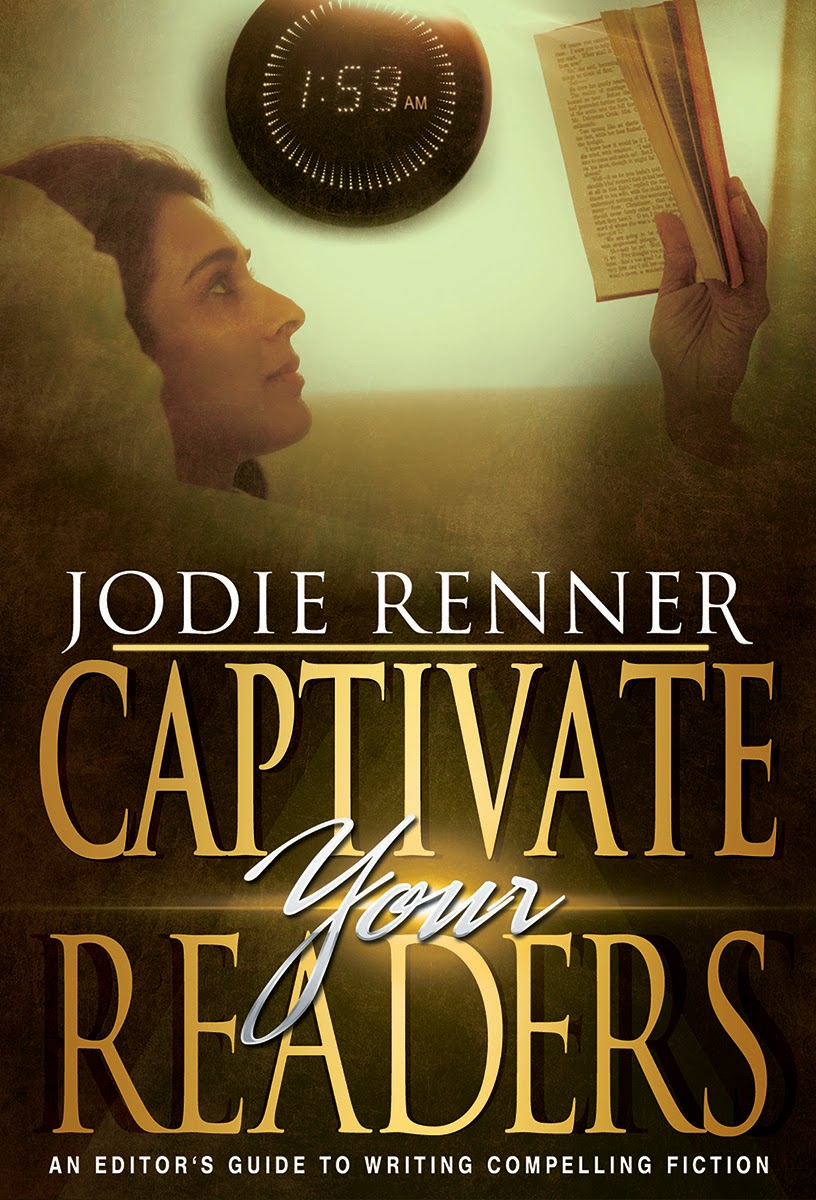
Developing a Strong Third-Person Voice, and also my book, Captivate Your Readers

~ SPARK UP YOUR PROSE. Use strong, specific nouns and verbs instead of tired, overused ones. For more ideas on this, check out my book, FIRE UP YOUR FICTION and the following article:

 Nail it with Just the Right Word.

~ PICK UP THE PACE. Does your story drag in places? Are your descriptions too lengthy and neutral-sounding?
See: Pick up the Pace for a Real Page-Turner

~ WRITE TIGHT. Read your story aloud to see where you can cut down on wordiness and repetitions. Take out any “little word pile-ups” and all unnecessary detail to improve flow and pacing. Make every word count. See many chapters of Fire up Your Fiction for more specifics on this, and my post,

Don’t Muddle Your Message.  

~ WRITE AUTHENTIC DIALOGUE. Read the dialogue out loud to make sure it sounds natural, like that character would actually speak. See my blog post,

 Tips for Writing Effective Dialogue.

Avoid these Style Blunders in Fiction.

STEP 3: FINAL PROOFREADING 


Now it's time to go through the revised copy and look for typos, spelling, punctuation, missing or repeated words, convoluted sentences, and anywhere the prose doesn’t flow easily and sparkle. Also, look for formatting problems. Is your prose broken down into short paragraphs, for more white space? Have you started a new paragraph for every new speaker? Is your dialogue properly punctuated? See my article

Dialogue Nuts and Bolts.

Some techniques that work for effective proofreading:

~ Change the font and print out your story on paper or download it to your e-reader or tablet; or get a sample book printed. Then read it in a different location from where you wrote it (preferably away from your home) and make notes.       

For more tips on effective final proofreading, see my article,

Tricks and Tips for Catching All Those Little Typos in Your Own Work.

Also, see How to save a bundle on editing costs – without sacrificing quality and

  Basic Formatting of Your Manuscript (Formatting 101) 

Click HERE for options to receive email alerts of new posts published on this blog.

Jodie Renner is a freelance fiction editor and the award-winning author of three craft-of-writing guides in her series An Editor’s Guide to Writing Compelling FictionWRITING A KILLER THRILLERFIRE UP YOUR FICTION, and CAPTIVATE YOUR READERS, as well as two clickable time-saving e-resources, QUICK CLICKS: Spelling List and QUICKCLICKS: Word Usage. She has also organized two anthologies for charity: VOICES FROM THE VALLEYS – Stories and Poems about Life in BC’s Interior, and CHILDHOOD REGAINED – Stories of Hope for Asian Child WorkersYou can find Jodie on her Amazon Author Page, at www.JodieRenner.com, and on Facebook. 

Monday, September 1, 2014

FIRE UP YOUR FICTION Wins Another Award!

by Jodie Renner, editor & author

I'm pleased to announce that my editor's guide to writing compelling stories, FIRE UP YOUR FICTION, has won a third book award.

It just received another Silver Medal, this one in the Readers' Favorite Awards, in the category of Writing and Publishing.


Congratulations Jodie Renner!
Fire up Your Fiction
is a 2014 Readers' Favorite Silver Medal Winner in the Non-Fiction - Writing/Publishing category!

Here's the certificate I received from Readers' Favorite Book Awards:

 
And the 5-star review this book received on the Readers' Favorite website:

Reviewed By Bil Howard for Readers’ Favorite

"Jodie Renner has done fiction writers a huge favor by compiling her blogs into Fire Up Your Fiction: An Editor’s Guide to Writing Compelling Stories. She covers subjects that can get a story moving and not only draw the reader in, but hold their attention and keep them turning pages.

"She covers the issues involved with creating and keeping conflict, tension, and action burning throughout your story and showing rather than telling. [...]

"Renner also discusses wordiness and the use of clichés, as well as cutting down your word count in order to get to the action and keep it moving. She also gives excellent advice on how to make your dialogue sizzle; a problem for nearly every author. All in all, this volume is packed with plenty of digestible literary protein that will feed writers and make them eager for action. [...]

"Packed with information, accurate and inspiring, Fire Up Your Fiction: An Editor’s Guide to Writing Compelling Stories will help you transform your fiction into a more marketable product." 

Fire up Your Fiction - An Editor's Guide to Writing Compelling Stories was also awarded a Silver Medal from the Florida Authors & Publishers President's Book Awards and an Honorable Mention from the Writer's Digest Self-Published Book Awards in 2013, and was a Finalist in Foreword Reviews' IndieFab Book Awards and National Indie Excellence Book Awards.

Comments on this book by bestselling "writing gurus": 

"This book is packed with good advice on how to spot and fix weaknesses in your fiction writing. It summarizes the combined wisdom of the last century or so of fiction teachers into one handy volume."
- Randy Ingermanson, bestselling author of Writing Fiction for Dummies

"A handy checklist and self-editing guide that will get any fiction writer to a stronger, well-told tale."
- James Scott Bell, bestselling author of Revision & Self-Editing, Plot & Structure, and Conflict & Suspense

Brief excerpts from other comments by judges:

"What a wonderful resource for writers at any stage of their career! I wish I had this book when I first started writing. ... I can't think of anything important that you haven't addressed succinctly and clearly. ... This should be on the booklist for Master's Programs in Writing for Publication. ... You must be a wonderful editor to be able to write such a readable, but comprehensive book."

- Judge, Writer's Digest Self-Published e-Book Awards, January 2014

“the Strunk & White for writers who want to be not just mere storytellers but master story-compellers.”

- Lucy Wang, reviewer for IndieReader

Amazon Reviews:

Fire up Your Fiction has received 85 reviews on Amazon.com to date, with an overall average of 4.8 out of 5 stars. Many writers and aspiring authors have emailed me to tell me how much this book and my other book, Writing a Killer Thriller, have helped them tighten up their writing and make it more compelling. If you have read either of my books and found them helpful for your writing, I'd love it if you could write a review on Amazon.

Click on the book title to go to Jodie Renner's eBooks on Amazon:

Fire up Your Fiction - An Editor's Guide to Writing Compelling Stories

Writing a Killer Thriller - An Editor's Guide to Writing Compelling Fiction

And look for Captivate Your Readers, out in late 2014, as well as two shorter resources, Grammar on the Go and Spelling on the Go.


Jodie Renner, editor & author       
www.JodieRenner.com
www.JodieRennerEditing.com

Join me on Facebook and Twitter


Thursday, July 10, 2014

Jodie Renner's Craft of Writing Articles, January to June 2014

by Jodie Renner, editor & author; @JodieRennerEd

A lot of people have been asking for a list of my craft-of-writing posts and other resources for writers, so here's a list, with links (just click on the title) of my blog posts from January through the
end of June of this year, 2014. I've listed them from most recent at the top, down to January 2 at the bottom.

June 30, 2014, The Kill Zone Blog:

12 Essential Steps from Story Idea to Publish-Ready Novel 


June 19, 2014, The Kill Zone blog: Dialogue Nuts & Bolts


June 16, 2014, The Kill Zone:

15 Questions for Your Beta Readers – And to Focus Your Own Revisions

June 2, 2014, The Kill Zone: Pick up the Pace for a Real Page-Turner


May 19, 2014, The Kill Zone:

How to save a bundle on editing costs – without sacrificing quality


May 5, 2014, The Kill Zone: Tips for Loosening up Your Writing


April 7, 2014, The Kill Zone:

 Looking for an editor? Check them out very carefully!


March 31, Crime Fiction Collective:

Are YOU Being Plagiarized, Too, Without Your Knowledge?


March 24, The Kill Zone: Nail it with Just the Right Word


March 8, 2014, Resources for Writers:

Don’t Give Readers a Reason to Reject Your Novel


Feb. 24, The Kill Zone:

Dangling Participles, Misplaced Modifiers, and Other Awkward Constructions


Feb. 21 – John Yeoman’s blog, The Wicked Writers Blog:

Seven Quick Ways to Write Sentences That Sizzle 


Feb. 3, Crime Fiction Collective:

Indie Publishing – Lessons Learned and Still Learning


Jan. 27, The Kill Zone: Fire up Your Fiction with Foreshadowing


Jan. 13, The Kill Zone: Book Contests for Indie Authors

Jodie Renner is a freelance fiction editor, workshop presenter, judge for fiction contests, and the
award-winning author of three craft-of-writing guides in her series An Editor’s Guide to Writing Compelling Fiction: Captivate Your Readers, Fire up Your Fiction, and Writing a Killer Thriller. She has also published two clickable time-saving e-resources, Quick Clicks: Spelling List and Quick Clicks: Word Usage, and has organized and edited two anthologies for charity: Voices from the Valleys – Stories & Poems about Life in BC’s Interior, and Childhood Regained – Stories of Hope for Asian Child Workers. You can find Jodie at www.JodieRenner.com, www.JodieRennerEditing.com, and on Facebook, Twitter, and Google+.  

Click HERE to sign up for Jodie’s occasional newsletter. 


Sunday, August 25, 2013

REVISE FOR SUCCESS - A Stress-Free, Concrete Plan of Action for Revising, Editing, and Polishing Your Novel


by Jodie Renner, editor & author

New authors often underestimate the importance of revising your novel before publishing. As Ernest Hemingway said, “The first draft of anything is sh*t.” While the first draft of your novel is definitely not crap, it’s likely a long way from being as powerful and compelling and polished as it could be.

But where to start and how to proceed? A lot of writers feel overwhelmed about the revision and self-editing process as it just seems too daunting a task. The best thing to do is break it down into specific tasks. But to save time, energy, and frustration, the order of the tasks is critical. There’s no point in spending hours polishing up a scene or chapter if you later realize that scene/chapter doesn’t drive the story forward so it needs to be cut -- or at least significantly rewritten.
First, put your story aside for at least a week – two or three weeks or a month is even better.

Try not to think about it during that time. Focus on other things and just let it percolate in the back of your mind. Maybe have beta readers (savvy volunteer readers who don’t need to be writers) go through it and comment on what excited them, bored them, or confused them.

Then:
STEP 1. LOOK AT BIG-PICTURE ISSUES: premise, plot, POV, structure, characterization, pacing.
- Does the main premise your story is built on stand up to scrutiny? Will it actually work? Ask a few smart trusted friends if they think your main story idea/challenge/obstacle/dilemma is logical and believable. If not, revise it so readers won’t pick it apart later - in negative reviews. An example of this might be in a romance where the main obstacle keeping the heroine and hero apart is a simple misunderstanding that could be resolved by a quick conversation or even basic reasoning - that kind of skimpy premise will irritate readers rather than intrigue them.
 
- Is your plot interesting enough? Does your protagonist have strong motivations and a clear, critical goal? What’s preventing him/her from reaching this goal? Is there enough at stake? Enough conflict and tension?
 
- Is your main character multidimensional or flat like cardboard? Is he charismatic and appealing, with inner conflict and some regrets and baggage? In other words, interesting enough to hold readers’ attention through a whole novel? And do his decisions and actions fit with his personality, goals, and motivations? See my article, Creating Compelling Characters.

- Ditto with other important characters. Go for contrast among the main characters.

- POV: Are you staying firmly in the point of view of the viewpoint character for each scene? Or are you hovering above or head-hopping? See my posts on point of view:

~ POV 101: Get into Your Protagonist’s Head and Stay There (for most of the novel)

~ POV 102 – How to Avoid Head-Hopping

~ POV 103 – Engage Your Readers with Deep Point of View
 
- What about structure and the order of chapters and scenes? Create a scene outline, with just a few words about each chapter or scene. Include the POV character for each scene and the main conflict or source of tension for that scene, and what changes in that scene. Cut them apart and play with the order of them. Be sure to save the biggest conflict/dilemma the MC faces for the climax. 

- Length: If your story is over 90,000 words, look for ways you can tighten it. Maybe your writing style is rambling and overly wordy, or you have too many characters or too many sub-plots. Or too much time spent on transitions and quiet scenes where not much happens. Spark up or delete any parts that seem boring or repetitive. For concrete tips on tightening up your story without losing any of the good stuff, see my post, How to Slash Your Word Count by 20-40%.

If your writing style is sparse, show important scenes through action, reactions, dialogue, and thoughts, instead of summarizing or telling, and add sensory details, visual clues, and character reactions.
 
- Are there chapters or scenes that drag, that could be condensed or eliminated? Every scene needs conflict and a change. If a scene doesn’t drive the plot forward or contribute to characterization, revise it, shorten it, or take it out.
 
- Is your opening compelling? Does it hook the reader, and situate them as to whose story it is (best to start out in the point of view of the main character right away) and where and when it's taking place? Should you start your story later? Or earlier?
 
- Are there places where the writing gets bogged down in explanations, description or backstory ("info dumps")? Trim these way down. Avoid interrupting the story to explain things to the readers.
 
- Are you telling the reader about important scenes instead of showing them in real time, with action, reaction, and dialogue? When it comes to important scenes, “show, don’t tell.” But skip past unimportant scenes and transitions.

STEP 2. WORK ON YOUR WRITING STYLE AND PACING.

See my book, Fire up Your Fiction, for concrete tips, with examples, on revising and polishing your fiction or nonfiction writing.

- Look at your paragraphs. Do you have any really long paragraphs? Break them down into shorter ones. Have you said the same thing twice or more? Cut out the repetitions to make the original statement stronger.

- Streamline your writing. Trim down long, convoluted sentences to make them tighter and more to-the-point.

- Amp up your word choices. Use strong, specific verbs and nouns that bring the scenes and characters to life.

- Cut out most -ly adverbs and replace tired, generic verbs like “walked” and “went” with strong, specific, evocative verbs, like "stomped" or "strode" or "shuffled."

- Add in lots of character reactions and sensory details to bring your characters to life on the page.

- Does your dialogue sound natural? Read it out loud or role-play with others, each taking a character’s dialogue to read aloud. Each character should sound different, not like the author. And their speaking style should vary according to to their gender, age, background, education, social situation, personality, etc.

STEP 3. GO THROUGH THE REVISED COPY FOR A FINAL PROOFREADING.

This is the last step. You’re wasting your time if you do this too early, and you’re wasting your money if you pay anyone for proofreading or a light final edit before you’ve eliminated or condensed unneeded or boring chapters, scenes, and paragraphs, and trimmed down sentences.

Proofread for typos, spelling, punctuation, and missing words, and keep an eye out for repetitions and places where the prose lacks sparkle. You’ll catch these when you read it out loud.

To see things you’ve missed in prior passes:

- Change the font and print out your story on paper or send it to your e-reader.

- Read it in a different location than where you wrote it.

- Read it through out loud. Underline or make note of any parts where you stumble or that sound unnatural or overly wordy - that don't have an easy flow.

- To look for small errors, read through it with a piece of paper under the line, and keep moving it down. You can also try reading it from the end to the beginning, but read each sentence from beginning to end.

- Then make the changes on your Word document.

Good luck with this process! I look forward to seeing your novel in print! My award-winning writing guide, Fire up Your Fiction, is full of concrete tips for revising your novel, with lots of before-and-after examples.

Jodie Renner is a freelance fiction editor and the award-winning author of three writing guides in her series An Editor’s Guide to Writing Compelling Fiction: FIRE UP YOUR FICTION, CAPTIVATE YOUR READERS, and WRITING A KILLER THRILLER, as well as two clickable time-saving e-resources, QUICK CLICKS: Spelling List and QUICK CLICKS: Word Usage. She has also organized and edited two anthologies. Website: https://www.jodierenner.com/, Facebook, Amazon Author Page.