Friday, October 11, 2019

12 Dos and Don'ts for a Riveting Opening

updated from original post, by Jodie Renner, editor & author 

Do you want your popular fiction novel to reach lots of readers and garner great reviews? Of course you do! Competition is fierce, so your first pages have to grab the readers and compel them to keep turning the pages till the end.

Whether in a bookstore or shopping online, potential readers start by checking out the back cover blurb, then read the first page or two. Based on that, they'll either buy that novel or move on to another.

Your first pages are critical!

Gone are the days when fiction readers were willing to read pages of description and lead-up before being introduced to the characters and the plot. Readers, agents, and publishers today don’t have the time or patience to wade through pages of backstory and description, so you need to grab their interest right from the first sentence and first paragraph of your story.

As James Scott Bell says in Revision and Self-Editing, about the opening paragraphs,
“Give us a character in motion. Something happening to a person from line one. Make that a disturbing thing, or have it presage something disturbing.”

HERE ARE 12 DOS AND DON'TS FOR HOOKING READERS IN RIGHT FROM THE START. 
These are not hard-and-fast rules, of course, but techniques for engaging your readers emotionally, which is what will keep them turning the pages.

1. Don’t begin with a long, neutral description of the setting or with background information on your main character.

Do begin with dialogue and action, then add any necessary backstory or description in bits and pieces where it fits well as you progress through the story. This also builds up reader curiosity and adds intrigue.

2. Don’t start with a character other than your protagonist. 

Do introduce your protagonist right in the first paragraph – preferably the first sentence. Readers want to know right away whose story it is, which character you’re asking them to identify with. (See below for some first lines of bestselling novels.)

3. Don’t start with a description of past events. 

Do jump right in with what the main character is involved in right now and introduce some tension or conflict as soon as possible.

4. Don’t start in a viewpoint other than the main character’s.

Rather than starting in omniscient point of view, as the author talking to the readers, or in the viewpoint of a minor character observing, do start telling the story from your protagonist’s point of view, so readers start bonding with him or her right away. It’s best to stay in the protagonist’s viewpoint for at least the whole first chapter, or most of it, and don’t change the point of view within a scene.

5. Don’t introduce your protagonist in a static, neutral (boring) situation. 

Do develop your main character quickly by putting her in a bit of hot water and showing how she reacts to the situation, so readers can empathize and “bond” with her and start caring enough about her to keep reading. 

6. Don’t start with your character all alone, reflecting on his life. 

Do have more than one character (two is best) interacting, with action and dialogue and some tension. That’s more compelling than reading the thoughts of one person.

7. Don’t start with your protagonist getting out of bed, planning a trip, or traveling somewhere.

In other words, don’t start with him on his way to an important scene. Instead, present him in a meaningful scene right away.

8. Don’t introduce a lot of characters in the first few pages. 

To avoid reader confusion and frustration, it’s best to limit the number of characters you introduce in the first few pages to three or less. 

9. Don't confuse the readers. Don't leave them wondering who this is, where they are, and what's going on.

Readers want to get a handle very early on as to the 5 W's: Who, What, Where, When, and Why. Who is this character, exactly? Give the gender, approximate age, occupation, and standing in life of your protagonist. Also, what's going on and where are they? Is it the present or past? Once readers have a basic idea of your main character and story world, they can sit back and relax and get into the story.

10. Don’t leave the reader wondering what the characters look like or their approximate ages. 

Do provide a brief description of each main or supporting character as they’re introduced, or as soon as you can work it in, so the readers can form a picture of him or her in their minds. But don’t spend too much time detailing every single thing they’re wearing – just a rough sketch is best, with first-impression character traits, and from your viewpoint character’s point of view, but subtly and with attitude.

11. Don’t wait too long to introduce the love interest or villain.

To add interest and intrigue, in a romance, do introduce the hero (love interest) and, in a thriller, show us the antagonist (bad guy) within the first chapter or two. 

12. Don’t spend too long on setup.

Don’t take chapters to introduce the main conflict or problem the protagonist faces. Do write in an inciting incident, or at least some significant tension, within the first pages. 

But don’t fuss over your opening in the writing stage. Just start your story wherever you want. Then in the editing stage, you can go back and cut out the first several paragraphs or pages or even most of the first chapter or two, so that, in your final draft, your actual story starts after all that lead-up (some of which may appear later, in snippets here and there). 

In conclusion, here’s a little rule for writing compelling fiction: 

Act first, explain later.

The above tips are excerpted from Jodie Renner's writing guide, FIRE UP YOUR FICTION, available on all Amazon sites and elsewhere. 

Here are some effective opening lines from bestselling novels. Notice that the protagonist is mentioned by name right at the beginning, and the scene is in his/her point of view. Also, some tension and intrigue is introduced right away to compel us to keep reading.

"Jack Reacher ordered espresso, double, no peel, no cube, no foam, no china, and before it arrived at his table he saw a man’s life change forever."
– Lee Child, first line of The Hard Way

"The voice on the phone was a whisper. It had a forceful, almost desperate quality to it.
Henry Pierce told the caller he had a wrong number, but the voice became insistent."
- Michael Connelly, opening lines of Chasing the Dime

"The man with the rubber boots stepped into the elevator behind me, but I didn't see him at first. I smelled him though--the pungent odor of smoke and cheap wine and life on the street without soap."
- John Grisham, opening lines of The Street Lawyer


"I’d never given much thought to how I would die – even though I’d had reason enough in the last few months – but even if I had, I would not have imagined it like this."
– Stephenie Meyer, first line of Twilight
"The night Vincent was shot he saw it coming."
– Elmore Leonard, first line of Glitz

"Cooper Sullivan’s life, as he’d known it, was over."
– Nora Roberts, first line of Black Hills

"Dallas ran, far from the house. He could hear his aunt Betsy calling to him, but he needed to escape."
- Heather Graham, opening of the Prologue of The Summoning

Do you have any gripping opening lines you'd like to share? Please use the comments below. Thanks.

Click HERE for options to receive email alerts of new posts published on this blog.


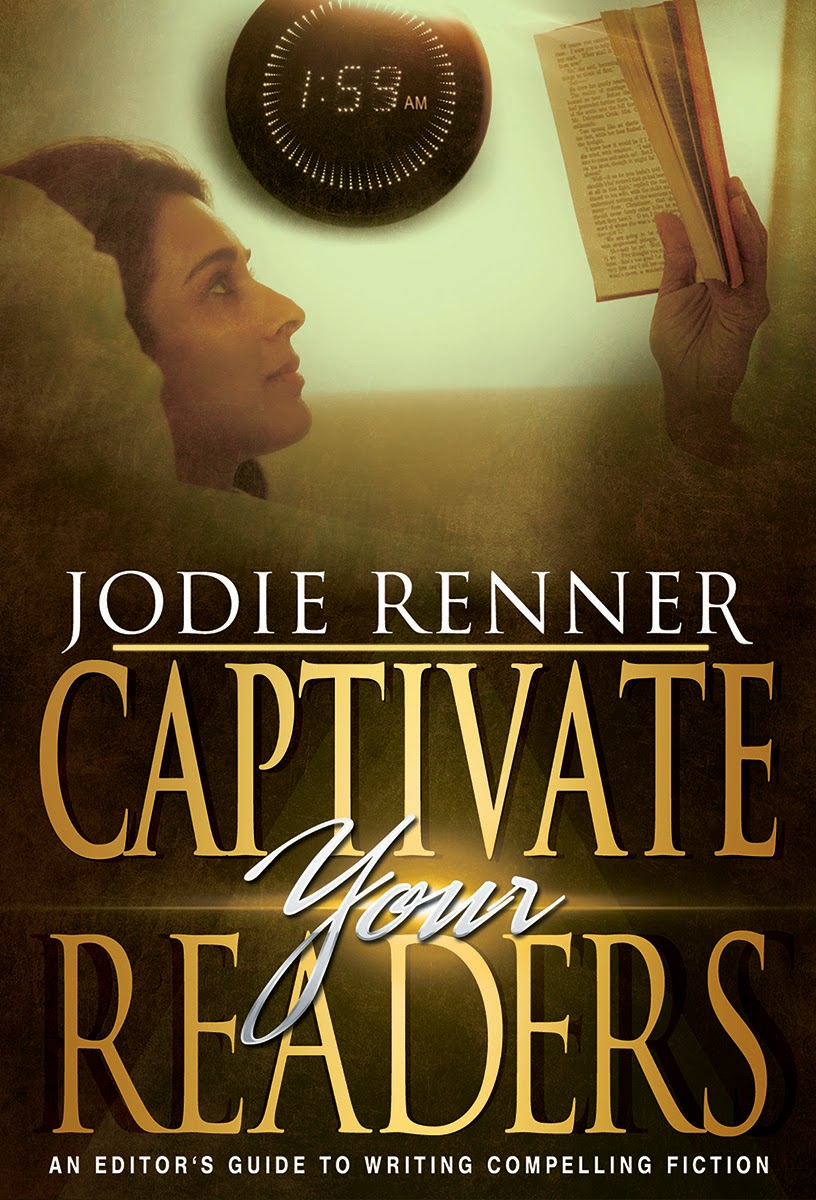
Jodie Renner is a freelance fiction editor and the award-winning author of three craft-of-writing guides in her series An Editor’s Guide to Writing Compelling Fiction: WRITING A KILLER THRILLER, FIRE UP YOUR FICTION
, and CAPTIVATE YOUR READERS, as well as two clickable time-saving e-resources, QUICK CLICKS: Spelling List and QUICK CLICKS: Word Usage. She has also organized two anthologies for charity: VOICES FROM THE VALLEYS – Stories and Poems about Life in BC’s Interior, and CHILDHOOD REGAINED – Stories of Hope for Asian Child Workers. You can find Jodie on her Amazon Author Page, at www.JodieRenner.com, and on Facebook. 

Wednesday, October 9, 2019

How to Slash Your Word Count by 20-40%

…and tighten up your story without losing any of the good stuff!   

by Jodie Renner, editor & author 

Have you been told your story looks promising or even intriguing, but your novel is way too long? Or maybe that it drags in places and needs tightening up? Today’s readers have shorter attention spans, and publishers don’t want to accept long novels from new writers, as they are so much more expensive to produce.

The current preferred length for thrillers, mysteries, and romance is around 70,000–90,000 words. Anything over 100K is definitely considered too long in most genres these days. Well-written, finely crafted fantasies and historical sagas can run longer, but newbie writers need to earn their stripes before attempting to sell a really long novel. Basically, every word needs to count. Every image and decision and action and reaction need to drive the story forward. There’s no place for rambling or waxing eloquent or self-indulgent preening in today’s popular fiction! Thrillers and other suspense novels especially need to be fast-paced page-turners.

Some strategies for cutting the word count. It’s best to proceed roughly in this order, using any of the tips that apply to your novel:

FIRST, CONSIDER:

~ IF YOU HAVE A WORDY, MEANDERING WRITING STYLE, TIGHTEN IT UP.

As you go along, condense long descriptions and lengthy, uninterrupted backstory; take out repetitions of all kinds (imagery, plot points, ideas, descriptions, phrases, words); delete or condense scenes that drag, have insufficient tension, or just don’t drive the story forward; and in general, make your scenes, paragraphs and sentences leaner. See Chapters 9, 10, 11, 14, and 15 of my writing guide Fire up Your Fiction.

START WITH BIG CHANGES: CUTS TO PLOT, CHARACTERS, AND STRUCTURE:

~ If your writing is quite tight but you have an intricate, involved plot, can you divide your really long novel into two or three in a series? But bear in mind that each book in the series needs its own plot arc and character arc – rising tension and some resolution, and a change/growth in the protagonist.

~ If the story doesn’t lend itself to being broken up, try making your plot less detailed. Cut or combine some of your less exciting plot points. Cut down on some of the “and then, and then, and then…”

~ Consider deleting one or two (or three) subplots, depending on how many you have.

~ Cut back on your cast of thousands. Too many characters can be confusing and annoying to the readers. Combine two or three characters into one. And don’t get into involved descriptions of minor, walk-on characters.

~ Consider deleting or condensing your first few pages or even all of chapter one. Maybe even chapter two, too. Take out the warm-up, where you’re revving your engine, and start your story later.

~ Take out almost all backstory (character history) in the first few chapters, and marble in just the essentials as you go along, on an “as-needed” basis only. This also helps incite curiosity and add intrigue.

~ Delete (or revise) chapters that don’t have enough tension and change, that don’t drive the story forward. Add any essential bits to other chapters. (Save deleted stuff on another file.) Or condense two chapters and combine them into one.

~ Delete or condense scenes that don’t have enough tension or change, or add much to the plot or characterization. Condense transitions scenes or parts where scenes drag, eliminating the boring bits. (Take out the parts that readers skip over.) See my article “Every Scene Needs Conflict and a Change" or Chapter 4 of my book, Writing a Killer Thriller.

~ Take out any weak links, remnants from earlier versions, stuff that just doesn’t fit there anymore (if it ever did).

THEN EVALUATE YOUR WRITING STYLE AND THE INTERNAL STRUCTURE OF YOUR CHAPTERS AND SCENES:

~ Cut back on rambling or overly detailed descriptions of settings. With today’s access to TV, movies, the internet, and travel, we no longer need the kind of detail readers of 100 years ago needed to understand the setting, so it's usually better to just paint with broad brush strokes and leave out most of the little details. Also, don’t describe the setting in neutral (boring) language. Filter any descriptions of surroundings through the eyes, ears, attitude, and mood of your point of view character. 

~ Same with character descriptions – no need to go into great detail. Give the most obvious and interesting details, and let the readers fill in the rest to their heart’s content. See my article “Character Descriptions – Detailed or Sketchy?”

~ Don’t repeat info. Don't have a character relating the details to another character about something that happened that the readers witnessed first-hand and already know about. Skip over it with a phrase like “She told him how she’d gotten injured.” 

~ Start scenes and chapters later and end them sooner. Cut out the warm-up and cool-down.

~ Skip over transitional times when not much happens. Replace with one or two sentences, or just a phrase, like “Three days later,”.

~ Eliminate or severely condense any “explanations” on subjects. Take out or condense any info dumps, self-indulgent rambling on pet topics, “teaching” sections, or rants. Keep these to the bare minimum, and give the info from a character’s point of view, with attitude, or through a lively conversation or heated argument. See Chapter 8 of Fire up Your Fiction.

~ Eliminate repetitions and redundancies. Just say it once – no need to say it again in a different way. You may think that will help emphasize your point, but it actually has the opposite effect. For more on this, see Chapter 9 of Fire up Your Fiction.

FINALLY, TIGHTEN YOUR WRITING TO CREATE LEANER PARAGRAPHS AND SENTENCES:

~ Try to delete one paragraph per page (or two); one sentence (or more) in each paragraph; and at least one word, preferably more, in each sentence. Cut out the deadwood!

~ Do a search for all those words that are just taking up space or weakening your prose, and delete most of them, like there is, there was, it is, it was, that, now, then, suddenly, immediately, and qualifiers like very, quite, kind of, sort of, somewhat, extremely, etc. Wherever you have "and then," use one or the other, not both. 
Also, take out any other extra words that are cluttering up your sentences like “located”: Not: “The cafe was located on Main Street,” but: “The cafe was on Main Street.” And delete redundant add-ons like “in color,” “in size,” “in time,” and “in number.” Not, “The car was red in color” but “The car was red” or "the red car." For more tips on streamlining your writing, see Chs. 14 and 15 of Fire up Your Fiction.

~ For better flow, condense prepositional phrases: Change “the captain of the team” to “the team captain”; change “in the vicinity of” to “near,” etc. For more, see Chs. 14 and 15 of Fire up Your Fiction.

For more tips, with examples, for tightening your writing, see "Cut the Clutter and Streamline Your Writing."

For more tips on streamlining your writing and cutting out the deadwood, see Chapters 14 and 15 of Fire up Your Fiction.

Writers – Do you have any other ideas for reducing your word count?

Also, see my articles “How to Save a Bundle on Editing Costs” and “Honing Your Craft.”

Click HERE for options to receive email alerts of new posts published on this blog.

Jodie Renner is a freelance fiction editor and the award-winning author of three craft-of-writing guides in her series An Editor’s Guide to Writing Compelling Fiction: WRITING A KILLER THRILLER, FIRE UP YOUR FICTION
, and CAPTIVATE YOUR READERS, as well as two clickable time-saving e-resources, QUICK CLICKS: Spelling List and QUICK CLICKS: Word Usage. She has also organized two anthologies for charity: VOICES FROM THE VALLEYS – Stories and Poems about Life in BC’s Interior, and CHILDHOOD REGAINED – Stories of Hope for Asian Child Workers. You can find Jodie on her Amazon Author Page, at www.JodieRenner.com, and on Facebook. 


Saturday, September 28, 2019

How to Create Workable Scene Outlines for Your Novel

by Jodie Renner, editor & author   

Are you on the first or second draft of your novel and feel like it's a bit of a muddle? Are you feeling a bit overwhelmed? Maybe thinking of rearranging or eliminating some scenes or chapters, but the task feels daunting?

Here's a quick and easy way to find some clarity. Below you'll see a template for briefly outlining each of your scenes so you can see at a glance if the order works and if each scene is engaging, meaningful, and drives your story forward.

After you've outlined all your scenes using the template below, cut them apart and play with the order of them. Maybe condense and combine a few, or even eliminate any that don't have enough tension or contribute to the story as a whole. Make notes on the back or on a separate document as to possible rearranging and ways to add more tension, conflict, and intrigue to any scenes that may need it. Possibly even show that scene from the point of view of a different character?

First, what’s a scene?

Although most novels are divided up into chapters, the scene is the fundamental unit of fiction. Each scene is a mini-story, with a main character who faces a problem, dilemma, or challenge. Every scene needs some tension or conflict, even if it's just internal, and at the end of each scene, at least one of the main characters should have gone through some sort of change or be facing a new challenge or dilemma. Otherwise, the scene isn’t pulling its weight and needs to be revised or cut. Every scene needs a mission (goal), an obstacle, and an outcome (usually a question or new problem). For more on scenes, see Jodie’s article “Every Scene Needs Conflict and a Change.”

Remember that, to keep the readers turning the pages, every scene or chapter should end on an unresolved note, a question, a surprise, a shock, a setback, a reversal, a revelation, a new dilemma or challenge, a veering in a new direction, or an unexpected action or event.

A modern novel normally has several dozen scenes. Each scene can range in length from a few paragraphs to a dozen pages or more. A chapter can contain one scene or several. Some authors like to use jump cuts, where they “cut away” in the middle of a scene to go to a different scene, then perhaps interrupt that one in the middle to go back to the first scene and resume where they left off.

Using the Scene Outline:

The outline below will help you organize your scenes and decide if any of them need to be moved, revised, amped up, or cut.

This is a great tool for both plotters and "pantsers". Plotters/outliners can use it to outline your scenes early on in the process; and those of you who prefer to just let the words flow and write “by the seat of your pants” can use it later, to make sure the timeline makes sense and the scene has enough conflict/tension and a change. 

In your outline, keep each scene description to a minimum. Don’t get carried away with too many details, or the task could become arduous. The most important thing is the POV (point of view) character’s goal for that scene, and what’s preventing him/her from reaching that goal, plus new conflicts / problems / questions that arise.

And you can use a different font color or highlight color for each main character, for a quick reference on who was the POV (viewpoint) character for each scene. Also, you can print it up and cut them out to rearrange the scenes, or use a writing software for that.

If in doubt as to who should be the viewpoint character for that scene, most often it’s your protagonist. The point of view character for a particular scene can also, less often, be your antagonist or another main character. Almost never a minor character. If you can’t decide who should be the POV character for a particular scene, go with the character who has the most invested emotionally or the most to lose.

SCENE OUTLINE FORM:           


SCENE 1

Place (Setting):        

Date/Month/Season:

Year (approx.):   

POV character for this scene:

Other main characters here:

POV character’s goal here:

Motivation for their goal (why do they want that?):

Main problem / conflict – Who/What is preventing POV character from reaching his/her goal:

Outcome – Usually a setback / new problem:

(And/or new info, revelation, new question, or, rarely, the resolution of the problem):

         
SCENE 2

Place: 

Date/Month/Season: Year (approx.):

POV character: 

Other main characters:    

POV character’s goal:

Motivation for their goal: 

Main problem/conflict/question:

Outcome (most often a setback):


SCENE 3

Place: 

Date/Month/Season: Year (approx.):

POV character:


Other main characters:   

POV character’s goal:

Motivation: 

Main problem/conflict/question:

Outcome (most often a setback): 


 SCENE 4


Place:

Etc. Continue for as many chapters and scenes as you have.


Jodie Renner is a freelance fiction editor and the award-winning author of three craft-of-writing guides in her series An Editor’s Guide to Writing Compelling Fiction: WRITING A KILLER THRILLER, FIRE UP YOUR FICTION, and CAPTIVATE YOUR READERS, as well as two clickable time-saving e-resources, QUICK CLICKS: Spelling List and QUICK CLICKS: Word Usage. She has also organized two anthologies for charity: VOICES FROM THE VALLEYS – Stories and Poems about Life in BC’s Interior, and CHILDHOOD REGAINED – Stories of Hope for Asian Child Workers. You can find Jodie on her Amazon Author Page, at www.JodieRenner.com, and on Facebook. 

Thursday, September 26, 2019

REVISE FOR SUCCESS – Concrete Tips for Revising and Editing Your Fiction

by Jodie Renner, editor & author 

After you’ve finished the first draft of your popular fiction novel or short story – or even if you’re only a third or halfway into it but have some nagging doubts about the viability of various aspects of the story – take a short break. Put your manuscript aside for at least a week or two and concentrate on other things. Then come back to it with a bit of distance, as a reader.

Here's a step-by-step guide to looking for any possible weaknesses in your premise, plot, characterization, or writing style. This is a pretty detailed list, so just approach it one step at a time, over days and weeks, maybe even months. Click on the links after each point for more in-depth suggestions on that topic.

STEP 1: LOOK FOR ANY BIG-PICTURE ISSUES.


~ PREMISE: 

Is your main idea intriguing and solid? Will the foundation of your story stand up to scrutiny? Does your main character have a driving goal and face significant challenges that he/she must overcome?

~ CHARACTERIZATION:
 
Is your protagonist charismatic, multi-dimensional, conflicted, and at least somewhat sympathetic and likeable? Does he/she change as a result of what he/she goes through in the course of the story? (character arc)

Click to read: Create a Complex, Charismatic Main Character.

Does your protagonist have significant, meaningful goals and motivations? What is driving him or her?

Do your characters’ decisions and actions seem realistic and authentic?

Click on this link: Make Sure Your Characters Act in Character. 

Also, are your supporting characters different from each other and the protagonist, for interesting contrast and tension?

~ POINT OF VIEW: 

Are you staying firmly in the head of the viewpoint character for each scene, or are there places where you’re hovering above or inadvertently slipping into the thoughts of other characters (head-hopping)? Click on the links below.

POV 101: Get into Your Protagonist’s Head and Stay There 

POV 102 – How to Avoid Head-Hopping 

POV 103 – Engage Your Readers with Deep Point of View 

~ PLOT: 

Does your protagonist have a significant challenge or dilemma that’s difficult to solve? Are you piling on the problems as the story goes on? Make sure every plot point directly affects the character and his journey. See Writing a Killer Thriller for essential tips that apply to all popular fiction.

~ STRUCTURE: 

Should you start your story or any of your scenes later? Or earlier? Would it be more effective to change the order of some chapters or scenes? Shorten some or expand others? Or even delete a few?

~ SCENES: 

Does every scene have some tension and conflict? Does every scene end with a question or dilemma that drives the story forward? See

Every Scene Needs Tension and a Change.  

Make brief scene outlines, using this template:

   Scene: Chapter: Place:
   - Date/Month/Season: Year (approx.):
   - POV character for this scene:
   - Other main characters here:
   - POV character’s goal here:
   - Motivation for their goal (why do they want that?):
   - Main problem/conflict – Who/What is preventing POV character from reaching his/her goal:
  - Outcome – Usually a setback / new problem:

Revise any scenes that don’t have conflict and a change and don’t advance the story. 

~ CONFLICT, TENSION and INTRIGUE: 

Every novel, no matter the genre, needs conflict, tension, and intrigue – and a certain amount of suspense. For practical advice on how to keep readers turning the pages, see my writer's guide, Writing a Killer Thriller and this article:

 Add Tension, Suspense, and Intrigue.

~ POTENTIAL PLOT HOLES, inconsistencies, or discrepancies: 

Ask others to watch out for any accidental bloopers in your story that will erode reader confidence. These might be related to the passage of time, moving in space, names suddenly changing, and other details that don't make sense.

~ OPENING: 

Will your opening paragraphs and first pages hook the readers and entice them to keep reading? Don’t warm up your engines with backstory or start with lengthy description – get right into the story from the first line, in the head of your protagonist.

12 Dos and Don’ts for a Riveting Opening.

~ LENGTH:
 
Is your story too long or too short? If it’s more than 90,000 words (okay, unless it’s a fantasy or epic), check out:

How to Slash Your Word Cut by 20-40% - Without losing any of the good stuff!

This would be a good time to send your story off to some trusted beta readers, volunteers who read critically in your genre. They don’t need to be writers.

Here’s a list of 15 Questions for Your Beta Readers – And to Focus Your Own Revisions

STEP 2: WRITING STYLE, VOICE, TONE, AND PACING


~ SHOW, DON'T TELL. 

Be sure to show, rather than tell, all critical scenes in real time, with action and dialogue, and quickly summarize or skip over humdrum scenes. See my article, Show, Don't Tell.

~ SHOW CHARACTER REACTIONS. 

Bring characters to life on the page by showing their emotions, physical reactions, thought reactions, and sensory perceptions.

See: Bring Your Characters to Life by Showing Their Reactions and

Immerse Your Readers with Sensory Details.

~ RELAX YOUR WRITING. 

Is your writing style too correct and formal for fiction? If so, loosen up the language. Read it aloud to see where you can make it more casual by streamlining sentences and using contractions and everyday words.

See Tips for Loosening up Your Writing.

~ VOICE:
 
Does each of your main characters have a unique voice? Or do they all sound like each other and the author? Beware of writing in a too-correct, nonfiction style. Remember that men usually speak differently than women, and a blue-collar guy shouldn't sound like a businessman or teacher. Use free-form journaling in the character's secret diary, especially when they're upset, to capture their true inner and outer voice, with plenty of attitude.

See: Concrete Tips for Developing a Unique Voice in Your Fiction

Developing a Strong Third-Person Voice, and also my book, Captivate Your Readers

~ SPARK UP YOUR PROSE.
 
Use strong, specific nouns and verbs instead of tired, overused ones. For more ideas on this, check out my book, FIRE UP YOUR FICTION and the following article:

 Nail it with Just the Right Word.

~ PICK UP THE PACE. 

Does your story drag in places? Are your descriptions too lengthy and neutral-sounding?
See: Pick up the Pace for a Real Page-Turner

~ WRITE TIGHT. 

Read your story aloud to see where you can cut down on wordiness and repetitions. Take out any “little word pile-ups” and all unnecessary detail to improve flow and pacing. Make every word count. See many chapters of Fire up Your Fiction for more specifics on this, and my post,

Don’t Muddle Your Message.  

~ WRITE AUTHENTIC DIALOGUE.
 
Read the dialogue out loud to make sure it sounds natural, like that character would actually speak. See my blog post,

 Tips for Writing Effective Dialogue.

Avoid these Style Blunders in Fiction.

STEP 3: FINAL PROOFREADING


Now it's time to go through the revised copy and look for typos, spelling, punctuation, missing or repeated words, convoluted sentences, and anywhere the prose doesn’t flow easily and sparkle. 

Also, look for formatting problems. Is your prose broken down into short paragraphs, for more white space? Have you started a new paragraph for every new speaker? Is your dialogue properly punctuated? See my article

Dialogue Nuts and Bolts.

Some techniques that work for effective proofreading:

~ Change the font and print out your story on paper or download it to your e-reader or tablet; or get a sample book printed. Then read it in a different location from where you wrote it (preferably away from your home) and make notes. 

Use the text-to-voice function of Word to listen to your story or make the font a lot bigger and read it out loud yourself.      

For more tips on effective final proofreading, see my article,

Tricks and Tips for Catching All Those Little Typos in Your Own Work.

Also, see How to save a bundle on editing costs – without sacrificing quality and

  Basic Formatting of Your Manuscript (Formatting 101) 


Jodie Renner is a freelance fiction editor and the award-winning author of three craft-of-writing guides in her series An Editor’s Guide to Writing Compelling Fiction: WRITING A KILLER THRILLER, FIRE UP YOUR FICTION, and CAPTIVATE YOUR READERS, as well as two clickable time-saving e-resources, QUICK CLICKS: Spelling List and QUICK CLICKS: Word Usage. She has also organized two anthologies for charity: VOICES FROM THE VALLEYS – Stories and Poems about Life in BC’s Interior, and CHILDHOOD REGAINED – Stories of Hope for Asian Child Workers. You can find Jodie on her Amazon Author Page, at www.JodieRenner.com, and on Facebook. 

Sunday, September 22, 2019

CLEAR, CONCISE, POWERFUL NONFICTION WRITING

by Jodie Renner, editor & author   

(An oldie but goodie I wrote and published here 9 years ago.)

- All of these tips will also make fiction writing clearer and more concise.

"Are you excavating a subterranean channel?" asked the scholar. "No sir," replied the farmer. "I am only digging a ditch." - Anon

Today’s post is mainly aimed at nonfiction writers, for a change. Have you ever read a legal document that was incomprehensible to you? Sometimes even magazine articles seem to be far more stiff and convoluted than they need to be.

Readers today are deluged with documents to read and information to assimilate. They don't want to have to wade through a thick pile of verbiage, long, complicated sentences, and unnecessarily fancy words to get the info they're looking for. They want you to state your points clearly and succinctly (with maybe even a touch of humor), so they can get on to the next chapter, document or article.

Language is all about communication; and as such, written language should be easily understood by most of the population, or at least by everyone in your target readership. If you’re sending your average reader to the dictionary more than once or twice in your article, or if they have to stop and re-read a sentence because it’s way too long and complex, you’re not communicating in a clear, direct way, and you’re likely to turn off your readers. Or, worse, you’ll just come across as pedantic and pompous.

According to Wikipedia, “Plain language, sometimes called simple language or clear language, is lucid, succinct writing designed to ensure the reader understands as quickly and completely as possible. Plain language avoids complications created by verbose, convoluted writing common in technical, legal, and other fields.”

Dr. Robert Eagleson defines plain language as “...clear, straightforward expression, using only as many words as are necessary. It is language that avoids obscurity, inflated vocabulary and convoluted construction. It is not baby talk, nor is it a simplified version of...language.”

Here are some tips for communicating clearly and effectively in your writing:

1. Avoid unnecessarily long sentences and excess wordiness.

Excess or elaborate words make your writing weaker. When tempted to use a wordy phrase, choose a concise alternative instead. As Robert W. Harris says, “Concise sentences have a force that wordy sentences don’t have. Extraneous words merely take up space and dilute the impact of the idea being expressed.”

Harris gives the following examples in his book, When Good People Write Bad Sentences:
Wordy: “Consuming excessive calories at breakfast, lunch and dinner can lead to an increase in blood pressure.”

Concise: “Overeating at meals can increase blood pressure.”

Wordy: “Owing to the fact that my car is not the most reliable of machines, I often show up for appointments after their scheduled commencement times.”

Concise: “Because my car is unreliable, I’m often late for appointments.”

Government writing in particular, is often too wordy. Here are some examples from www.plainlanguage.gov of excess words in government writing and plain alternatives:

Original: "At the present time, the FAA in accordance with new regulations will on a monthly basis conduct random security checks in the event that there is a terrorist alert."

Revised: "The FAA under new regulations will conduct monthly random security checks if there is a terrorist alert."

Some examples of wordy phrases to avoid, and straightforward, clear alternatives:

Wordy phrases ---- Plain Alternatives     

as a consequence of -----because
in the vicinity of ---------near
on a regular basis ------- regularly
as a means of ----------- to
as prescribed by --------- in, under
at a later date ----------- later
at the present time ----- now, currently
despite the fact that ----- despite
for the purpose of ------- to, for
in accordance with ------ under
in the event that ---------- if
in the not-too-distant future - soon
has the appearance of --- looks like
on a monthly basis ------- monthly
owing to the fact that ---- because
pertaining to -------------- of, about
should it appear that ----- if
with regard to ------------ about
drew to a close ----------- ended
on an annual basis ------- annually

Notice that the extra words in the first column above don’t help the meaning or add anything of significance. The wordy phrases are no more serious, compelling, or informative than their concise alternatives. In fact, extra words drain the life out of your work. The fewer words used to express an idea, the more punch it has.

2. Use active voice instead of passive voice.

Passive: The tests were graded by the teacher. The ball was kicked by Paul. The motion was passed by Senate.

Active: The teacher graded the tests. Paul kicked the ball. Senate passed the motion.

Because the active voice emphasizes the doer of an action, it is usually briefer, clearer, and more emphatic than the passive voice. Whenever possible, use active voice in your writings.

3. Avoid redundancies and unnecessary qualifiers.

It’s a mistake to think that in order to make an idea clear, you need to state it in several different ways. Using different words that mean the same thing can actually make your document harder to understand. To avoid repetition, if you are thinking of describing something with two words that have the same meaning, use the word that sounds more powerful.

Original: Because you are an experienced senior, you should help aid the new incoming freshmen.

Revised: Because you are a senior, you should help the incoming freshmen.

Also, unnecessary qualifiers add no additional meaning to a sentence, so avoid redundant phrases such as:

absolutely necessary, advance warning, basic fundamentals, close scrutiny, final outcome, future plans, honest truth, joint collaboration, overused cliché, past history, regular routine, unexpected surprise, etc.

In all of these cases, it’s best to just use the second of the two words in each phrase, as none of these words needed qualifying.

4. Don’t use multiple negatives

Using more than one negative muddles the meaning of a document. Accentuate the positive when you can. Here’s an example from www.plainlanguage.gov:

Original: No changes will be made to the Department of Transportation’s regulations unless the administrator reviews them and concludes that they are not lacking any important information.

Revised: Changes will be made to the Department of Transportation’s regulations only if the administrator reviews them and concludes they are lacking important information.

5. Don’t use a pretentious word or phrase when an ordinary one will do.

“I always endeavor to utilize multisyllabic words. It is the manner in which sophisticated people write.” – from When Good People Write Bad Sentences
Pretentious language, rather than impressing or intimidating readers, just makes the writer look like a pompous show-off. High-sounding words can suggest that one’s ideas aren’t interesting on their own so they need to be “enhanced.”

Here are some overly fancy words and their down-to-earth alternatives:

altercation – fight; appellation – name; domicile – home; capacious – roomy; facilitate – aid; impecunious – poor; jocular – witty; masticate – chew; perambulate – stroll; modification – change; pusillanimous – timid; recapitulation – summary; sobriquet – nickname; vicissitude – hardship; vociferate – shout. (The list goes on, but you get the picture.)

6. Finally, wherever possible, write in a visually appealing style.

Use headings, subheadings, bulleted lists, numbered lists, sidebars, graphics, tables, and parallel phrasing to make it easier for your readers to find the information quickly.

Remember, the purpose of writing is to communicate your ideas as clearly and as easily as possible – not to impress your readers with your erudition!


Jodie Renner is a freelance fiction editor and the award-winning author of three craft-of-writing guides in her series An Editor’s Guide to Writing Compelling Fiction: WRITING A KILLER THRILLER, FIRE UP YOUR FICTION, and CAPTIVATE YOUR READERS, as well as two clickable time-saving e-resources, QUICK CLICKS: Spelling List and QUICK CLICKS: Word Usage. She has also organized two anthologies for charity: VOICES FROM THE VALLEYS – Stories and Poems about Life in BC’s Interior, and CHILDHOOD REGAINED – Stories of Hope for Asian Child Workers. You can find Jodie on her Amazon Author Page, at www.JodieRenner.com, and on Facebook. 

Wednesday, September 18, 2019

How and When to Use HYPHENS, DASHES, & ELLIPSES


ELLIPSES vs. DASHES; also HYPHEN, EM DASH and EN DASH

by Jodie Renner, editor & author 

In my editing of fiction manuscripts, I often find writers using ellipses (...), hyphens, or semicolons where they should use dashes. Here's a brief run-down on the correct use of these punctuation marks.

A. Ellipsis (…) or Dash (—)?          


In fiction,

An ellipsis (…) is used to show hesitation:

“What I meant is… I don’t know how to begin…” 

or a trailing off:


"She came with you? But I thought..." She paused.
"You thought what? Come on, spit it out."

(Also, usually in nonfiction, indicates the omission of words in a quoted text.)

A dash (—), also called em dash, is used to show an interruption in speech:


“But I—”

“But nothing! I don’t want to hear your excuses!”

or a sudden break in thought or sentence structure: “Will he—can he—find out the truth?”

The dash is used for amplifying or explaining
, for setting off information within a sentence, kind of like parentheses or commas can do: 

“My friends—I mean, my former friends—ganged up on me.” 

B. Hyphen vs. En Dash vs. Em Dash:

The en dash is longer than a hyphen but shorter than an em dash (the normal dash).

A hyphen (-) is used within a word.


It separates the parts of a compound word: bare-handed, close-up, die-hard, half-baked, jet-lagged, low-key, never-ending, no-brainer, pitch-dark, self-control, single-handed, sweet-talk, user-friendly, up-to-date, watered-down, work-in-progress, etc.

Dashes are used between words.


An en dash (–) connects numbers (and sometimes words), usually in a range, meaning “to”: 1989–2007; Chapters 16–18; the score was 31–24 for Green Bay; the London–Paris train; 10:00 a.m.–2:00 p.m. Also sometimes used as a dash in articles and other nonfiction writing, with a space on each side ( – ).

An em dash (—) is used to mark an interruption, as mentioned above (“What the—”), or material set off parenthetically from the main point—like this. Don’t confuse it with a hyphen (-). In fiction, the em dash almost always appears with no spaces around it.

C.
How to Create Em Dashes and En Dashes:  


Em dash (—) Ctrl+Alt+minus (far top right, on the number pad). CMS uses no spaces around em dashes; AP puts spaces on each side of em-dashes

En dash (–) Ctrl+minus (far top right, on the number pad). Usually has a space on both sides.


D. Advanced Uses of the Dash (Em Dash):

According to the Chicago Manual of Style (6.87), “To avoid confusion, no sentence should contain more than two em dashes; if more than two elements need to be set off, use parentheses.”

The Chicago Manual of Style also says (6.90) that if the break belongs to the surrounding sentence rather than to the quoted material, the em dashes must appear outside the quotation marks: “Someday he’s going to hit one of those long shots and”—his voice turned huffy—“I won’t be there to see it.”

Using an em dash in combination with other punctuation: CMS 6.92: “A question mark or an exclamation point—but never a comma, a colon, or a semicolon, and rarely a period—may precede an em dash.

All at once Jeremy—was he out of his mind?—shook his fist in the officer’s face.

Only if—heaven forbid!—you lose your passport should you call home.


E. More on hyphens: 

For much more on when (and when not) to use hyphens, see my post, It's All About Those Hyphens!  

See also: Dialogue Nuts & Bolts
 Some Common Grammar Gaffes,
 Basic Formatting of Your Manuscript, 
Style Blunders in Fiction

Do you have any other punctuation or grammar questions you'd like me to address? If so, please leave your suggestions or questions in the comments below. Thanks!

Click HERE for options to receive email alerts of new posts published on this blog. 

Jodie Renner is a freelance fiction editor and the award-winning author of three craft-of-writing guides in her series An Editor’s Guide to Writing Compelling Fiction: WRITING A KILLER THRILLER, FIRE UP YOUR FICTION, and CAPTIVATE YOUR READERS, as well as two clickable time-saving e-resources, QUICK CLICKS: Spelling List and QUICK CLICKS: Word Usage. She has also organized two anthologies for charity: VOICES FROM THE VALLEYS – Stories and Poems about Life in BC’s Interior, and CHILDHOOD REGAINED – Stories of Hope for Asian Child Workers. You can find Jodie on her Amazon Author Page, at www.JodieRenner.com, and on Facebook. 

Tuesday, September 17, 2019

QUICK CLICKS: SPELLING LIST - Commonly Misspelled Words at Your Fingertips

by Jodie Renner, editor & author 

Are you a busy writer or journalist? A student with writing assignments piling up? An editor who needs to verify info quickly? Then you'll love my handy, time-saving, clickable resource for writers, editors, students, and anyone who has any kind of writing project. It's called QUICK CLICKS: SPELLING LIST - Commonly Misspelled Words at Your Fingertips. CLICK HERE to check out the Kindle book on Amazon. It's also available as a PDF document to leave up on your screen, behind or beside your W.I.P. To purchase the PDF version for $2.99, please email info (at) JodieRenner (dot) com.

How will this e-resource make your life easier?

Whether you’re a journalist, fiction or nonfiction writer, student, blogger, editor, or anyone else on a busy schedule (aren’t we all these days?), this clickable spelling list will save you tons of time, no matter what you’re writing. Just keep this doc up on your screen or beside you on your Kindle, tablet, or smartphone, and if you’re unsure of a word, go to this, click on the first two letters, find the word quickly, check the spelling, and you’re back to your writing project within seconds. 

Words are listed here for various reasons. They might be challenging to spell, like “acquiescence” or “hemorrhage” or “abhorrent” or “zucchini” or “Caesar.” Or what about those everyday words we think we know how to spell, but just want to quickly verify, like “occurrence” or “embarrassed” or “occasion” or “recommend” or “separate” or “weird” or “vacuum”?

In many other cases, the words or terms are easy to spell but are just included because there is confusion as to whether they should be hyphenated, one word, or two words. For example, is it back seat, back-seat, or backseat? checkout, check-out, or check out? Is it under-achiever or underachiever? counter-clockwise or counterclockwise?

I’ve also included troublesome homonyms such as its and it’s; rein and reign; stationary and stationery; principal and principle; peek, peak, and pique; insure and ensure; complement and compliment; lightning and lightening, and many more.

For the sake of brevity and ease of use, definitions are rarely given in this resource, except in cases where the incorrect word is often mistakenly used.

So why wouldn’t you just rely on your word processor’s spell-checker? Because Word’s spell-checker is made up of words that users submit and in many cases is blatantly incorrect. 

All of the words in this list have all been verified as correct spelling or normal current usage. My main references are the two copyeditors’ and proofreaders’ “bibles,” Merriam-Webster’s Dictionary (M-W) and The Chicago Manual of Style (CMOS); and for words that don’t appear in Merriam-Webster, I’ve chosen the spelling used in the majority of online dictionaries.

Click on the letters to go to words starting with those letters. To come back to the list, just click on “Home,” found on every page of this convenient resource.

Endorsements and Reviews for Quick Clicks: Spelling List:

“One word or Two? Hyphen or no hyphen? I never can keep all that straight. This books clears the air. A must for every writer.”~ DP Lyle, award-winning author of the Samantha Cody and Dub Walker thriller series

“This is a great resource for word usage, with clickable links that make it easy. I see it becoming indispensable.”~ L.J. Sellers, author of the bestselling Detective Jackson and Agent Dallas series

An Avid Listener, April 7, 2019:
5.0 out of 5 stars Fast and authoritative

"A dictionary has the correct spelling of all these words, but only Jodie Renner makes looking up words virtually instantaneous. Every word is quick-linked to the index pages, and every page links back to the index, so it's simply a matter of tapping and scrolling.

"Plus she's backed up every 'iffy' answer with my go-to sources, Merriam Webster and Chicago Manual of Style, so I know I'm right. (Asking "The Google" for correct spelling often yields decidedly nonstandard results.) Thanks, Jodie!"

“Must-have useful reference for editors and writers! The organization is brilliant.
“This time-saving reference is incredibly useful for writers and editors. It's a very well-organized book and the clickable links are absolutely one of the best features. I'm going to use this again and again!”
~ Eve Paludan, author and editor

“Indispensable tool for all writers, novice or seasoned. Once you start using this quick spelling resource, you’ll wonder how you ever managed without it.”
~ Los Angeles Writer

“A useful time-saver! Very easy to use. Convenient and slick.”
~ Mandrake 

“Lots of live links make it quick and easy to use!
“This guide to commonly misspelled words and phrases is a time-saver for any writer. Quick Clicks: Spelling List is a quick reference guide you can keep in the background of your work in progress. If you are not sure how to spell a word, whether it's hyphenated or not, or which of several homonyms is the right one, like peak or peek, weather or whether, etc., you can find the answer with a few clicks and get back to work quickly. This is a must-have resource. I give Quick Clicks: Spelling List a 5-star ranking as an indispensable writer's tool for spelling.”
~ John W. Kurtze

“To hyphenate or not to hyphenate . . . Is there an ‘e’ in there? this quick and easy to use guide helps with some of the most common spelling demons without me having to go to Google and sort through the results to get the best answer. Jodie is a great editor and this is the latest in her series of practical writing guides. You can keep it open on your Kindle or your computer-based Kindle app for easy reference during writing sessions. Grab it, you won't regret it.”
~ Patient Reader

A Superb Tool
“I haven’t owned Spelling on the Go [former title] for 24 hours yet and I’ve already used it four times. The layout is simple to use and can be navigated with ease. This is going to be one of those resources that people say ‘I can’t believe nobody thought of that before’ about.”
~ Brian Switzer

And check out the companion e-resource, Quick Clicks: Word Usage.

Jodie Renner is a freelance fiction editor and the award-winning author of three writing guides in her series An Editor's Guide to Writing Compelling Fiction: Writing a Killer Thriller, Fire up Your Fiction, and Captivate Your Readers, as well as two clickable time-saving e-resources, Quick Clicks: Spelling List and Quick Clicks: Word Usage. She has also organized and edited two anthologies for charity. www.JodieRenner.com