Sunday, September 15, 2019

Some Common Grammar Gaffes

by Jodie Renner, editor & author  

Is it "with Dave and me" or "with Dave and I"? Should it be"who" or "whom"? Do you "lie down" or "lay down"? Is it "the guy that just left" or "the guy who just left"? Is it "My Mom" or "My mom"? Should I use "that" or "which" there?

The English language is in a constant state of flux, evolving and changing along with technological changes, changes in attitude, the influence of other cultures, street language, slang expressions, etc. That means the English language is vibrant, not stagnant, just as is our society. Language needs to keep up with changes to facilitate communication.

But it’s probably a good thing to try to have some degree of consistency and standards, so we don’t all sink to the lowest common denominator of texting-style, “fast-food” language. [Sorry, I shake my head when I see "ur" in a Facebook post instead of "your"-- or "4" for "for," "r" for "are," or "u" for "you." How hard is it to type two more letters? It just reflects badly on the writer, I think.] Texting family and friends is one thing, but blog posts, articles, assignments, short stories, and fiction or nonfiction books require accurate spelling and correct grammar (except in dialogue, of course), in order to retain reader credibility and respect.
Here are a few common grammar blunders I see in my editing of books and my general reading. (All rules are per Chicago Manual of Style.)

"HE AND I" or "HIM AND ME"?

Is it “my brother and me” or “my brother and I”? That depends. 

Is it “Give the books to Jane and I,” or “Give the books to Jane and me.”?

Is it “Carol and me went with them,” or “Carol and I went with them.”?

Is it “She and Brad are coming, too,” or “Her and Brad are coming, too.”?

Here's a simple little trick to know whether to use “I” or “me”; “he” or“him”; “she” or “her” etc.:

Just take out the “and” and the other person’s name or pronoun. What are you left with? Does it make sense?

For example, which is it? “Him and his buddy are going fishing,” or “He and his buddy are going fishing.”

Take out “and his buddy.” Would you say “Him is going fishing” or “He is going fishing.”? 

Since you’d use “he” when it’s alone in the sentence, then you’d say, “He and his buddy are going fishing.”

Or is it “Leave your sister and I alone for a few minutes,” or “Leave your sister and me alone for a few minutes”?

To figure this out, take out "your sister and" and think of whether you’d say, “Leave I alone” or “Leave me alone.”

Since you’d say “Leave me alone,” then it has to be “Leave your sister and me alone.”

Apply this little trick to the first two examples above, and you’ll know it has to be “Give the books to Jane and me,” and “Carol and I went with them.”

And by the way, "between you and me" is correct.

I could get into a lengthy explanation about subject (nominative) pronouns and object (objective) pronouns, but if you just use that little gimmick, it works every time.

WHO vs. WHOM:

Even though nowadays, in casual conversation or dialogue in novels, “whom” often seems affected or pretentious and out of place, it’s good to know the correct usage for nonfiction writing, academic writing, journalistic writing, some narration, and dialogue spoken by educated characters.

Here’s the general rule:

Who is used for the subject of a verb or the doer of the action: “Who saw him?”

Whom is correct for the object of the verb, or the receiver of the action: “Whom did he see?”

Whom is correct usage after prepositions (by, for, to, with before, after, beside, in front of, etc.), e.g., By whom? For whom? With whom? To whom? “To whom are you referring?” “The woman for whom he gave his life.”

Quick trick: A quick way to remember which to use: Ask yourself whether the answer would be “he” or “him”. If he, use who, if him, use whom. Who went with you? He went with me. Whom did you see? I saw him. 

Test the “who –> he” vs “whom –> him” trick with these sentences:

Is it “Whom should I say is calling?” or “Who should I say is calling?”

(He is calling, so “who” is correct here.)

Is it “Who will you choose to go first?” or “Whom will you choose to go first?”

(You’ll choose him, so “whom” is correct here.)

As I mentioned, the use of “whom” in everyday conversation often seems somewhat affected these days. So, unless you want to come off as sounding pedantic, it’s best to avoid using “whom” in casual conversation with friends or family. Also, avoid whom in casual dialogue in fiction, especially (obviously!) when rough or uneducated people are talking! 

WHO, THAT, WHICH:

“that” for “who”:

 –  “that” is for things; “who” is for people. I’m probably not the only one who winced a bit the first 100 times I heard Katy Perry’s great song, “The One That Got Away.” I even heard the radio announcer saying, “It should be ‘The One WHO Got Away,’ of course!”

Examples of correct usage:
The children who were playing ran in when it started to rain. The bikes and toys that were left outside got wet.
The boats that were in the harbor got tossed around in the storm.
The ladies who organized the church tea were surprised at the attendance.

“that” versus “which”: 

(This one’s directed at North Americans, as Brits use “which” where we use “that,”)
Quick trick: An easy way to remember whether to use “which” or “that”:

 “which” always follows a comma, while “that” almost never follows a comma.

Or think of it this way: If the sentence doesn’t need the clause/phrase that comes after the word to make sense, use “which.” If what comes after the word is essential to the sentence, use “that.” 

Here's an example to illustrate: 

The library, which is on Main Street, has about 30,000 books.
The library that is on Main Street has about 30,000 books.

In the first sentence, the one with “which,” we don’t need the extra information that it’s on Main Street for the sentence to make sense, as there’s only one library, and it’s on Main Street.
In the second sentence, we need the “that” part, as that tells us we’re talking about the library on Main Street, not some other library in town. So what follows “that” is essential to the sentence. 

Let’s look at another example:

The car, which was a Toyota, was badly crumpled in the accident.
The car that was a Toyota was badly crumpled in the accident.

The first sentence implies that there was only one car in the accident, and by the way, it was a Toyota. That’s nonessential information, so it’s enclosed in commas and introduced by “which.”
The second sentence tells us there was more than one car involved in the accident, and that the Toyota, unlike the others, was badly crumpled. The “that” clause gives us essential information.
So another way to look at it is “which” introduces nonessential info, and “that” introduces essential info. 

LAY vs. LIE:
This one stumps a lot of people, even a bestselling author I know, who has emailed me a few times for a reminder of when to use “lie” and when to use “lay.” It’s very common to mix up these two, especially with their weird past tenses, which just complicate the issue.

Basically, you lay something down, but you lie down. So “lay” takes an object – a thing after it that you’re putting down. Not counting ourselves, so a person just lies down. And even if it’s a thing, if it’s already there and nobody’s in the act of putting it there, it’s lying there, not laying there.

Correct usages:

Present tense:

Lie: I like to lie in the hammock. Mom often lies down for a nap in the afternoon. Ricky is lying down on the grass.

Lay: She lays the baby in the bassinette every night. She is laying the baby down right now.

So far so good. But here’s where it gets weird: The past tense of “lay” is “laid,” as in “I laid the book on the table.” But the past tense of “lie” is “lay” as “She lay down on the couch for a nap yesterday.” Huh?! Just another of the many ways that English is weird and often illogical.
So to reiterate:

Lay requires a direct object: You lay something down. 

Lie does not require a direct object: You lie down.

The verb tenses of lay: 

Present: lay, is laying.  Lay the report on my desk.

Past: laid, has laid, was laying.  She laid the ring on the table and walked out; she had laid it there before.

The verb tenses of lie: 

Present: lie, is lying: Why don’t you lie down for a while? The book is lying on the table.

Past: lay, has lain, was lying. The little boy lay in the shade, fast asleep. He has lain there many times, in fact yesterday he was lying in that exact spot.

So: He laid (past tense of lay) the wreath on the grave, where it lay (past tense of lie) for a month.

If you think you'll forget all this stuff, especially the past tenses, just copy and paste this somewhere to help you remember. That’s what I did before I finally got it into my head! 

ERRORS IN CAPITALIZATION: 

There's often some confusion around capitalization of titles, family members, and places. Basically, it's "Mom" but "my mom," "Uncle Ted," but "his uncle,” etc. Also, "Doctor Edwards," but "the doctor," “Vancouver General Hospital” but “the hospital” and so on.

Use caps for proper nouns but not for generic nouns: 

the doctor, but Doctor Wilson; the president, but President Obama; the general, but General Eisenhower; the judge, but Judge Judy; the sergeant, but Sergeant Wilson; the prince, but Prince Charles; the police department, but the Chicago Police Department; the library, but New York Public Library, the hospital, but Toronto General Hospital. 

But when you’re addressing the president, it’s “Mr. President,” and when you’re addressing anyone else with a title, you still use the capital, even if you don’t use their name, as in “Yes, Sergeant, I’ll do that right away.” Also, “Yes, Your Majesty.” And “No, Your Honor.” 

But sir, ma’am, my lord, my lady, milady, etc. are not capitalized.  

Don’t capitalize terms of endearment or pet names, like dear, honey, sweetie, son, buddy, etc.: “Yes, dear.” 

Family names: Capitalize family names like father, mother, etc. only when using them as a name, as in “Dad, can I borrow the car keys?” or “Where’s Mom?” or “Thanks, Grandma,” but no caps when just referring to family members, as in “my dad” or “your mother,” or “his grandmother.”


See also Common Grammar Gaffes, Part II (past perfect, misplaced modifiers)

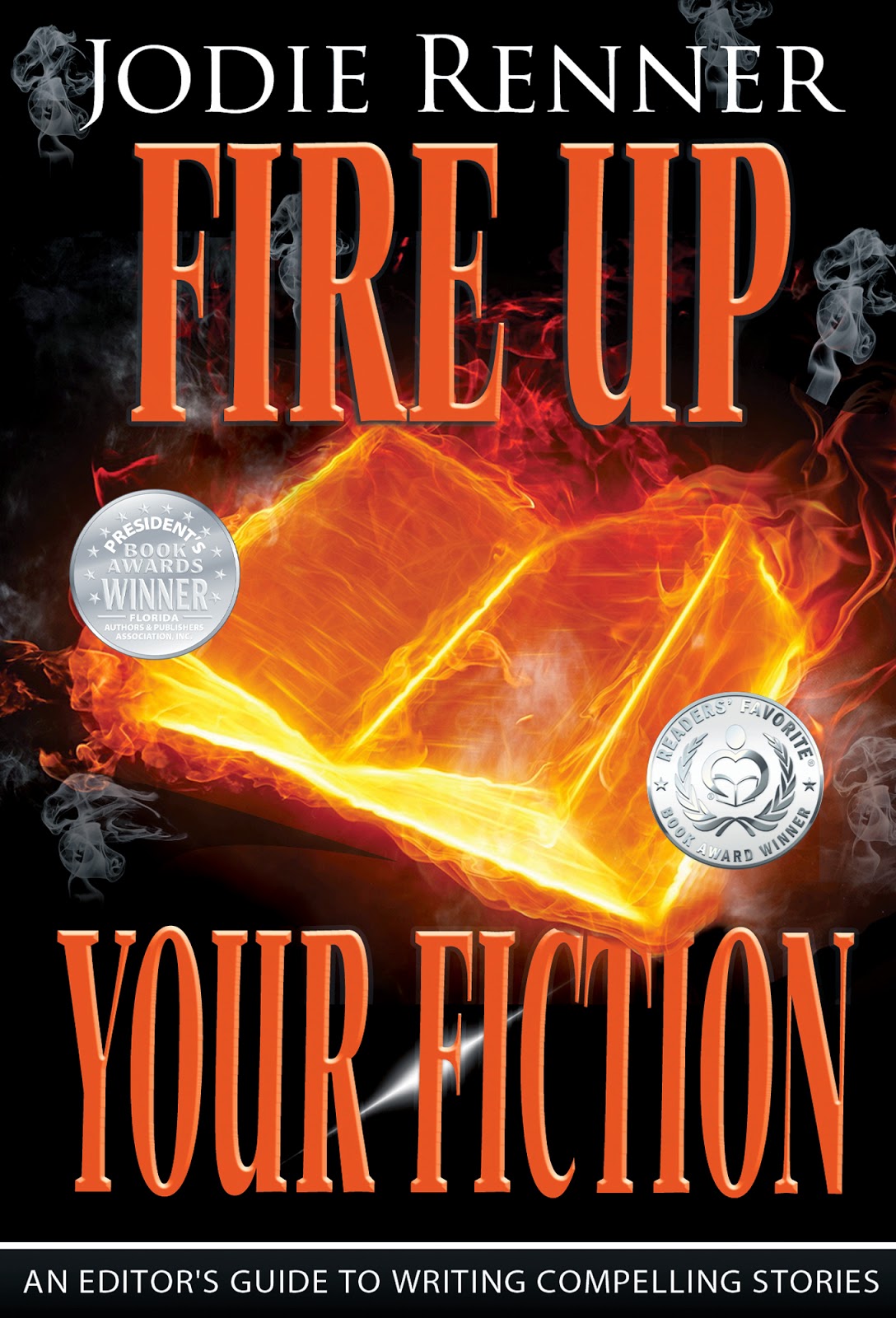
Jodie Renner is a freelance fiction editor and the award-winning author of three craft-of-writing guides in her series An Editor’s Guide to Writing Compelling Fiction: WRITING A KILLER THRILLER, FIRE UP YOUR FICTION, and CAPTIVATE YOUR READERS, as well as two clickable time-saving e-resources, QUICK CLICKS: Spelling List and QUICK CLICKS: Word Usage. She has also organized two anthologies for charity: VOICES FROM THE VALLEYS – Stories and Poems about Life in BC’s Interior, and CHILDHOOD REGAINED – Stories of Hope for Asian Child Workers. You can find Jodie on her Amazon Author Page, at www.JodieRenner.com, and on Facebook. 

Tuesday, September 10, 2019

A Checklist for Submitting Your Short Story to Anthologies and Contests

A glimpse into the minds of acquiring editors and judges for short (or any) fiction

by Jodie Renner, editor & author 

Have you tried your hand at writing short stories yet? If not, what’s holding you back? As award-winning blogger Anne R. Allen said in an excellent article in Writer’s Digest magazine, “Bite-sized fiction has moved mainstream, and today’s readers are more eager than ever to ‘read short.’” To check out Anne’s “nine factors working in favor of a short story renaissance,” see “9 Ways Writing Short Stories Can Pay off For Writers“, and there’s more in her post, "Why You Should be Writing Short Fiction."

Here’s another Argument for Writing Short Stories, by Emily Harstone.  She says, “Writers who are serious about improving and developing their craft should write short stories and get editorial feedback on them, even if they are never planning on publishing these short stories. Short stories are one of the best ways to hone your craft as a writer.”

Okay, you’ve decided to take the plunge and craft a few short stories. Good for you! Next step: Consider submitting some of them to anthologies, magazines, or contests. But wait! Before you click “send,” be sure to check out my 33 Tips for Creating a Short Story Worthy of Contests, Magazines, and Anthologies, then go through your story with these tips in mind and give it a good edit and polish – possibly even a major rewrite – before submitting it.

What are some of the common criteria used by publications and contests when evaluating short story submissions?

I have served as judge several times for Writer’s Digest Popular Fiction Contest, where I had to whittle down 140 or more entries (for the thriller category alone) to 10 finalists, but I wasn’t provided with a checklist or any specific criteria. However, a friend who regularly submits short stories to anthologies, magazines, and contests recently received a polite rejection letter from the editor of a literary magazine, along with a checklist of possible reasons, with two of them checked off specifically relating to her story.

While useful, the list of possible weaknesses is very “bare bones” and cries out for more detail and specific pointers. Editors, publishers, and judges are swamped with submissions and understandably don’t have time to give detailed advice for improvement to all the authors whose stories they turn down.

Here’s the list my friend received, with my comments below each point.

Checklist from a Publisher/Editor/Publication in Response to Short Story Submissions

“Thank you for submitting your short story to …. We’ve given your work careful consideration and are unable to offer you publication. We do not offer in-depth reviews of rejected submissions, due to time constraints. Briefly, we feel your submission suffered from one/several of the following common problems:”

– “Tone or content inappropriate for…” (publisher / publication / anthology / magazine)
Check their submission guidelines and read other stories they’ve accepted to get an idea of the genre, style, tone, and content they seem to prefer.

– “Stylistic and grammatical errors; too many typos”

Be sure to use spell-check and get someone with strong skills in spelling, grammar, punctuation, and sentence structure to check it over carefully for you. Read it out loud, and where you pause briefly, put in a comma. Where you pause a little longer, put in a period. You could also try using editing software or submit it to a professional freelance editor. This last choice has the most likelihood of helping you hone your fiction-writing skills.

– “Structure problems”

For a novel, this could mean some chapters could be rearranged, shortened, or taken out. For a short story, it could mean the time sequencing is strange; you've started too early, too late, or in the middle; or perhaps you have too many characters or too many plot lines. Or perhaps you've interrupted the story by dumping in a lot of backstory or explanations.

– “Formatting problems made reading frustrating”

Be sure your story is in a common font, like Times New Roman, 12-point, and double-spaced, with only one space after periods and one-inch margins on all four sides. Don’t boldface anything or use all caps. For more white space and ease of reading, divide long blocks of text into paragraphs. Start a new paragraph for each new speaker. Indent paragraphs, but not by clicking on the space bar. Use Word's paragraph function. Don’t use an extra line space between paragraphs. Use italics sparingly for emphasis. For more specifics on formatting, see “Basic Formatting of Your Manuscript (Formatting 101)”.

– “Characters were problematic/unbelievable/unlikeable”

Your characters’ decisions, actions and motivations need to fit their goals, personality, background, and character. And make sure your protagonist is likeable, someone readers will want to root for.

– “Content and/or style too well-worn or obvious”

This likely refers to a plot that’s been done a million times, with cookie-cutter characters and a predictable ending.

– “Word choice needs refinement”

This one could cover the gamut from tired, generic verbs like walked, ran, saw, looked or overused adjectives like nice, good, bad, old, big, small, tall, short; to inadvertently inserting light-hearted words at a tense time or vice-versa; to using overly formal, technical, or esoteric words where a concrete, vivid, immediately understandable one would be more effective; and more.

– “Overbearing or heavy-handed”

This probably refers to a story where the author’s agenda is too obvious, too hard-hitting, maybe even a bit “preachy,” rather than subtle, allowing the reader to draw their own conclusions.

– “Nothing seems to have happened”

This likely indicates no critical problem or dilemma for the protagonist, not enough meaningful action and change, and insufficient conflict and tension.

– “Strong beginning, then peters out”

This is an indicator that your plot needs amping up and you need to add rising tension, suspense, and intrigue to keep readers avidly turning the pages. Also, flesh out your characters to make them more complex. Give your protagonist secrets, regrets, inner conflict, and a strong desire that is being thwarted.

– “Needs overall development and polish.”

This indicates you likely need to roll up your sleeves and hone your writing skills. Read some writing guides, like my award-winning editor's guides to writing compelling fiction, Captivate Your Readers, Fire up Your Fiction, or Writing a Killer Thriller. Also, read lots of highly rated published short stories, paying close attention to the writers’ techniques. Here’s where a critique group of experienced fiction writers or some savvy beta readers or a professional edit could help.

– “We didn’t get it.”

This is a catch-all category that means the story didn’t work for a number of reasons. This could be an indicator to put this story aside and hone your craft, critically read other highly rated stories in your genre, then, using your new skills, craft a fresh story.

“While all of these criticisms open doors to further questions, we regret that we cannot be more constructive….”

That’s understandable. They just don’t have time to critique or mentor every writer who contacts them. But I hope my comments above help aspiring fiction writers hone your craft and get your stories published – or even win awards for them. Good luck! For tips on how to actually submit, check out “Writing Short Stories? Don’t Make These 4 Submission Mistakes."

Jodie Renner is a freelance fiction editor and the award-winning author of three craft-of-writing guides in her series An Editor’s Guide to Writing Compelling Fiction: WRITING A KILLER THRILLER, FIRE UP YOUR FICTION, and CAPTIVATE YOUR READERS, as well as two clickable time-saving e-resources, QUICK CLICKS: Spelling List and QUICK CLICKS: Word Usage. She has also organized two anthologies for charity: VOICES FROM THE VALLEYS – Stories and Poems about Life in BC’s Interior, and CHILDHOOD REGAINED – Stories of Hope for Asian Child Workers. You can find Jodie on her Amazon Author Page, at www.JodieRenner.com, and on Facebook. 

Tuesday, September 3, 2019

REACH MORE READERS WITH YOUR WRITING

15 Tips for Clear, Concise, Powerful Writing 

by Jodie Renner, editor & author 

When revising your novel, short story, nonfiction book, article or blog post, keep these 15 tips handy to help you clarify and strengthen your message and keep your readers engaged.

1. Write in a clear, casual, friendly accessible style. Avoid formal or stiff writing. Pretend you are talking to people you know and like. Let your personality and warmth show through.

2. Grab the reader’s attention at the beginning with a compelling statement, question, scene, or example.

3. Avoid formal sentences and pretentious language. Rather than impressing your readers, ornate, fancy words can just end up alienating them. Don’t send your readers away from your story to look up a word. Fancy, erudite, or pompous words are show-offy and frustrating. Besides, immediately recognizable words make for instant comprehension and keep the pace going and the reader turning the pages. But look for the strongest, most evocative word for the situation.

4. Don’t confuse, annoy, or bore your readers with unclear or vague writing. Avoid generalities and vague terms like “things,” “food,” “people” and “animals.” Use specific examples and sensory imagery to paint a clear picture and bring your ideas to life.

5. Vary your sentence structure and the lengths of your sentences. Avoid starting several sentences in a row with He or She or the person’s name. Break up long, convoluted sentences.

6. Write lean. Make every word count. Take out all unnecessary and repetitive words and sentences and go for an easy flow of ideas. Avoid repeating ideas and watch for those little words that just clutter up your sentences. Take out “It was,” “There was,” and “that” wherever they’re not needed.

7. Take out wishy-washy qualifiers like quite, sort of, almost, kind of, a bit, pretty, somewhat, rather, usually, basically, generally, probably, mostly, really, etc. Forget “He was quite brave,” or “She was pretty intelligent” or “It was almost scary.” These qualifiers dilute your message, reduce the impact, and make the imagery weaker. Take them out. Even very is to be avoided – it’s like you’re saying the word after it needs reinforcing. “She was beautiful” packs more punch than “She was very beautiful.”

8. Keep adverbs to a minimum. Instead of propping up a boring, anemic verb with an adverb, look for strong, descriptive, powerful verbs. Instead of “He walked slowly” go for “He plodded” or “He trudged” or “He dawdled.” Instead of “She ate hungrily” say “She devoured the bag of chips,” or “She wolfed down the pizza.” Instead of “They talked quickly,” say “They babbled.”

9. Avoid colorless, overused verbs like walked, ran, went, saw, talked, ate, did, got, put, took. Get out your thesaurus (or use the MS Word one. Hint: look up the present tense: walk, run, eat, say, etc.) to find more expressive, powerful verbs instead, like crept, loped, stumbled, stomped, glimpsed, noticed, observed, witnessed, spied, grunted, whimpered, devoured, consumed, gobbled, wolfed, munched, or bolted.

10. Avoid –ing verbs wherever possible. Use -ed verbs instead – they’re stronger and more immediate. “He was racing” is weaker than “He raced.” “They searched the house” is more immediate than “They were searching the house.” Rewrite -ing verbs whenever you can, and you’ll strengthen your writing and increase its power. But keep -ing verbs for ongoing action that was going on while something else occurred: The phone rang while he was washing his car.

11. Use adjectives sparingly and consciously. Instead of stringing a bunch of adjectives in front of an ordinary, overused noun, find a more precise, expressive noun to show rather than tell. Overuse of adjectives can also turn your writing into “purple prose” that is melodramatic and overly “flowery.”

12. Avoid the passive voice. For greater impact, when describing an action, start with the doer, then describe what he did, rather than the other way around. Use the more direct active voice wherever possible. Instead of “The house was taped off by the police,” write “The police taped off the house.” Also, avoid empty phrases like “There is”, “There was,” “It’s,” and “It was.” Jump right in with what you’re actually talking about.

13. Avoid negative constructions wherever possible – they can be confusing to the reader. Instead of “I didn’t disagree with him,” say “I agreed with him.”

14. Read your pages out loud to make sure the ideas flow naturally. Wherever you stumble or have to reread, your readers will, too.

15. Pay attention to white space. A solid wall of words for a whole page can make readers anxious, especially reluctant readers. Use frequent paragraphing. For nonfiction and blog posts, use bolded subheadings and lists wherever appropriate.

Click HERE for options to receive email alerts of new posts published on this blog.

Jodie Renner is a freelance fiction editor and the award-winning author of three craft-of-writing guides in her series An Editor’s Guide to Writing Compelling Fiction: WRITING A KILLER THRILLER, FIRE UP YOUR FICTION, and CAPTIVATE YOUR READERS, as well as two clickable time-saving e-resources, QUICK CLICKS: Spelling List and QUICK CLICKS: Word Usage. She has also organized two anthologies for charity: VOICES FROM THE VALLEYS – Stories and Poems about Life in BC’s Interior, and CHILDHOOD REGAINED – Stories of Hope for Asian Child Workers. You can find Jodie on her Amazon Author Page, at www.JodieRenner.com, and on Facebook. 

Cut the Clutter and Streamline Your Writing

- Part I  

Excerpted from Fire up Your Fiction - An Editor's Guide to Writing Compelling Stories

by Jodie Renner, editor & author 

In my editing of fiction manuscripts, it seems one of my most important jobs is to help my clients streamline their writing so the ideas flow more smoothly.

I’m talking about those extra words that aren’t needed to enhance the mood, plot or characterization, or bring the story to life; the clutter of words that are getting in the way of the imagery and story and slowing down the pace.

Think of a flower garden that is stifled by weeds to the point where you can’t see the flowers. Or a cluttered basement or workshop, where you can’t find the things you really need. The good stuff gets lost, or at least difficult to find among all the junk.

So once you’ve gotten through your first draft, it’s important to go back in and cut down on wordiness and redundancies in order to make your story more compelling, pick up the pace, and increase the tension and sense of urgency.

But of course, don’t throw the baby out with the bath water—no need to make your style so laconic that you’ve sucked the life and voice out of it. Keep all those juicy words and phrases that set the tone, portray your voice and attitude, add atmosphere, provide sensory details, deepen your characters, add to the suspense and intrigue, and so on. Just cut out the excess blah-blah and leave the gems behind.

Sol Stein calls this important part of the editorial process “liposuctioning the flab.” As he says, “Flab is the enemy of every writer. Superfluous words and phrases soften prose. […] Flab, if not removed, can have a deleterious effect on the impatient reader, who will pay less attention to each word and begin to skip….” After you go through and cut the flab, the remaining text will be much stronger and more compelling.

Here’s some clutter to look for and expel, so the readers have nothing between them and your story:

First, take out any words, sentences, or paragraphs that are unnecessary, impede the flow of ideas, and slow the pace down. Search and destroy all those little words and phrases that just clutter up your sentences, adding nothing.

Here are some examples from my editing. I’ve changed the details to provide anonymity.

Before: They slept each night in the cheap motels located less than a mile’s drive from the interstate.

After: They slept each night in cheap motels just off the interstate.


Before: “You must never touch anything in this room if I don’t tell you to or if I haven’t given permission.”

After: “You must never touch anything in this room without my permission.”

Even better: “Do not touch anything in this room without my permission.”

Or even: "Do not touch anything in this room."


Before: The captain often asked a question of his men without really wanting their opinion. It was his way of providing a sense of democracy to his leadership style, when in actuality there was none.

After: The captain often posed questions of his men without really wanting their opinion. It was his way of pretending his leadership style was democratic.


Before: Jason motioned to a particular number in the middle of the spreadsheet that Tom currently had on the computer screen.

After: Jason motioned to a number in the middle of the spreadsheet on the screen.

Or: Jason pointed to a number in the middle of the spreadsheet.

Or even better: Jason pointed to a number on the spreadsheet.


Take out empty, filler words like “It was,” “there was,” and “there were”:

Before: There was a long scar just above both eyebrows that gave him a sinister look.

After: A long scar above his eyebrows gave him a sinister look.

Even better: A long scar on his forehead gave him a sinister look.


Unnecessarily wordy: I headed down a rickety set of wooden steps to the basement. There was a dim light ahead in the hallway. To the right there were cardboard boxes stacked high. To the left, there was a closed door with a padlock. Suddenly, I heard muffled sounds. There was someone upstairs.

Much tighter: I headed down a rickety set of wooden steps to the dimly lit basement. To the right, cardboard boxes were stacked high. To the left, I saw a closed door with a padlock. Suddenly, I heard muffled sounds. Someone was upstairs.

I could play around with this some more, but you get the picture.

So, avoid cluttering up sentences and paragraphs with little words and phrases that aren’t needed and impede the natural flow of ideas:

Before: Admiral Paul McLean strode into the room. A four-star admiral who currently was commander of the US Special Operations Command located in Tampa, Florida, McLean directed all the Special Forces throughout the military from the Green Berets to the Navy SEALs.

After: Admiral Paul McLean strode into the room. A four-star admiral and commander of US Special Operations in Tampa, McLean directed all the Special Forces, from the Green Berets to the Navy SEALs.

In Part II, we’ll examine more ways of streamlining your language to make your message more compelling, such as cutting way back on adverbs, reducing the number of adjectives, avoiding repetitions, and trimming or deleting paragraphs that don’t drive your story forward.

Click HERE for options to receive email alerts of new posts published on this blog.

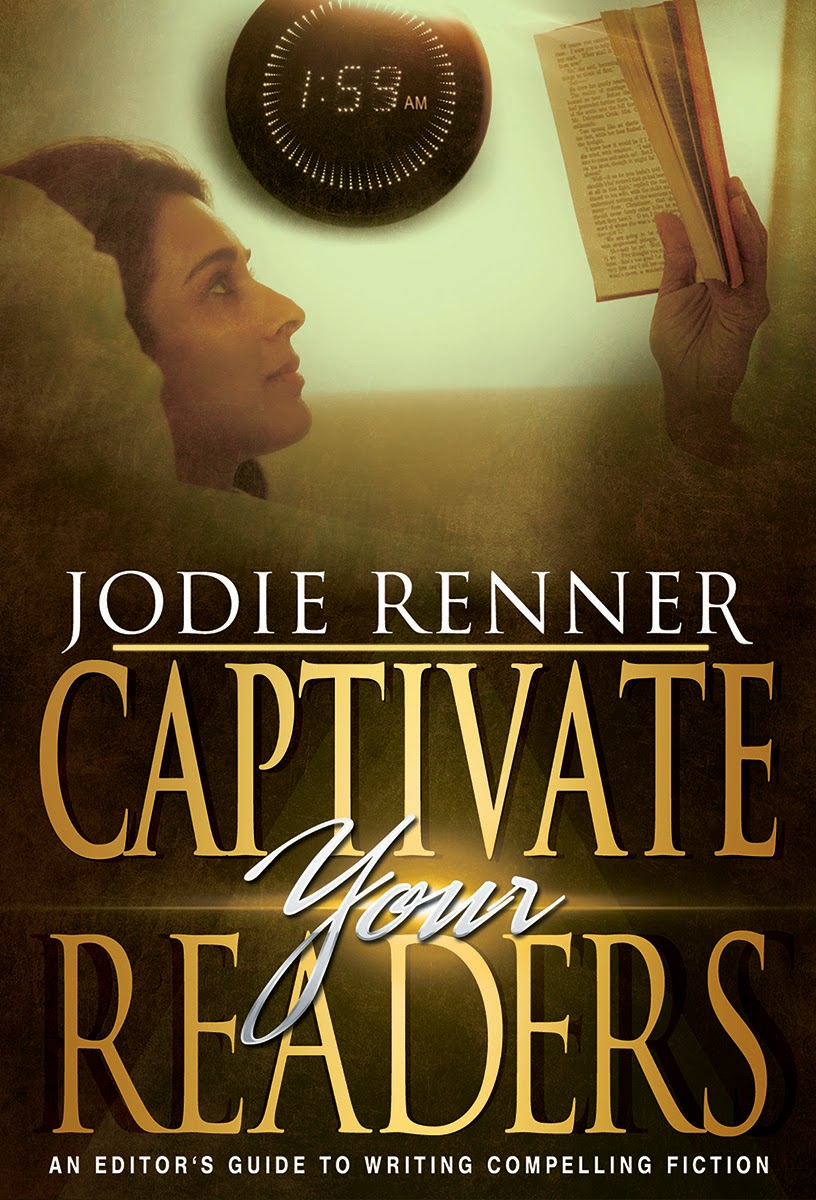
Jodie Renner is a freelance fiction editor and the award-winning author of three craft-of-writing guides in her series An Editor’s Guide to Writing Compelling Fiction: WRITING A KILLER THRILLER, FIRE UP YOUR FICTION, and CAPTIVATE YOUR READERS, as well as two clickable time-saving e-resources, QUICK CLICKS: Spelling List and QUICK CLICKS: Word Usage. She has also organized two anthologies for charity: VOICES FROM THE VALLEYS – Stories and Poems about Life in BC’s Interior, and CHILDHOOD REGAINED – Stories of Hope for Asian Child Workers. You can find Jodie on her Amazon Author Page, at www.JodieRenner.com, and on Facebook. 
Resource:
Sol Stein, Stein on Writing


Also, see Jodie's article, "Clear, Concise, Powerful Nonfiction Writing." - See more at: http://crimefictioncollective.blogspot.ca/2012/04/cut-clutter-and-streamline-your-writing.html#sthash.zYdkz4YA.dpuf
Resource:
Sol Stein, Stein on Writing


Also, see Jodie's article, "Clear, Concise, Powerful Nonfiction Writing." - See more at: http://crimefictioncollective.blogspot.ca/2012/04/cut-clutter-and-streamline-your-writing.html#sthash.zYdkz4YA.dpuf