Showing posts with label revision. Show all posts

Wednesday, May 12, 2021

Tricks & Tips for Catching All Those Little Typos in Your Own Work

 by Jodie Renner, editor & author  


Whether you’re writing a blog post, a magazine article, a short story, an assignment, a novel, or a nonfiction book, it’s important to go over your work several times to make sure it’s polished and flows well. No matter what your you’re writing, you’re your credibility will be eroded if readers find mispelled misspelled words, misused words, missing or duplicate words, or other typos. 

If you plan to enter your short story or novel into a contest or query an agent, your credibility will be eroded and your reputation tarnished if the judge/reader/agent finds awkward sentences, boring word choices, missing words, extra words, or grammatical or spelling errors.

And if you're publishing your own novel or nonfiction and want to avoid annoyed readers and negative reviews, it's essential to submit a clean, polished, properly formatted book. 

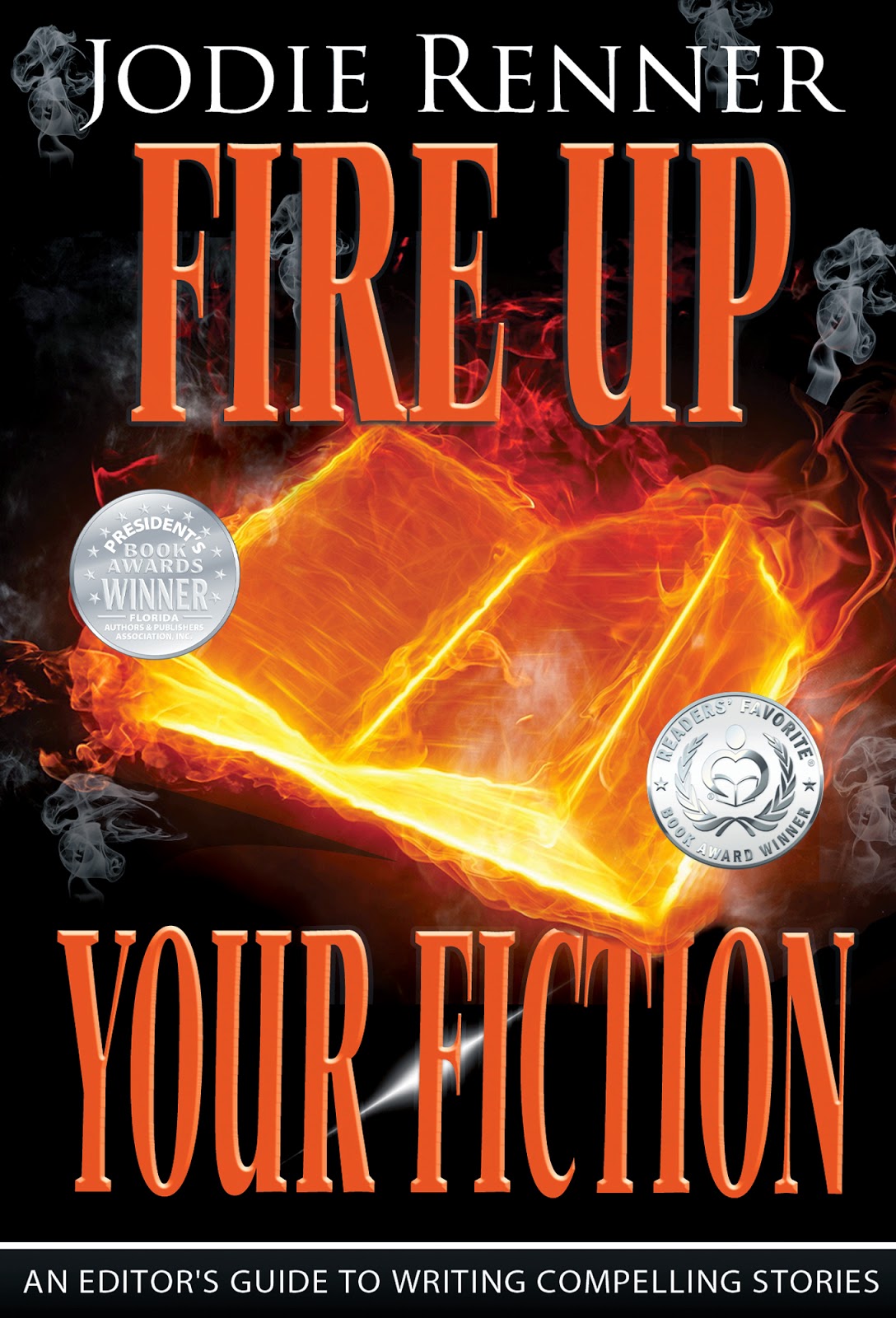
For advice on various aspects of writing, revising, and editing your fiction, you can check out my three writing guides and my many blog posts here and elsewhere. Writers find my to-the-point Fire up Your Fiction, with lots of bullet points and before-and-after examples, very helpful.

After you’ve resolved any big-picture content problems and any style issues, such as slow pacing, awkward sentence structure, or overly wordy phrasing, it’s time to go through the manuscript again for typos, spelling, and grammatical errors, including punctuation. 

My tips below will help you with the final editing and proofreading steps, smoothing out clunky sentences, cutting excess wordiness and repetition, and improving your word choices, as well as ferreting out those tiny little gremlins that escape your notice when you’re concentrating on content issues. At the bottom are links to more articles on specific topics related to revision and self-editing.

When we read our own work, we’re so familiar with what we want to say that we fill in words that aren’t actually on the page and skip over words that shouldn’t be there.

Of course, getting detail-oriented, eagle-eyed friends who are great at spelling to read your work carefully is a great option, if you know any. 

Here are some tips for fooling your brain into thinking your story is something new, something you need to read critically and revise ruthlessly before it reaches the demanding eyes of a literary agent, acquiring editor, contest judge, or picky reader and reviewer.

1. Set it aside for a while. First, if you can, put your article, blog post, or short story away for a day or two before revising and editing it, and your book manuscript away for a few weeks or more, if possible, so you can come back to it with fresh eyes and a bit of emotional distance. If you’re on a tight deadline, start at #2.

2. Start with Word’s Spell-check Editor and check those squiggly red and blue lines under words. Don’t rely entirely on spell-check, though, as it misses a lot (like the well-known laughable gaffe, “pubic” for “public”), and often flags words that will actually change something from correct to incorrect. For example, in a manuscript I edited, MS Word suggested that “I like your thinking” (as in “I like how you think”) should be “I like you’re thinking.” (Blatantly wrong for the context.) And it often suggests the wrong its/it’s, and misses all kinds of typos in manuscripts I edit, like “crowed” for “crowded,” “father” for “farther,” “county” for “country,” and “manger” for “manager.” So definitely don’t trust spell-check blindly.

4. Do a search (“Find”) for words you know how to spell but tend to spell wrong when you’re in a hurry, especially ones spell-check often won’t flag, like “you” for “your,” “the” for “their,” “your” for “you’re,” and “there” for “they’re” or “their.”

5. Maybe invest in grammar and spelling software, such as Grammarly, ProWritingAid, or AutoCrit. Here's a recent (2021) article on the Best Grammar Checkers and Editing Tools.

Then choose some of the following strategies, which are also excellent for picking up on clunky sentences, awkward phrasing, repetition, and wordiness.

Increase the size of the type to 140% -180%, by clicking on the + sign at the bottom right of the document.

Change the font to one that looks quite different to fool your eyes and brain into thinking this is new material you’ve never read (or thought of) before, so you need to pay close attention. Try Comic Sans or Franklin Gothic Book or Book Antiqua.

Format your novel to book size, like 6″ x 9″ with half-inch margins, a font like Georgia or Cambria, and single-spaced, maybe format it to two-column landscape so it looks like an open book, then, if you can afford the paper and ink, print it up and read it in a different location, somewhere you don’t write, preferably out of your home.

Send your book manuscript to your Kindle or other e-reader, then read it in a different location, preferably not at home. If you already have an e-reader, this is of course much cheaper and less wasteful than making a print copy of a whole book. Format it to book size first (6"x9", 0.5" margins, indents of 0.2" or 0.3"), then send it to your Kindle email account as an attachment.

~ Send your story to yourself and read it on your tablet or phone. Or use Word's OneDrive or another cloud option.

~ In a print version, place a ruler or piece of paper under the line you’re reading to keep from skipping ahead. Or keep your finger under each word as you read.

Read it out loud. Wherever you stumble, your readers will, too. This will also help with punctuation. If you pause briefly, put in a comma. If you pause for longer, put in a period. 

Get your computer to read passages aloud to you, while you follow along. This will help you hear errors you may not catch otherwise. To enable text-to-speech in Word: First, add “Speak” to the Quick Access Toolbar: Along the very top above “File,” the blue line that starts with W for Word (or “Autosave” or the “Save” icon), go to the far right to find the small down arrow. Click that. It will say “Customize Quick Access Toolbar.” Click “More Commands.” In the “Choose Commands” from the list, select “All Commands.” Scroll down to the “Speak” command, select it, and then click “Add.” Click “OK.” When you want to use the text-to-speech command, you’ll use the icon on the Quick Access Toolbar, which looks like a square speech bubble on a cartoon. To hear some text read aloud, turn on your speaker, highlight the paragraph or chapter you want to hear aloud, then click the Speak icon on the toolbar. To stop it, click the icon again.

Follow along the text while listening to the text being read aloud. Stop it whenever you need to add, delete, fix, or change a word or smooth out awkward phrasing.

~ For final proofreading for little typos, you could try this: Read the whole thing backwards or upside down (!). I’ve heard these suggestions, but haven’t actually done this myself, and probably won’t.

~ If you’re self-publishing, get a pre-publication sample book printed by Amazon or Ingram Spark and read it somewhere else, preferably away from your home, like in a coffee shop, a park, or the beach. This makes a huge difference  you're approaching the book as a reader, not the writer. I read all three of my writing guides in book form, pen in hand, while away on vacations, and I caught all kinds of repetitions, sentences that didn’t flow as well as they could, were too wordy, or generally needed polishing, etc., as well as the odd typo.

~ I also recommend my two quick, clickable e-resources to help you verify spelling and word choices: QUICK CLICKS: SPELLING LIST – Commonly Misspelled Words at Your Fingertips, and QUICK CLICKS: WORD USAGE – Precise Word Choices at Your Fingertips. Click on the titles to check them out. These handy resources will save you tons of time looking up words in the dictionary, and every word is verified as correct. (They're perfect for viewing on computers, laptops, tablets, or e-readers but don't work on small screens like phones.)

Also, check out these articles for more specific help:


Writers – do you have any questions or other strategies to add for catching all those little typos lurking in your manuscript? Let us know what works for you in the comments below. (Your comment will not appear instantly  it will need to be approved first.)

Jodie Renner is a freelance fiction editor and the award-winning author of three writing guides in her
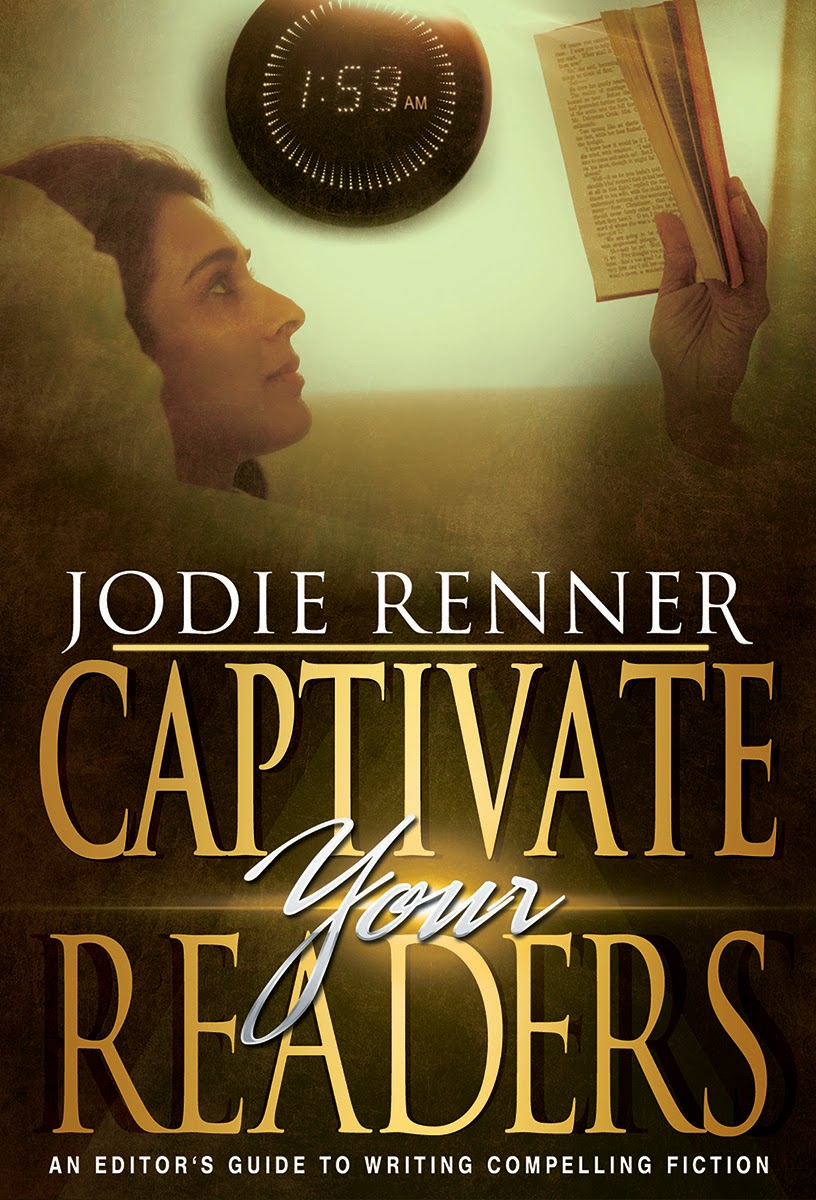
series An Editor’s Guide to Writing Compelling Fiction: FIRE UP YOUR FICTION, CAPTIVATE YOUR READERS, and WRITING A KILLER THRILLER, as well as two clickable time-saving e-resources, QUICK CLICKS: Spelling List and QUICK CLICKS: Word Usage. She has also organized and edited two anthologies. Website: https://www.jodierenner.com/, Facebook, Amazon Author Page

Friday, May 7, 2021

How Will Your Story Rate in a Contest? Evaluation Criteria

by Jodie Renner, editor & author

How do you think your unpublished novel or short story would rate in a writing contest? Do you think it's ready to send to a literary agent? And how will your readers react to it, once it's published? Will it get a thumbs-up or a thumbs-down? 

Here's a list of MANUSCRIPT EVALUATION CRITERIA to guide you, point by point, before submitting your story to a contest, editor, or agent (or publishing it yourself).

I was recently asked to read and review the first 50 pages of some unpublished novels that had been submitted to a well-respected contest. Below are the criteria I was sent, with a few points I've added myself. 

These questions will also help anyone wanting to publish their novel (or short stories) themselves, send it to an editor, or pitch it to an agent or publisher. 

Ask some friends, your critique group, or some other savvy beta readers (who read avidly in your genre) to read your first 10-30 pages and reply to these questions. Then collect their responses to see how your novel or short story would measure up to contest judges, agents, or readers. Then it's likely time to do some revising, editing, and polishing before submitting.

1. Intro/Beginning:       

- Does the opening hook you in?

- Is tension established early on?

- Is there too much backstory in a lump? Or maybe too little information provided?

- Does the beginning compel you to keep reading?


2. Characters:

- Can you identify with the main character? Do you care what happens to him/her?

- Is the protagonist interesting and complex, with some desires, secrets, and regrets?

- How well are the characters developed?

- Does each character feel unique? Or are they run-of-the-mill, flat, or stock characters?

- Are extraneous characters bogging down the story?


3. Grammar, Sentence Structure, Mechanics:

- Does the author have a strong command of spelling, grammar, punctuation, and mechanics, or will he/she require significant editing help?

- Does the author vary sentence structure to create rhythm, or does the writing feel monotonous?

- Does the writing meander or go on and on? Does it need tightening up to get to the point?


4. Setting:

- Does the author treat setting like an afterthought, or has it been given an attentive eye?

- Does the story have a real sense of place?

- Does the author get too hung up on describing setting when it is not integral to the progression of the story?

- Is the setting shown from the viewpoint of the character, and does it include sensory elements and character physical reactions to it?


5. Dialogue:     

- Does the dialogue seem natural, organic? Does it seem forced?

- Does it drive the story forward or simply fill space?

- Do the characters use many clichés?

- Are conversations interesting or are they too mundane?


6. Premise/Plot/Pacing/Conflict/Tension:

- Does the basic premise of the story make sense, and is it believable within the story’s context? 

- Does the story move along at a good pace? Do things drag on too long, or get passed by too quickly?

- Does there seem to be something really at stake throughout?

 - Does tension drive the story forward, or does it fizzle out and fall by the wayside?


7. Voice:

- Does character voice feel unique? Does it feel apropos to the character’s nature and background?

- Does the authorial voice tell too much instead of showing?

- Could the story work better with a different POV?

- Is the authorial voice unique, or does it feel like a regurgitation of similar works?

Once you and your volunteer readers have examined your story with these elements in mind and you've done any needed revisions, your novel or short story should be much closer to being ready to send to an editor, contest, agent, or publisher.

Good luck!

I could add more points/questions but don't want to overwhelm you. How about you? Can you suggest a point or two that should be added? Let me know in the comments below. (Comments will appear after being approved.)


Jodie Renner is a freelance fiction editor and the award-winning author of three writing guides in her series An Editor’s Guide to Writing Compelling Fiction: FIRE UP YOUR FICTION, CAPTIVATE YOUR READERS, and WRITING A KILLER THRILLER, as well as two clickable time-saving e-resources, QUICK CLICKS: Spelling List and QUICK CLICKS: Word Usage. She has also organized and edited two anthologies. Website: www.JodieRenner.com, Facebook, Amazon Author Page.


Tuesday, September 10, 2019

A Checklist for Submitting Your Short Story to Anthologies and Contests

A glimpse into the minds of acquiring editors and judges for short (or any) fiction

by Jodie Renner, editor & author 

Have you tried your hand at writing short stories yet? If not, what’s holding you back? As award-winning blogger Anne R. Allen said in an excellent article in Writer’s Digest magazine, “Bite-sized fiction has moved mainstream, and today’s readers are more eager than ever to ‘read short.’” To check out Anne’s “nine factors working in favor of a short story renaissance,” see “9 Ways Writing Short Stories Can Pay off For Writers“, and there’s more in her post, "Why You Should be Writing Short Fiction."

Here’s another Argument for Writing Short Stories, by Emily Harstone.  She says, “Writers who are serious about improving and developing their craft should write short stories and get editorial feedback on them, even if they are never planning on publishing these short stories. Short stories are one of the best ways to hone your craft as a writer.”

Okay, you’ve decided to take the plunge and craft a few short stories. Good for you! Next step: Consider submitting some of them to anthologies, magazines, or contests. But wait! Before you click “send,” be sure to check out my 33 Tips for Creating a Short Story Worthy of Contests, Magazines, and Anthologies, then go through your story with these tips in mind and give it a good edit and polish – possibly even a major rewrite – before submitting it.

What are some of the common criteria used by publications and contests when evaluating short story submissions?

I have served as judge several times for Writer’s Digest Popular Fiction Contest, where I had to whittle down 140 or more entries (for the thriller category alone) to 10 finalists, but I wasn’t provided with a checklist or any specific criteria. However, a friend who regularly submits short stories to anthologies, magazines, and contests recently received a polite rejection letter from the editor of a literary magazine, along with a checklist of possible reasons, with two of them checked off specifically relating to her story.

While useful, the list of possible weaknesses is very “bare bones” and cries out for more detail and specific pointers. Editors, publishers, and judges are swamped with submissions and understandably don’t have time to give detailed advice for improvement to all the authors whose stories they turn down.

Here’s the list my friend received, with my comments below each point.

Checklist from a Publisher/Editor/Publication in Response to Short Story Submissions

“Thank you for submitting your short story to …. We’ve given your work careful consideration and are unable to offer you publication. We do not offer in-depth reviews of rejected submissions, due to time constraints. Briefly, we feel your submission suffered from one/several of the following common problems:”

“Tone or content inappropriate for…” (publisher / publication / anthology / magazine)
Check their submission guidelines and read other stories they’ve accepted to get an idea of the genre, style, tone, and content they seem to prefer.

“Stylistic and grammatical errors; too many typos”

Be sure to use spell-check and get someone with strong skills in spelling, grammar, punctuation, and sentence structure to check it over carefully for you. Read it out loud, and where you pause briefly, put in a comma. Where you pause a little longer, put in a period. You could also try using editing software or submit it to a professional freelance editor. This last choice has the most likelihood of helping you hone your fiction-writing skills.

“Structure problems”

For a novel, this could mean some chapters could be rearranged, shortened, or taken out. For a short story, it could mean the time sequencing is strange; you've started too early, too late, or in the middle; or perhaps you have too many characters or too many plot lines. Or perhaps you've interrupted the story by dumping in a lot of backstory or explanations.

“Formatting problems made reading frustrating”

Be sure your story is in a common font, like Times New Roman, 12-point, and double-spaced, with only one space after periods and one-inch margins on all four sides. Don’t boldface anything or use all caps. For more white space and ease of reading, divide long blocks of text into paragraphs. Start a new paragraph for each new speaker. Indent paragraphs, but not by clicking on the space bar. Use Word's paragraph function. Don’t use an extra line space between paragraphs. Use italics sparingly for emphasis. For more specifics on formatting, see “Basic Formatting of Your Manuscript (Formatting 101)”.

“Characters were problematic/unbelievable/unlikeable”

Your characters’ decisions, actions and motivations need to fit their goals, personality, background, and character. And make sure your protagonist is likeable, someone readers will want to root for.

“Content and/or style too well-worn or obvious”

This likely refers to a plot that’s been done a million times, with cookie-cutter characters and a predictable ending.

“Word choice needs refinement”

This one could cover the gamut from tired, generic verbs like walked, ran, saw, looked or overused adjectives like nice, good, bad, old, big, small, tall, short; to inadvertently inserting light-hearted words at a tense time or vice-versa; to using overly formal, technical, or esoteric words where a concrete, vivid, immediately understandable one would be more effective; and more.

“Overbearing or heavy-handed”

This probably refers to a story where the author’s agenda is too obvious, too hard-hitting, maybe even a bit “preachy,” rather than subtle, allowing the reader to draw their own conclusions.

“Nothing seems to have happened”

This likely indicates no critical problem or dilemma for the protagonist, not enough meaningful action and change, and insufficient conflict and tension.

“Strong beginning, then peters out”

This is an indicator that your plot needs amping up and you need to add rising tension, suspense, and intrigue to keep readers avidly turning the pages. Also, flesh out your characters to make them more complex. Give your protagonist secrets, regrets, inner conflict, and a strong desire that is being thwarted.

“Needs overall development and polish.”

This indicates you likely need to roll up your sleeves and hone your writing skills. Read some writing guides, like my award-winning editor's guides to writing compelling fiction, Captivate Your Readers, Fire up Your Fiction, or Writing a Killer Thriller. Also, read lots of highly rated published short stories, paying close attention to the writers’ techniques. Here’s where a critique group of experienced fiction writers or some savvy beta readers or a professional edit could help.

“We didn’t get it.”

This is a catch-all category that means the story didn’t work for a number of reasons. This could be an indicator to put this story aside and hone your craft, critically read other highly rated stories in your genre, then, using your new skills, craft a fresh story.

“While all of these criticisms open doors to further questions, we regret that we cannot be more constructive….”

That’s understandable. They just don’t have time to critique or mentor every writer who contacts them. But I hope my comments above help aspiring fiction writers hone your craft and get your stories published – or even win awards for them. Good luck! For tips on how to actually submit, check out “Writing Short Stories? Don’t Make These 4 Submission Mistakes."

Jodie Renner is a freelance fiction editor and the award-winning author of three craft-of-writing guides in her series An Editor’s Guide to Writing Compelling FictionWRITING A KILLER THRILLER, FIRE UP YOUR FICTION, and CAPTIVATE YOUR READERS, as well as two clickable time-saving e-resources, QUICK CLICKS: Spelling List and QUICK CLICKS: Word Usage. She has also organized two anthologies for charity: VOICES FROM THE VALLEYS – Stories and Poems about Life in BC’s Interior, and CHILDHOOD REGAINED – Stories of Hope for Asian Child WorkersYou can find Jodie on her Amazon Author Page, at www.JodieRenner.com, and on Facebook. 

Tuesday, September 3, 2019

Cut the Clutter and Streamline Your Writing

- Part I  

Excerpted from Fire up Your Fiction - An Editor's Guide to Writing Compelling Stories

by Jodie Renner, editor & author 

In my editing of fiction manuscripts, it seems one of my most important jobs is to help my clients streamline their writing so the ideas flow more smoothly.

I’m talking about those extra words that aren’t needed to enhance the mood, plot or characterization, or bring the story to life; the clutter of words that are getting in the way of the imagery and story and slowing down the pace.

Think of a flower garden that is stifled by weeds to the point where you can’t see the flowers. Or a cluttered basement or workshop, where you can’t find the things you really need. The good stuff gets lost, or at least difficult to find among all the junk.

So once you’ve gotten through your first draft, it’s important to go back in and cut down on wordiness and redundancies in order to make your story more compelling, pick up the pace, and increase the tension and sense of urgency.

But of course, don’t throw the baby out with the bath water—no need to make your style so laconic that you’ve sucked the life and voice out of it. Keep all those juicy words and phrases that set the tone, portray your voice and attitude, add atmosphere, provide sensory details, deepen your characters, add to the suspense and intrigue, and so on. Just cut out the excess blah-blah and leave the gems behind.

Sol Stein calls this important part of the editorial process “liposuctioning the flab.” As he says, “Flab is the enemy of every writer. Superfluous words and phrases soften prose. […] Flab, if not removed, can have a deleterious effect on the impatient reader, who will pay less attention to each word and begin to skip….” After you go through and cut the flab, the remaining text will be much stronger and more compelling.

Here’s some clutter to look for and expel, so the readers have nothing between them and your story:

First, take out any words, sentences, or paragraphs that are unnecessary, impede the flow of ideas, and slow the pace down. Search and destroy all those little words and phrases that just clutter up your sentences, adding nothing.

Here are some examples from my editing. I’ve changed the details to provide anonymity.

Before: They slept each night in the cheap motels located less than a mile’s drive from the interstate.

After: They slept each night in cheap motels just off the interstate.


Before: “You must never touch anything in this room if I don’t tell you to or if I haven’t given permission.”

After: “You must never touch anything in this room without my permission.”

Even better: “Do not touch anything in this room without my permission.”

Or even: "Do not touch anything in this room."


Before: The captain often asked a question of his men without really wanting their opinion. It was his way of providing a sense of democracy to his leadership style, when in actuality there was none.

After: The captain often posed questions of his men without really wanting their opinion. It was his way of pretending his leadership style was democratic.


Before: Jason motioned to a particular number in the middle of the spreadsheet that Tom currently had on the computer screen.

After: Jason motioned to a number in the middle of the spreadsheet on the screen.

Or: Jason pointed to a number in the middle of the spreadsheet.

Or even better: Jason pointed to a number on the spreadsheet.


Take out empty, filler words like “It was,” “there was,” and “there were”:

Before: There was a long scar just above both eyebrows that gave him a sinister look.

After: A long scar above his eyebrows gave him a sinister look.

Even better: A long scar on his forehead gave him a sinister look.


Unnecessarily wordy: I headed down a rickety set of wooden steps to the basement. There was a dim light ahead in the hallway. To the right there were cardboard boxes stacked high. To the left, there was a closed door with a padlock. Suddenly, I heard muffled sounds. There was someone upstairs.

Much tighter: I headed down a rickety set of wooden steps to the dimly lit basement. To the right, cardboard boxes were stacked high. To the left, I saw a closed door with a padlock. Suddenly, I heard muffled sounds. Someone was upstairs.

I could play around with this some more, but you get the picture.

So, avoid cluttering up sentences and paragraphs with little words and phrases that aren’t needed and impede the natural flow of ideas:

Before: Admiral Paul McLean strode into the room. A four-star admiral who currently was commander of the US Special Operations Command located in Tampa, Florida, McLean directed all the Special Forces throughout the military from the Green Berets to the Navy SEALs.

After: Admiral Paul McLean strode into the room. A four-star admiral and commander of US Special Operations in Tampa, McLean directed all the Special Forces, from the Green Berets to the Navy SEALs.

In Part II, we’ll examine more ways of streamlining your language to make your message more compelling, such as cutting way back on adverbs, reducing the number of adjectives, avoiding repetitions, and trimming or deleting paragraphs that don’t drive your story forward.

Click HERE for options to receive email alerts of new posts published on this blog.

Jodie Renner is a freelance fiction editor and the award-winning author of three craft-of-writing guides in her series An Editor’s Guide to Writing Compelling FictionWRITING A KILLER THRILLER, FIRE UP YOUR FICTION, and CAPTIVATE YOUR READERS, as well as two clickable time-saving e-resources, QUICK CLICKS: Spelling List and QUICK CLICKS: Word Usage. She has also organized two anthologies for charity: VOICES FROM THE VALLEYS – Stories and Poems about Life in BC’s Interior, and CHILDHOOD REGAINED – Stories of Hope for Asian Child WorkersYou can find Jodie on her Amazon Author Page, at www.JodieRenner.com, and on Facebook. 
Resource:
Sol Stein, Stein on Writing


Also, see Jodie's article, "Clear, Concise, Powerful Nonfiction Writing." - See more at: http://crimefictioncollective.blogspot.ca/2012/04/cut-clutter-and-streamline-your-writing.html#sthash.zYdkz4YA.dpuf
Resource:
Sol Stein, Stein on Writing


Also, see Jodie's article, "Clear, Concise, Powerful Nonfiction Writing." - See more at: http://crimefictioncollective.blogspot.ca/2012/04/cut-clutter-and-streamline-your-writing.html#sthash.zYdkz4YA.dpuf

Sunday, November 16, 2014

QUICK CLICKS: WORD USAGE and QUICK CLICKS: SPELLING LIST both $0.99!


I've been busy creating a new series of handy, clickable e-resources for writers, editors, students, teachers, instructors, journalists, bloggers, and anyone else with a writing project on the go. I just published the second one last Wednesday, and yesterday, I decided to play around with the titles to re-brand them a bit. (Until yesterday, they were called Grammar on the Go and Spelling on the Go.)

So far, two e-books in the series are out: Quick Clicks: Spelling List - Commonly Misspelled Words at Your Fingertips and Quick Clicks: Word Usage - Style and Usage Tips for Writers and Editors. And to introduce the second one, I've just put them both on sale for $0.99 each, tonight through Tuesday, Nov. 18. Click on the titles to go to the e-resources on Amazon.com. I'll list the links below for Amazon.ca and Amazon.co.uk, where they're also on sale for the equivalent of 99 cents USD.


Why more spelling, word usage, and grammar resources? Because these are designed to be super quick and easy to use, so they'll save you a lot of time - and you can rest assured that the information presented is well-researched and accurate.

At the beginning of each guide is a bank of letters like this, only with live links to small groups of words or terms in the document that start with those 2 or 3 letters:

A  ad  af  al  am  an  ap  as   Ba  be  bi  bo  br  bu   Ca  ce  ch  ci  co  com  con  cr   Da  de  di  dr   Ea  ef  em  en  ev  etc.

You click on a pair of letters and you jump right to the words starting with those two (or three) letters. Then on every page is a link to get you back "Home" or to the "Key" to look for another word or term.
The idea is to have the e-resource on your computer, e-reader, tablet, or phone beside you, or the PDF up on your computer, behind or beside your WIP, and just click to the word or term, check it, then get back to your writing project within seconds.
 
You can buy the PDF for $2.99 ($1.50 during this sale) by contacting Jodie Renner at info (at) JodieRenner (dot) com. You'll need a PayPal account, but they're very easy to set up.
 
If you click on the links to Amazon, you can open the book and preview the first 10 pages or more to check them out.
 
Spread the word about this great sale, as it's only for two days!


Quick Clicks: Spelling List on Amazon.co.uk  (0.77)

And suggestions welcome for more words and terms to include in updated editions! Please add any suggestions or comments below. Thanks!
 Besides publishing her popular craft-of-writing books under the series, An Editor’s Guide to Writing Compelling Fiction, the award-winning Fire up Your Fiction and Writing a Killer Thriller (and the upcoming Captivate Your Readers), as well as her handy, clickable e-resources, Quick Clicks: Spelling List – Commonly Misspelled Words at Your Fingertips and Quick Clicks: Word Usage – Style and Usage Tips for Busy Writers and Editors, Jodie Renner is a sought-after freelance fiction editor and author of numerous blog posts on writing captivating fiction. Jodie is also a former English (and French) teacher and has a master's degree in language and literature. Find Jodie on Facebook and Twitter.

Tuesday, January 7, 2014

30 Excellent Points to Consider as You Revise / Rewrite Your Novel

I just discovered an excellent checklist for revising / rewriting your fiction. I highly recommend you go through these points to see if any of them resonate with you in regards to your current WIP.

I tried to copy just the beginning of the list to give you a taste of it, but it would only let me copy the whole thing. It's on an excellent blog called "Writers Write." Here's the link:  http://writerswrite.co.za/rewriting-a-checklist-for-authors-1 Follow them by clicking on the links at the end.

Rewriting – A Checklist for Authors

30 questions to ask when you're revising / rewriting your novel
      

Taken from Writers Write -How to write a book. Join our Writers Write course from 13-16 January 2014 (more dates available on request). Email news@writerswrite.co.za for details.
Join us on Facebook and Twitter for daily writing tips

Follow @Writers_Write

 AND SCROLL DOWN FOR A LIST OF WRITERS' CONFERENCES & BOOK FESTIVALS IN 2014.

Sunday, August 25, 2013

REVISE FOR SUCCESS - A Stress-Free, Concrete Plan of Action for Revising, Editing, and Polishing Your Novel


by Jodie Renner, editor & author

New authors often underestimate the importance of revising your novel before publishing. As Ernest Hemingway said, “The first draft of anything is sh*t.” While the first draft of your novel is definitely not crap, it’s likely a long way from being as powerful and compelling and polished as it could be.

But where to start and how to proceed? A lot of writers feel overwhelmed about the revision and self-editing process as it just seems too daunting a task. The best thing to do is break it down into specific tasks. But to save time, energy, and frustration, the order of the tasks is critical. There’s no point in spending hours polishing up a scene or chapter if you later realize that scene/chapter doesn’t drive the story forward so it needs to be cut -- or at least significantly rewritten.
First, put your story aside for at least a week – two or three weeks or a month is even better.

Try not to think about it during that time. Focus on other things and just let it percolate in the back of your mind. Maybe have beta readers (savvy volunteer readers who don’t need to be writers) go through it and comment on what excited them, bored them, or confused them.

Then:
STEP 1. LOOK AT BIG-PICTURE ISSUES: premise, plot, POV, structure, characterization, pacing.
- Does the main premise your story is built on stand up to scrutiny? Will it actually work? Ask a few smart trusted friends if they think your main story idea/challenge/obstacle/dilemma is logical and believable. If not, revise it so readers won’t pick it apart later - in negative reviews. An example of this might be in a romance where the main obstacle keeping the heroine and hero apart is a simple misunderstanding that could be resolved by a quick conversation or even basic reasoning - that kind of skimpy premise will irritate readers rather than intrigue them.
 
- Is your plot interesting enough? Does your protagonist have strong motivations and a clear, critical goal? What’s preventing him/her from reaching this goal? Is there enough at stake? Enough conflict and tension?
 
- Is your main character multidimensional or flat like cardboard? Is he charismatic and appealing, with inner conflict and some regrets and baggage? In other words, interesting enough to hold readers’ attention through a whole novel? And do his decisions and actions fit with his personality, goals, and motivations? See my article, Creating Compelling Characters.

- Ditto with other important characters. Go for contrast among the main characters.

- POV: Are you staying firmly in the point of view of the viewpoint character for each scene? Or are you hovering above or head-hopping? See my posts on point of view:

~ POV 101: Get into Your Protagonist’s Head and Stay There (for most of the novel)

~ POV 102 – How to Avoid Head-Hopping

~ POV 103 – Engage Your Readers with Deep Point of View
 
- What about structure and the order of chapters and scenes? Create a scene outline, with just a few words about each chapter or scene. Include the POV character for each scene and the main conflict or source of tension for that scene, and what changes in that scene. Cut them apart and play with the order of them. Be sure to save the biggest conflict/dilemma the MC faces for the climax. 

- Length: If your story is over 90,000 words, look for ways you can tighten it. Maybe your writing style is rambling and overly wordy, or you have too many characters or too many sub-plots. Or too much time spent on transitions and quiet scenes where not much happens. Spark up or delete any parts that seem boring or repetitive. For concrete tips on tightening up your story without losing any of the good stuff, see my post, How to Slash Your Word Count by 20-40%.

If your writing style is sparse, show important scenes through action, reactions, dialogue, and thoughts, instead of summarizing or telling, and add sensory details, visual clues, and character reactions.
 
- Are there chapters or scenes that drag, that could be condensed or eliminated? Every scene needs conflict and a change. If a scene doesn’t drive the plot forward or contribute to characterization, revise it, shorten it, or take it out.
 
- Is your opening compelling? Does it hook the reader, and situate them as to whose story it is (best to start out in the point of view of the main character right away) and where and when it's taking place? Should you start your story later? Or earlier?
 
- Are there places where the writing gets bogged down in explanations, description or backstory ("info dumps")? Trim these way down. Avoid interrupting the story to explain things to the readers.
 
- Are you telling the reader about important scenes instead of showing them in real time, with action, reaction, and dialogue? When it comes to important scenes, “show, don’t tell.” But skip past unimportant scenes and transitions.

STEP 2. WORK ON YOUR WRITING STYLE AND PACING.

See my book, Fire up Your Fiction, for concrete tips, with examples, on revising and polishing your fiction or nonfiction writing.

- Look at your paragraphs. Do you have any really long paragraphs? Break them down into shorter ones. Have you said the same thing twice or more? Cut out the repetitions to make the original statement stronger.

- Streamline your writing. Trim down long, convoluted sentences to make them tighter and more to-the-point.

- Amp up your word choices. Use strong, specific verbs and nouns that bring the scenes and characters to life.

- Cut out most -ly adverbs and replace tired, generic verbs like “walked” and “went” with strong, specific, evocative verbs, like "stomped" or "strode" or "shuffled."

- Add in lots of character reactions and sensory details to bring your characters to life on the page.

- Does your dialogue sound natural? Read it out loud or role-play with others, each taking a character’s dialogue to read aloud. Each character should sound different, not like the author. And their speaking style should vary according to to their gender, age, background, education, social situation, personality, etc.

STEP 3. GO THROUGH THE REVISED COPY FOR A FINAL PROOFREADING.

This is the last step. You’re wasting your time if you do this too early, and you’re wasting your money if you pay anyone for proofreading or a light final edit before you’ve eliminated or condensed unneeded or boring chapters, scenes, and paragraphs, and trimmed down sentences.

Proofread for typos, spelling, punctuation, and missing words, and keep an eye out for repetitions and places where the prose lacks sparkle. You’ll catch these when you read it out loud.

To see things you’ve missed in prior passes:

- Change the font and print out your story on paper or send it to your e-reader.

- Read it in a different location than where you wrote it.

- Read it through out loud. Underline or make note of any parts where you stumble or that sound unnatural or overly wordy - that don't have an easy flow.

- To look for small errors, read through it with a piece of paper under the line, and keep moving it down. You can also try reading it from the end to the beginning, but read each sentence from beginning to end.

- Then make the changes on your Word document.

Good luck with this process! I look forward to seeing your novel in print! My award-winning writing guide, Fire up Your Fiction, is full of concrete tips for revising your novel, with lots of before-and-after examples.

Jodie Renner is a freelance fiction editor and the award-winning author of three writing guides in her series An Editor’s Guide to Writing Compelling Fiction: FIRE UP YOUR FICTION, CAPTIVATE YOUR READERS, and WRITING A KILLER THRILLER, as well as two clickable time-saving e-resources, QUICK CLICKS: Spelling List and QUICK CLICKS: Word Usage. She has also organized and edited two anthologies. Website: https://www.jodierenner.com/, Facebook, Amazon Author Page.