Showing posts with label revising. Show all posts

Thursday, April 15, 2021

How to save a bundle on editing costs – without sacrificing quality

by Jodie Renner, freelance fiction editor & craft-of-writing author

Whether you plan to publish your novel yourself, query agents, or pitch it directly to publishers, it’s highly recommended (essential, really) to get your manuscript edited by a respected freelance fiction editor who reads and edits your genre. 

Can’t afford it, you say? Realistically, if you want your novel to get accepted, sell well, and get lots of 5-star reviews, you can’t afford not to. All successful authors use editors. Read the Acknowledgments page of bestsellers  the author often thanks 3-5 editors. (Of course, the average indie author can't afford that, but at least get one!)

Editing fees vary hugely, depending on the length and quality of the manuscript and how much work is needed to take it from “so-so” or “pretty good” to a real page-turner that engages readers, sells well, and garners great reviews. 

Before approaching an editor, it's important to be sure your story is already as tight and compelling as you can make it – and that it’s under 100,000 words long. 70-90K is generally preferred for today’s fiction.

Here are some tips for reducing your editing costs and ensuring a much higher-quality edit and final product. Down at the bottom you'll find more specific tips for revising various aspects of your story.

Don’t be in a hurry to pitch or publish your book before it’s ready.

If you rush to publish an early draft, you could do your reputation as a writer a lot of damage. Once the book is out there and getting negative reviews, the bad publicity could sink your career before it has had a chance to take off. And you can't get those reviews deleted  they won't go away. It’s important to open your mind to the very real possibility probability that your story could use clarification, tightening,  revising, polishing, and generally sprucing up on several levels, areas that may not have occurred to you because you’re too close to the story or maybe even unaware of key techniques that bring fiction to life. 

First, of course, write freely. Then, when inspiration wanes, step back, hone your skills, and evaluate.

First, get your ideas down as quickly as you can, with no editing – write with wild abandon and let your muse flow freely. But once you’ve gotten your story down (or as far as your initial surge of creativity will take you for now), it’s a good time to put it aside for a week or three and bone up on some current, well-respected craft advice, with your story in the back of your mind. Then you can re-attack your novel with fresh ideas and inspiration, and address any possible issues you weren’t aware of that could be considered amateurish, confusing, heavy-handed, or boring to today’s sophisticated, savvy readers. 

Now’s the time to read a few books by the writing “gurus” and maybe join a critique group (in-person or online) and/or attend some writing workshops. Also, read and analyze successful novels in your genre.

Then, notes in hand, roll up your sleeves and revise your novel, based on what you’ve learned. (See link at the end to my step-by-step revision tips.)

If you then send your improved story, rather than your first or second draft, to a freelance editor, they will be able to concentrate on more advanced fine-tuning instead of just spending all their time and energy flagging basic issues and newbie-type weaknesses. 

With a cleaner, sharper copy, they'll be able to tackle more advanced issues and take your manuscript up several more levels. Not only that, if you're more informed, you’ll “get” the editor’s suggestions, so the whole process will go a lot smoother and be more enjoyable and beneficial.

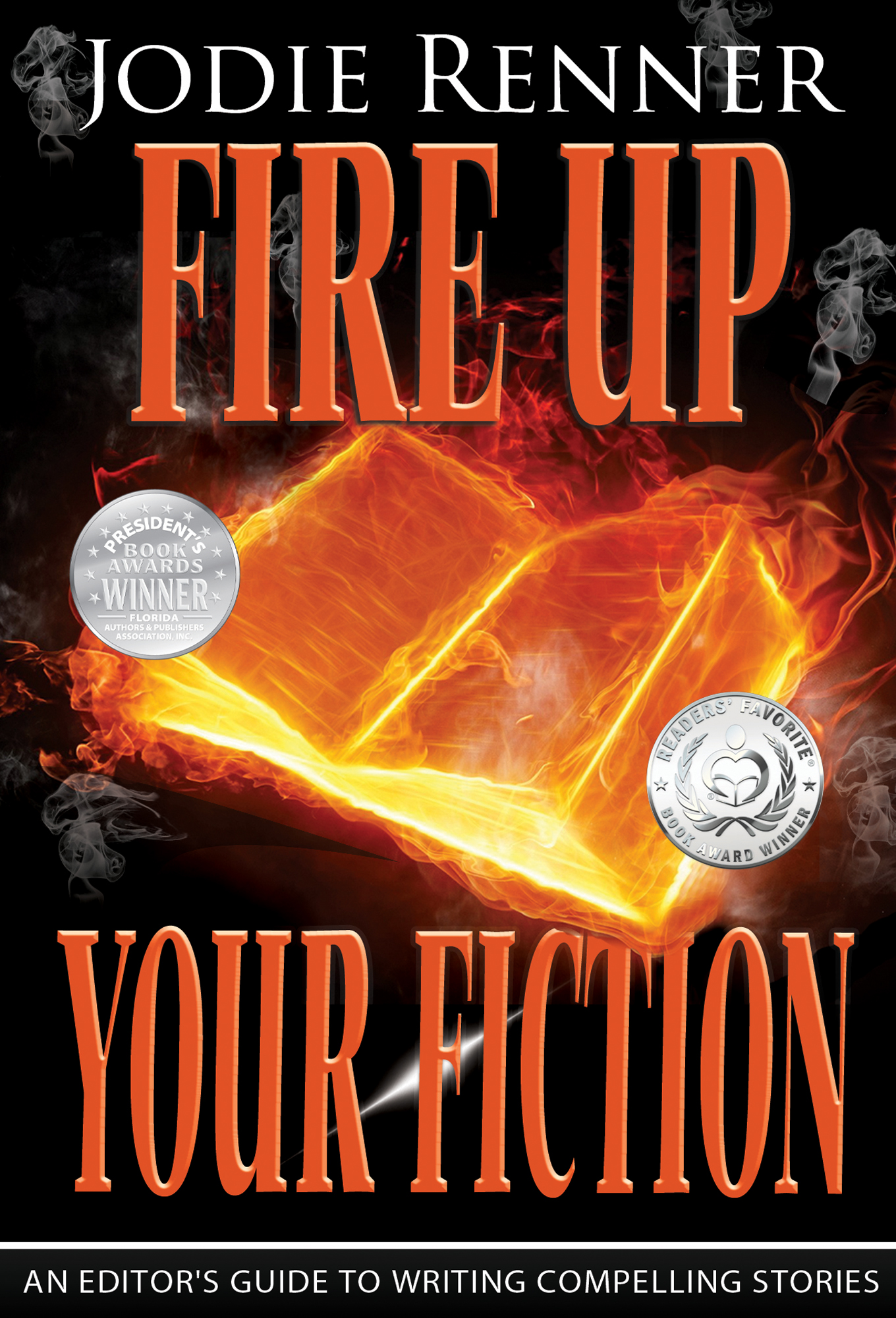
A great book to start with is my short, sweet, to-the-point, award-winning Editor’s Guide to Writing Compelling Stories,  Fire up Your Fiction. 

And for additional advice on point of view, avoiding author intrusions, and showing instead of telling, peruse Captivate Your Readers

And if you’re writing a suspenseful story or other fast-paced fiction, check out my Writing a Killer Thriller for more great tips. 

All three are available in print or e-book, which you can also read on your computer, laptop, tablet, or smartphone. 

And when it comes time to find a freelance editor, don’t shop for the cheapest one and insist that your manuscript only needs a quick final proofread or light edit.  

That approach will result in a cursory, superficial, even substandard job, like hiring a painter to paint the exterior of a house that’s falling over and needs rebuilding, and will actually end up costing you more money in the long run.

Why?

Because you could well be unaware of how many structural, content, and stylistic weaknesses your story may contain, which should be addressed and fixed before the final copyedit stage.

Paying for a basic copyedit and proofread on a long, weak manuscript, only to find out later it needs a major overhaul, which will then require rewriting and another full copyedit, is short-sighted — and money down the drain.

Is your novel more than 90-100K words long? Time to go through and tighten it up!

If your novel is a rambling 120-130,000 words long, it needs weeding of anything superfluous or repetitious. It’s very likely you need to focus your story; cut down on descriptions, explanations, and backstory; eliminate or combine some characters; maybe delete a sub-plot or two; plug some plot holes; fix point-of-view issues; pick up the pace, make your dialogue snappier; and turn those long, meandering sentences and paragraphs into lean, mean, to-the-point writing.

Not only will this process make your story much stronger and more captivating, but it will save you a bundle on editing costs, since freelance editors charge by the word, the page, or the hour, and editing your 80 or 90,000-word, tighter, self-edited and revised book will cost you a whole lot less than asking them to slog through 120-130K words written in rambling, convoluted sentences.

Is your novel too long? Check out these practical tips:

 ~ How to Slash Your Word Count by 20-40% …and tighten up your story without losing any of the good stuff!


Your story may even need a structural or developmental edit.

If you’re at the stage where you know it’s not great, but you’re too close to your story to pinpoint the weaknesses, perhaps you should hire a developmental editor or book coach to stand back and take a look at the big picture for you and give you a professional assessment of your manuscript’s strengths and weaknesses. 

Or if you can’t afford a developmental editor, try a critique group or 3-6 beta (volunteer) readers – smart acquaintances who read a lot in your genre – to give you some advice on your story line and characters and flag any plot holes or spots where the story lags or is confusing or illogical, or they can't warm up to the character.  Here is a list of questions to ask your beta readers.

Enlist help to ferret out inconsistencies and inaccuracies.

You don’t want to lose reader trust and invite bad reviews by being careless about facts and time sequences, etc., either. Find a critique partner or an astute friend or two with an inquiring mind and an eye for detail and ask them to read your story purely for logistics. Do all the details make sense? How about the time sequences? Character motivations? Accuracy of information?

For technical info, do your research or try to find an expert or two in the field, and rather than asking them to plow through your whole novel, just send them the sections that are relevant to their area of expertise. 

It’s even possible that you’ve based your whole story premise on something that doesn’t actually make sense or is just too far-fetched, and the sooner you find that out the better!

Read it aloud.

Read your whole story out loud to check for a natural, easy flow of ideas, in the characters’ vernacular and voice, which of course need to suit the tone, mood, and situation. This part of the process should also help you cut down on awkward sentences, confusing wording, and overall rambling / wordiness, all of which will turn agents and readers off. 

Run it through grammar check and spell-check. 

Or get someone you know who's good at that to go through it for you. Of course, you and they need to keep in mind that fiction is usually written in casual language, with lots of contractions, and the dialogue is often in incomplete sentences, with colloquial and sometimes profane language.

The more advance work you do, the less you’ll pay for editing.

So, to save money and increase your sales and royalties, after writing your first or second draft, it’s critical to hone your fiction-writing skills and go through your manuscript several more times and enlist some beta readers to give you feedback before sending it to an editor. 

Also, be sure to find an editor who specializes in fiction and edits your genre, and get them to do a sample edit (free or paid) of at least the first four or five pages. 

(See my article, “Looking for an editor? Check them out very carefully!”

Many editors, including myself, will offer a detailed edit and critique of the first few chapters (not free, of course, and you need to send them a brief synopsis, too, so they'll know what the story is about). I highly recommend you start with that introductory edit. This is often a huge eye-opener for the author and money extremely well-spent, as you can then use their suggestions to revise the rest of the novel before getting them (or another editor) to go through the rest, at a  possibly significantly  lower rate because it will now be cleaner, tighter, and more polished. 

And don’t make your main priority finding the cheapest editor, as they may be just starting out and unaware of important fiction-writing issues that should be addressed, such as point of view, showing instead of telling, and avoiding info dumps and other author intrusions. 

And whatever you do, don’t tie the editor’s hands by insisting your manuscript only needs a light edit, because that’s cheaper. 

You could well end up paying for that uninformed, “cheap” light edit on an overlong, weak manuscript, then discovering that the story has big issues that need to be addressed and requires major revisions, including slashing and rewriting. Then you’ll have to pay for another complete edit of the new version! $$ multiplied!

Speaking as a professional editor with 13 years of experience, I have found that often, new writers are unaware of weaknesses in their novels, issues that can cause rejections or that readers will catch and complain about. You don’t necessarily know what you don’t know.

Also, check out the editor's guidelines and be sure to send them what they need, including the genre, a brief synopsis (story line), and brief character descriptions. 

And be sure to format your novel properly before sending it to an editor or agent: 

Times New Roman, 12-point, double-spaced, left-justified, paragraphs indented, no extra space between paragraphs, and one space (not two) between sentences. And don't use Tab or the space bar for indents  that causes headaches. Use the Paragraph function to do it properly. 

For more specific tips, see my article, Basic Formatting of Your Manuscript.

Check out these other articles by Jodie for lots of concrete tips on revising and tightening your novel (Click on the titles below):

REVISE FOR SUCCESS – A Stress-Free, Concrete Plan of Action for Revising, Editing, and Polishing YourNovel

Is your novel more than 90K words?

 ~ How to Slash Your Word Count by 20-40% …and tighten up your story without losing any of the good stuff!

~ 15 Questions for Your Beta Readers -- and to focus your own revisions

And a handy alphabetical spelling checklist:

~ 90+ Commonly Misused Sound-Alike Word Pairs


Jodie Renner is a freelance fiction editor and the award-winning author of three writing guides in her series An Editor’s Guide to Writing Compelling Fiction: FIRE UP YOUR FICTION, CAPTIVATE YOUR READERS, and WRITING A KILLER THRILLER, as well as two clickable time-saving e-resources, QUICK CLICKS: Spelling List and QUICK CLICKS: Word Usage. She has also organized and edited two anthologies for charity. Website: www.JodieRenner.com, Facebook, Amazon Author Page.

Thursday, October 24, 2019

16 Concrete Tips for Self-Editing

I'm over on The Kill Zone blog today, where I was a regular contributor (every other Monday) for two years, from 2013 to 2015. That award-winning blog specializes in advice for mystery and thriller writers, and I specialize in editing fast-paced suspense fiction, so it was a great fit.

Here's the beginning of my guest blog post over there today, with a link below to the rest:

16 Concrete Tips for Effectively Editing Your Own Fiction

by Jodie Renner, editor & author     
Are you relatively new at writing fiction? Perhaps you’ve shown your first (or latest) draft to beta readers and been told your premise, plot, and characterization are now pretty solid, but that your pacing is a bit slow and your writing style could use some amping up and polishing. Perhaps it’s overly wordy or just a bit pedestrian.
If so, take a break, then grab a coffee or some chocolate and start going through the whole story again, page by page, to search for any wordy, clunky, hackneyed, or lackluster phrasing and replace it with succinct, fresh, vibrant wording that will entice and delight your readers. The step-by-step list below will help you do a line-by-line self-edit to take your story up a notch or two.
If you want your popular fiction to captivate readers, sell well, and garner great reviews, ferret out and fix these 16 style weaknesses:
1. Meandering, wordy, or repetitive writing. Be on the constant lookout for anywhere you can cut down on wordiness. Don’t bore your readers by having characters going on and on. Avoid lengthy, neutral descriptions—today’s readers don’t have patience with them. And don’t say the same thing several times just to make sure readers got it. Look for areas you’re repeating yourself. Also, watch for “little word pileup.” Can you be more succinct and direct? For example, instead of “It would be a good thing for us to…,” just say “We should….” Here’s an example from my editing:
Before: The man was small and pudgy and he had a full dark beard that he nervously stroked with his hand.
After: The small, pudgy man nervously stroked his full dark beard.
2. Wishy-washy qualifiers that weaken your message. Do a search for words like quite, sort of, almost, kind of, a bit, pretty, somewhat, rather, usually, basically, generally, probably, mostly, etc., and delete almost all of them. Forget “He was quite brave,” or “She was pretty intelligent” or “It was almost scary.” These qualifiers dilute your message, reduce the impact, and make the imagery weaker. Even really and very are best avoided—it’s like you’re saying the word after it needs reinforcing. “She was beautiful” packs more punch than “She was very beautiful.”
3. ….
for the rest of this post, go to: Concrete Tips for Effectively Editing Your Own Fiction.
See you over there! I'd be delighted if you left a comment there as well. Thanks.
Jodie Renner is a freelance fiction editor and the award-winning author of three craft-of-writing guides in her series An Editor’s Guide to Writing Compelling FictionWRITING A KILLER THRILLER, FIRE UP YOUR FICTION, and CAPTIVATE YOUR READERS, as well as two clickable time-saving e-resources, QUICK CLICKS: Spelling List and QUICK CLICKS: Word Usage. She has also organized two anthologies for charity: VOICES FROM THE VALLEYS – Stories and Poems about Life in BC’s Interior, and CHILDHOOD REGAINED – Stories of Hope for Asian Child WorkersYou can find Jodie on her Amazon Author Page, at www.JodieRenner.com, and on Facebook. 

Tuesday, September 3, 2019

Cut the Clutter and Streamline Your Writing

- Part I  

Excerpted from Fire up Your Fiction - An Editor's Guide to Writing Compelling Stories

by Jodie Renner, editor & author 

In my editing of fiction manuscripts, it seems one of my most important jobs is to help my clients streamline their writing so the ideas flow more smoothly.

I’m talking about those extra words that aren’t needed to enhance the mood, plot or characterization, or bring the story to life; the clutter of words that are getting in the way of the imagery and story and slowing down the pace.

Think of a flower garden that is stifled by weeds to the point where you can’t see the flowers. Or a cluttered basement or workshop, where you can’t find the things you really need. The good stuff gets lost, or at least difficult to find among all the junk.

So once you’ve gotten through your first draft, it’s important to go back in and cut down on wordiness and redundancies in order to make your story more compelling, pick up the pace, and increase the tension and sense of urgency.

But of course, don’t throw the baby out with the bath water—no need to make your style so laconic that you’ve sucked the life and voice out of it. Keep all those juicy words and phrases that set the tone, portray your voice and attitude, add atmosphere, provide sensory details, deepen your characters, add to the suspense and intrigue, and so on. Just cut out the excess blah-blah and leave the gems behind.

Sol Stein calls this important part of the editorial process “liposuctioning the flab.” As he says, “Flab is the enemy of every writer. Superfluous words and phrases soften prose. […] Flab, if not removed, can have a deleterious effect on the impatient reader, who will pay less attention to each word and begin to skip….” After you go through and cut the flab, the remaining text will be much stronger and more compelling.

Here’s some clutter to look for and expel, so the readers have nothing between them and your story:

First, take out any words, sentences, or paragraphs that are unnecessary, impede the flow of ideas, and slow the pace down. Search and destroy all those little words and phrases that just clutter up your sentences, adding nothing.

Here are some examples from my editing. I’ve changed the details to provide anonymity.

Before: They slept each night in the cheap motels located less than a mile’s drive from the interstate.

After: They slept each night in cheap motels just off the interstate.


Before: “You must never touch anything in this room if I don’t tell you to or if I haven’t given permission.”

After: “You must never touch anything in this room without my permission.”

Even better: “Do not touch anything in this room without my permission.”

Or even: "Do not touch anything in this room."


Before: The captain often asked a question of his men without really wanting their opinion. It was his way of providing a sense of democracy to his leadership style, when in actuality there was none.

After: The captain often posed questions of his men without really wanting their opinion. It was his way of pretending his leadership style was democratic.


Before: Jason motioned to a particular number in the middle of the spreadsheet that Tom currently had on the computer screen.

After: Jason motioned to a number in the middle of the spreadsheet on the screen.

Or: Jason pointed to a number in the middle of the spreadsheet.

Or even better: Jason pointed to a number on the spreadsheet.


Take out empty, filler words like “It was,” “there was,” and “there were”:

Before: There was a long scar just above both eyebrows that gave him a sinister look.

After: A long scar above his eyebrows gave him a sinister look.

Even better: A long scar on his forehead gave him a sinister look.


Unnecessarily wordy: I headed down a rickety set of wooden steps to the basement. There was a dim light ahead in the hallway. To the right there were cardboard boxes stacked high. To the left, there was a closed door with a padlock. Suddenly, I heard muffled sounds. There was someone upstairs.

Much tighter: I headed down a rickety set of wooden steps to the dimly lit basement. To the right, cardboard boxes were stacked high. To the left, I saw a closed door with a padlock. Suddenly, I heard muffled sounds. Someone was upstairs.

I could play around with this some more, but you get the picture.

So, avoid cluttering up sentences and paragraphs with little words and phrases that aren’t needed and impede the natural flow of ideas:

Before: Admiral Paul McLean strode into the room. A four-star admiral who currently was commander of the US Special Operations Command located in Tampa, Florida, McLean directed all the Special Forces throughout the military from the Green Berets to the Navy SEALs.

After: Admiral Paul McLean strode into the room. A four-star admiral and commander of US Special Operations in Tampa, McLean directed all the Special Forces, from the Green Berets to the Navy SEALs.

In Part II, we’ll examine more ways of streamlining your language to make your message more compelling, such as cutting way back on adverbs, reducing the number of adjectives, avoiding repetitions, and trimming or deleting paragraphs that don’t drive your story forward.

Click HERE for options to receive email alerts of new posts published on this blog.

Jodie Renner is a freelance fiction editor and the award-winning author of three craft-of-writing guides in her series An Editor’s Guide to Writing Compelling FictionWRITING A KILLER THRILLER, FIRE UP YOUR FICTION, and CAPTIVATE YOUR READERS, as well as two clickable time-saving e-resources, QUICK CLICKS: Spelling List and QUICK CLICKS: Word Usage. She has also organized two anthologies for charity: VOICES FROM THE VALLEYS – Stories and Poems about Life in BC’s Interior, and CHILDHOOD REGAINED – Stories of Hope for Asian Child WorkersYou can find Jodie on her Amazon Author Page, at www.JodieRenner.com, and on Facebook. 
Resource:
Sol Stein, Stein on Writing


Also, see Jodie's article, "Clear, Concise, Powerful Nonfiction Writing." - See more at: http://crimefictioncollective.blogspot.ca/2012/04/cut-clutter-and-streamline-your-writing.html#sthash.zYdkz4YA.dpuf
Resource:
Sol Stein, Stein on Writing


Also, see Jodie's article, "Clear, Concise, Powerful Nonfiction Writing." - See more at: http://crimefictioncollective.blogspot.ca/2012/04/cut-clutter-and-streamline-your-writing.html#sthash.zYdkz4YA.dpuf

Sunday, November 16, 2014

QUICK CLICKS: WORD USAGE and QUICK CLICKS: SPELLING LIST both $0.99!


I've been busy creating a new series of handy, clickable e-resources for writers, editors, students, teachers, instructors, journalists, bloggers, and anyone else with a writing project on the go. I just published the second one last Wednesday, and yesterday, I decided to play around with the titles to re-brand them a bit. (Until yesterday, they were called Grammar on the Go and Spelling on the Go.)

So far, two e-books in the series are out: Quick Clicks: Spelling List - Commonly Misspelled Words at Your Fingertips and Quick Clicks: Word Usage - Style and Usage Tips for Writers and Editors. And to introduce the second one, I've just put them both on sale for $0.99 each, tonight through Tuesday, Nov. 18. Click on the titles to go to the e-resources on Amazon.com. I'll list the links below for Amazon.ca and Amazon.co.uk, where they're also on sale for the equivalent of 99 cents USD.


Why more spelling, word usage, and grammar resources? Because these are designed to be super quick and easy to use, so they'll save you a lot of time - and you can rest assured that the information presented is well-researched and accurate.

At the beginning of each guide is a bank of letters like this, only with live links to small groups of words or terms in the document that start with those 2 or 3 letters:

A  ad  af  al  am  an  ap  as   Ba  be  bi  bo  br  bu   Ca  ce  ch  ci  co  com  con  cr   Da  de  di  dr   Ea  ef  em  en  ev  etc.

You click on a pair of letters and you jump right to the words starting with those two (or three) letters. Then on every page is a link to get you back "Home" or to the "Key" to look for another word or term.
The idea is to have the e-resource on your computer, e-reader, tablet, or phone beside you, or the PDF up on your computer, behind or beside your WIP, and just click to the word or term, check it, then get back to your writing project within seconds.
 
You can buy the PDF for $2.99 ($1.50 during this sale) by contacting Jodie Renner at info (at) JodieRenner (dot) com. You'll need a PayPal account, but they're very easy to set up.
 
If you click on the links to Amazon, you can open the book and preview the first 10 pages or more to check them out.
 
Spread the word about this great sale, as it's only for two days!


Quick Clicks: Spelling List on Amazon.co.uk  (0.77)

And suggestions welcome for more words and terms to include in updated editions! Please add any suggestions or comments below. Thanks!
 Besides publishing her popular craft-of-writing books under the series, An Editor’s Guide to Writing Compelling Fiction, the award-winning Fire up Your Fiction and Writing a Killer Thriller (and the upcoming Captivate Your Readers), as well as her handy, clickable e-resources, Quick Clicks: Spelling List – Commonly Misspelled Words at Your Fingertips and Quick Clicks: Word Usage – Style and Usage Tips for Busy Writers and Editors, Jodie Renner is a sought-after freelance fiction editor and author of numerous blog posts on writing captivating fiction. Jodie is also a former English (and French) teacher and has a master's degree in language and literature. Find Jodie on Facebook and Twitter.