Tuesday, September 10, 2019

A Checklist for Submitting Your Short Story to Anthologies and Contests

A glimpse into the minds of acquiring editors and judges for short (or any) fiction

by Jodie Renner, editor & author 

Have you tried your hand at writing short stories yet? If not, what’s holding you back? As award-winning blogger Anne R. Allen said in an excellent article in Writer’s Digest magazine, “Bite-sized fiction has moved mainstream, and today’s readers are more eager than ever to ‘read short.’” To check out Anne’s “nine factors working in favor of a short story renaissance,” see “9 Ways Writing Short Stories Can Pay off For Writers“, and there’s more in her post, "Why You Should be Writing Short Fiction."

Here’s another Argument for Writing Short Stories, by Emily Harstone.  She says, “Writers who are serious about improving and developing their craft should write short stories and get editorial feedback on them, even if they are never planning on publishing these short stories. Short stories are one of the best ways to hone your craft as a writer.”

Okay, you’ve decided to take the plunge and craft a few short stories. Good for you! Next step: Consider submitting some of them to anthologies, magazines, or contests. But wait! Before you click “send,” be sure to check out my 33 Tips for Creating a Short Story Worthy of Contests, Magazines, and Anthologies, then go through your story with these tips in mind and give it a good edit and polish – possibly even a major rewrite – before submitting it.

What are some of the common criteria used by publications and contests when evaluating short story submissions?

I have served as judge several times for Writer’s Digest Popular Fiction Contest, where I had to whittle down 140 or more entries (for the thriller category alone) to 10 finalists, but I wasn’t provided with a checklist or any specific criteria. However, a friend who regularly submits short stories to anthologies, magazines, and contests recently received a polite rejection letter from the editor of a literary magazine, along with a checklist of possible reasons, with two of them checked off specifically relating to her story.

While useful, the list of possible weaknesses is very “bare bones” and cries out for more detail and specific pointers. Editors, publishers, and judges are swamped with submissions and understandably don’t have time to give detailed advice for improvement to all the authors whose stories they turn down.

Here’s the list my friend received, with my comments below each point.

Checklist from a Publisher/Editor/Publication in Response to Short Story Submissions

“Thank you for submitting your short story to …. We’ve given your work careful consideration and are unable to offer you publication. We do not offer in-depth reviews of rejected submissions, due to time constraints. Briefly, we feel your submission suffered from one/several of the following common problems:”

“Tone or content inappropriate for…” (publisher / publication / anthology / magazine)
Check their submission guidelines and read other stories they’ve accepted to get an idea of the genre, style, tone, and content they seem to prefer.

“Stylistic and grammatical errors; too many typos”

Be sure to use spell-check and get someone with strong skills in spelling, grammar, punctuation, and sentence structure to check it over carefully for you. Read it out loud, and where you pause briefly, put in a comma. Where you pause a little longer, put in a period. You could also try using editing software or submit it to a professional freelance editor. This last choice has the most likelihood of helping you hone your fiction-writing skills.

“Structure problems”

For a novel, this could mean some chapters could be rearranged, shortened, or taken out. For a short story, it could mean the time sequencing is strange; you've started too early, too late, or in the middle; or perhaps you have too many characters or too many plot lines. Or perhaps you've interrupted the story by dumping in a lot of backstory or explanations.

“Formatting problems made reading frustrating”

Be sure your story is in a common font, like Times New Roman, 12-point, and double-spaced, with only one space after periods and one-inch margins on all four sides. Don’t boldface anything or use all caps. For more white space and ease of reading, divide long blocks of text into paragraphs. Start a new paragraph for each new speaker. Indent paragraphs, but not by clicking on the space bar. Use Word's paragraph function. Don’t use an extra line space between paragraphs. Use italics sparingly for emphasis. For more specifics on formatting, see “Basic Formatting of Your Manuscript (Formatting 101)”.
“Characters were problematic/unbelievable/unlikeable”

Your characters’ decisions, actions and motivations need to fit their goals, personality, background, and character. And make sure your protagonist is likeable, someone readers will want to root for.

“Content and/or style too well-worn or obvious”

This likely refers to a plot that’s been done a million times, with cookie-cutter characters and a predictable ending.

“Word choice needs refinement”

This one could cover the gamut from tired, generic verbs like walked, ran, saw, looked or overused adjectives like nice, good, bad, old, big, small, tall, short; to inadvertently inserting light-hearted words at a tense time or vice-versa; to using overly formal, technical, or esoteric words where a concrete, vivid, immediately understandable one would be more effective; and more.

“Overbearing or heavy-handed”

This probably refers to a story where the author’s agenda is too obvious, too hard-hitting, maybe even a bit “preachy,” rather than subtle, allowing the reader to draw their own conclusions.

“Nothing seems to have happened”

This likely indicates no critical problem or dilemma for the protagonist, not enough meaningful action and change, and insufficient conflict and tension.

“Strong beginning, then peters out”

This is an indicator that your plot needs amping up and you need to add rising tension, suspense, and intrigue to keep readers avidly turning the pages. Also, flesh out your characters to make them more complex. Give your protagonist secrets, regrets, inner conflict, and a strong desire that is being thwarted.

“Needs overall development and polish.”

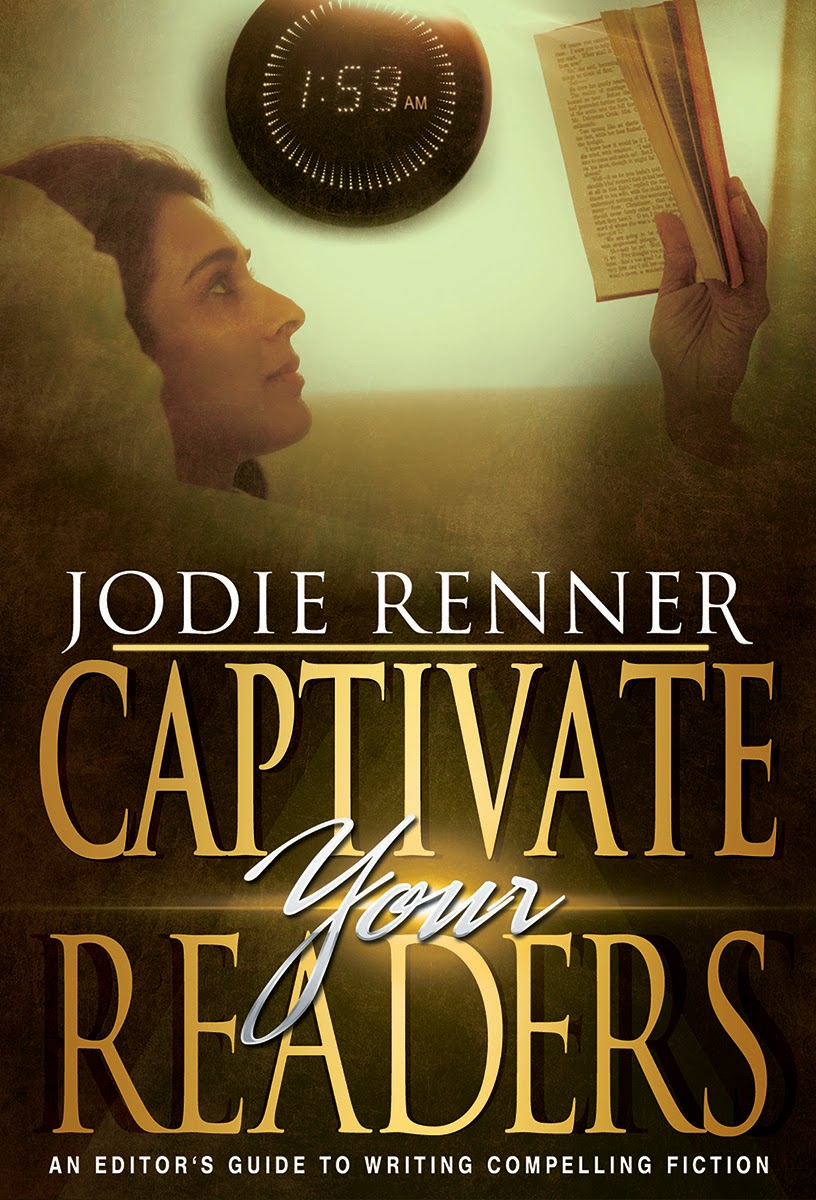
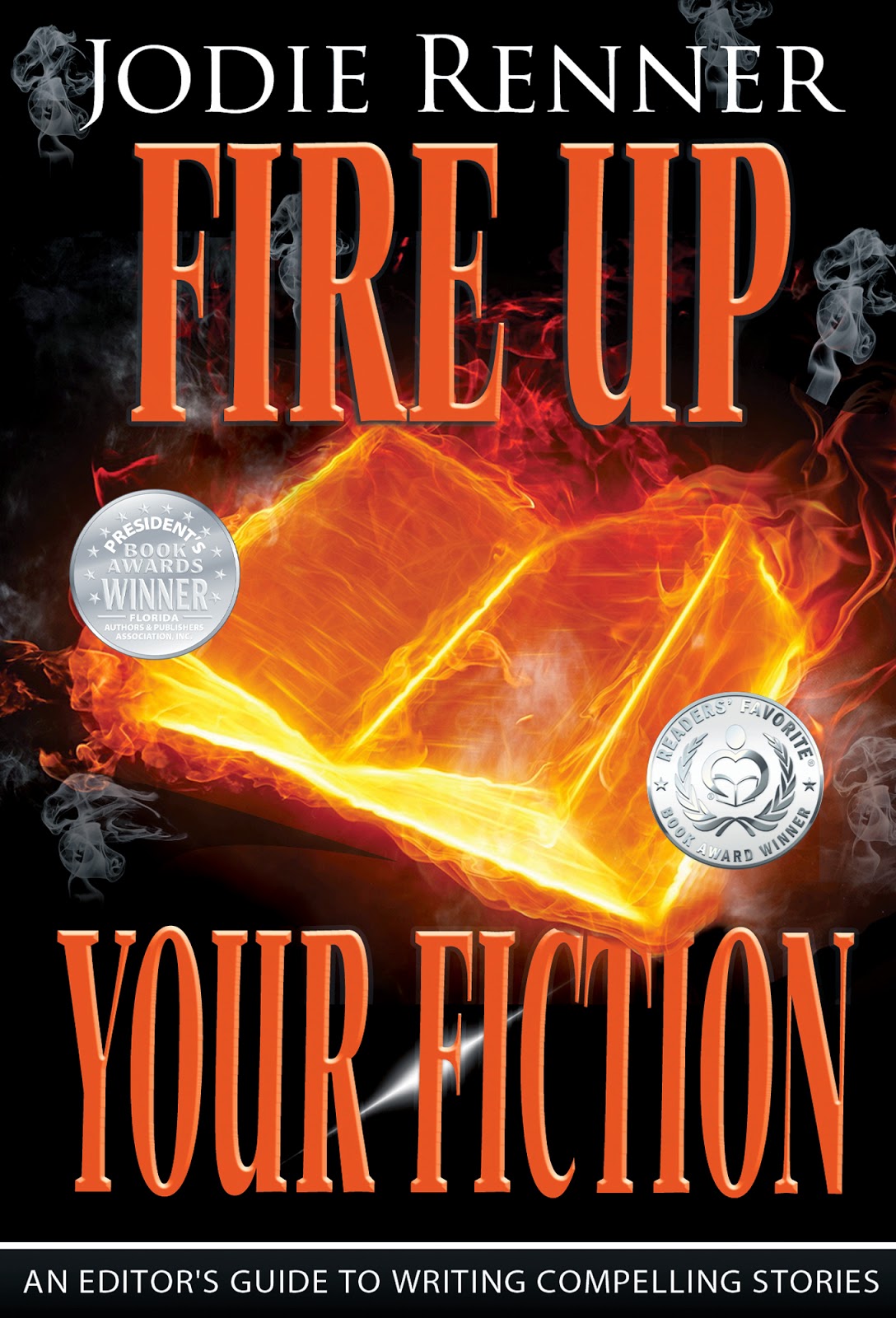
This indicates you likely need to roll up your sleeves and hone your writing skills. Read some writing guides, like my award-winning editor's guides to writing compelling fiction, Captivate Your Readers, Fire up Your Fiction, or Writing a Killer Thriller. Also, read lots of highly rated published short stories, paying close attention to the writers’ techniques. Here’s where a critique group of experienced fiction writers or some savvy beta readers or a professional edit could help.

“We didn’t get it.”

This is a catch-all category that means the story didn’t work for a number of reasons. This could be an indicator to put this story aside and hone your craft, critically read other highly rated stories in your genre, then, using your new skills, craft a fresh story.

“While all of these criticisms open doors to further questions, we regret that we cannot be more constructive….”

That’s understandable. They just don’t have time to critique or mentor every writer who contacts them. But I hope my comments above help aspiring fiction writers hone your craft and get your stories published – or even win awards for them. Good luck! For tips on how to actually submit, check out “Writing Short Stories? Don’t Make These 4 Submission Mistakes."
Jodie Renner is a freelance fiction editor and the award-winning author of three craft-of-writing guides in her series An Editor’s Guide to Writing Compelling FictionWRITING A KILLER THRILLER, FIRE UP YOUR FICTION, and CAPTIVATE YOUR READERS, as well as two clickable time-saving e-resources, QUICK CLICKS: Spelling List and QUICK CLICKS: Word Usage. She has also organized two anthologies for charity: VOICES FROM THE VALLEYS – Stories and Poems about Life in BC’s Interior, and CHILDHOOD REGAINED – Stories of Hope for Asian Child WorkersYou can find Jodie on her Amazon Author Page, at www.JodieRenner.com, and on Facebook. 

Tuesday, September 3, 2019

REACH MORE READERS WITH YOUR WRITING

15 Tips for Clear, Concise, Powerful Writing 

by Jodie Renner, editor & author 

When revising your novel, short story, nonfiction book, article or blog post, keep these 15 tips handy to help you clarify and strengthen your message and keep your readers engaged.

1. Write in a clear, casual, friendly accessible style. Avoid formal or stiff writing. Pretend you are talking to people you know and like. Let your personality and warmth show through.

2. Grab the reader’s attention at the beginning with a compelling statement, question, scene, or example.

3. Avoid formal sentences and pretentious language. Rather than impressing your readers, ornate, fancy words can just end up alienating them. Don’t send your readers away from your story to look up a word. Fancy, erudite, or pompous words are show-offy and frustrating. Besides, immediately recognizable words make for instant comprehension and keep the pace going and the reader turning the pages. But look for the strongest, most evocative word for the situation.

4. Don’t confuse, annoy, or bore your readers with unclear or vague writing. Avoid generalities and vague terms like “things,” “food,” “people” and “animals.” Use specific examples and sensory imagery to paint a clear picture and bring your ideas to life.

5. Vary your sentence structure and the lengths of your sentences. Avoid starting several sentences in a row with He or She or the person’s name. Break up long, convoluted sentences.

6. Write lean. Make every word count. Take out all unnecessary and repetitive words and sentences and go for an easy flow of ideas. Avoid repeating ideas and watch for those little words that just clutter up your sentences. Take out “It was,” “There was,” and “that” wherever they’re not needed.

7. Take out wishy-washy qualifiers like quite, sort of, almost, kind of, a bit, pretty, somewhat, rather, usually, basically, generally, probably, mostly, really, etc. Forget “He was quite brave,” or “She was pretty intelligent” or “It was almost scary.” These qualifiers dilute your message, reduce the impact, and make the imagery weaker. Take them out. Even very is to be avoided – it’s like you’re saying the word after it needs reinforcing. “She was beautiful” packs more punch than “She was very beautiful.”

8. Keep adverbs to a minimum. Instead of propping up a boring, anemic verb with an adverb, look for strong, descriptive, powerful verbs. Instead of “He walked slowly” go for “He plodded” or “He trudged” or “He dawdled.” Instead of “She ate hungrily” say “She devoured the bag of chips,” or “She wolfed down the pizza.” Instead of “They talked quickly,” say “They babbled.”

9. Avoid colorless, overused verbs like walked, ran, went, saw, talked, ate, did, got, put, took. Get out your thesaurus (or use the MS Word one. Hint: look up the present tense: walk, run, eat, say, etc.) to find more expressive, powerful verbs instead, like crept, loped, stumbled, stomped, glimpsed, noticed, observed, witnessed, spied, grunted, whimpered, devoured, consumed, gobbled, wolfed, munched, or bolted.

10. Avoid –ing verbs wherever possible. Use -ed verbs instead – they’re stronger and more immediate. “He was racing” is weaker than “He raced.” “They searched the house” is more immediate than “They were searching the house.” Rewrite -ing verbs whenever you can, and you’ll strengthen your writing and increase its power. But keep -ing verbs for ongoing action that was going on while something else occurred: The phone rang while he was washing his car.

11. Use adjectives sparingly and consciously. Instead of stringing a bunch of adjectives in front of an ordinary, overused noun, find a more precise, expressive noun to show rather than tell. Overuse of adjectives can also turn your writing into “purple prose” that is melodramatic and overly “flowery.”

12. Avoid the passive voice. For greater impact, when describing an action, start with the doer, then describe what he did, rather than the other way around. Use the more direct active voice wherever possible. Instead of “The house was taped off by the police,” write “The police taped off the house.” Also, avoid empty phrases like “There is”, “There was,” “It’s,” and “It was.” Jump right in with what you’re actually talking about.

13. Avoid negative constructions wherever possible – they can be confusing to the reader. Instead of “I didn’t disagree with him,” say “I agreed with him.”

14. Read your pages out loud to make sure the ideas flow naturally. Wherever you stumble or have to reread, your readers will, too.

15. Pay attention to white space. A solid wall of words for a whole page can make readers anxious, especially reluctant readers. Use frequent paragraphing. For nonfiction and blog posts, use bolded subheadings and lists wherever appropriate.

Click HERE for options to receive email alerts of new posts published on this blog.

Jodie Renner is a freelance fiction editor and the award-winning author of three craft-of-writing guides in her series An Editor’s Guide to Writing Compelling FictionWRITING A KILLER THRILLER, FIRE UP YOUR FICTION, and CAPTIVATE YOUR READERS, as well as two clickable time-saving e-resources, QUICK CLICKS: Spelling List and QUICK CLICKS: Word Usage. She has also organized two anthologies for charity: VOICES FROM THE VALLEYS – Stories and Poems about Life in BC’s Interior, and CHILDHOOD REGAINED – Stories of Hope for Asian Child WorkersYou can find Jodie on her Amazon Author Page, at www.JodieRenner.com, and on Facebook. 

Cut the Clutter and Streamline Your Writing

- Part I  

Excerpted from Fire up Your Fiction - An Editor's Guide to Writing Compelling Stories

by Jodie Renner, editor & author 

In my editing of fiction manuscripts, it seems one of my most important jobs is to help my clients streamline their writing so the ideas flow more smoothly.

I’m talking about those extra words that aren’t needed to enhance the mood, plot or characterization, or bring the story to life; the clutter of words that are getting in the way of the imagery and story and slowing down the pace.

Think of a flower garden that is stifled by weeds to the point where you can’t see the flowers. Or a cluttered basement or workshop, where you can’t find the things you really need. The good stuff gets lost, or at least difficult to find among all the junk.

So once you’ve gotten through your first draft, it’s important to go back in and cut down on wordiness and redundancies in order to make your story more compelling, pick up the pace, and increase the tension and sense of urgency.

But of course, don’t throw the baby out with the bath water—no need to make your style so laconic that you’ve sucked the life and voice out of it. Keep all those juicy words and phrases that set the tone, portray your voice and attitude, add atmosphere, provide sensory details, deepen your characters, add to the suspense and intrigue, and so on. Just cut out the excess blah-blah and leave the gems behind.

Sol Stein calls this important part of the editorial process “liposuctioning the flab.” As he says, “Flab is the enemy of every writer. Superfluous words and phrases soften prose. […] Flab, if not removed, can have a deleterious effect on the impatient reader, who will pay less attention to each word and begin to skip….” After you go through and cut the flab, the remaining text will be much stronger and more compelling.

Here’s some clutter to look for and expel, so the readers have nothing between them and your story:

First, take out any words, sentences, or paragraphs that are unnecessary, impede the flow of ideas, and slow the pace down. Search and destroy all those little words and phrases that just clutter up your sentences, adding nothing.

Here are some examples from my editing. I’ve changed the details to provide anonymity.

Before: They slept each night in the cheap motels located less than a mile’s drive from the interstate.

After: They slept each night in cheap motels just off the interstate.


Before: “You must never touch anything in this room if I don’t tell you to or if I haven’t given permission.”

After: “You must never touch anything in this room without my permission.”

Even better: “Do not touch anything in this room without my permission.”

Or even: "Do not touch anything in this room."


Before: The captain often asked a question of his men without really wanting their opinion. It was his way of providing a sense of democracy to his leadership style, when in actuality there was none.

After: The captain often posed questions of his men without really wanting their opinion. It was his way of pretending his leadership style was democratic.


Before: Jason motioned to a particular number in the middle of the spreadsheet that Tom currently had on the computer screen.

After: Jason motioned to a number in the middle of the spreadsheet on the screen.

Or: Jason pointed to a number in the middle of the spreadsheet.

Or even better: Jason pointed to a number on the spreadsheet.


Take out empty, filler words like “It was,” “there was,” and “there were”:

Before: There was a long scar just above both eyebrows that gave him a sinister look.

After: A long scar above his eyebrows gave him a sinister look.

Even better: A long scar on his forehead gave him a sinister look.


Unnecessarily wordy: I headed down a rickety set of wooden steps to the basement. There was a dim light ahead in the hallway. To the right there were cardboard boxes stacked high. To the left, there was a closed door with a padlock. Suddenly, I heard muffled sounds. There was someone upstairs.

Much tighter: I headed down a rickety set of wooden steps to the dimly lit basement. To the right, cardboard boxes were stacked high. To the left, I saw a closed door with a padlock. Suddenly, I heard muffled sounds. Someone was upstairs.

I could play around with this some more, but you get the picture.

So, avoid cluttering up sentences and paragraphs with little words and phrases that aren’t needed and impede the natural flow of ideas:

Before: Admiral Paul McLean strode into the room. A four-star admiral who currently was commander of the US Special Operations Command located in Tampa, Florida, McLean directed all the Special Forces throughout the military from the Green Berets to the Navy SEALs.

After: Admiral Paul McLean strode into the room. A four-star admiral and commander of US Special Operations in Tampa, McLean directed all the Special Forces, from the Green Berets to the Navy SEALs.

In Part II, we’ll examine more ways of streamlining your language to make your message more compelling, such as cutting way back on adverbs, reducing the number of adjectives, avoiding repetitions, and trimming or deleting paragraphs that don’t drive your story forward.

Click HERE for options to receive email alerts of new posts published on this blog.

Jodie Renner is a freelance fiction editor and the award-winning author of three craft-of-writing guides in her series An Editor’s Guide to Writing Compelling FictionWRITING A KILLER THRILLER, FIRE UP YOUR FICTION, and CAPTIVATE YOUR READERS, as well as two clickable time-saving e-resources, QUICK CLICKS: Spelling List and QUICK CLICKS: Word Usage. She has also organized two anthologies for charity: VOICES FROM THE VALLEYS – Stories and Poems about Life in BC’s Interior, and CHILDHOOD REGAINED – Stories of Hope for Asian Child WorkersYou can find Jodie on her Amazon Author Page, at www.JodieRenner.com, and on Facebook. 
Resource:
Sol Stein, Stein on Writing


Also, see Jodie's article, "Clear, Concise, Powerful Nonfiction Writing." - See more at: http://crimefictioncollective.blogspot.ca/2012/04/cut-clutter-and-streamline-your-writing.html#sthash.zYdkz4YA.dpuf
Resource:
Sol Stein, Stein on Writing


Also, see Jodie's article, "Clear, Concise, Powerful Nonfiction Writing." - See more at: http://crimefictioncollective.blogspot.ca/2012/04/cut-clutter-and-streamline-your-writing.html#sthash.zYdkz4YA.dpuf

Friday, August 30, 2019

Create a Charismatic, Complex Character Readers Will Worry About

by Jodie Renner, editor & author     

(Excerpted from Captivate Your Readers)

What's the secret to engaging potential readers and compelling them to keep reading? Make them identify with, root for, and worry about your main character!

Your novel can have an intriguing premise and riveting plot, but if your lead character is bland, wimpy, ditzy, arrogant, or lacking in personality or drive, readers won’t warm up to him or care what happens to him, so they’ll put the book down. Conversely, if your protagonist is fascinating, sympathetic, and clever, but complicated, readers will be drawn to him and start worrying about him, which is exactly what you want. A worried reader is an engaged reader.

“Living, vibrating human beings are still the secret and magic formula of great and enduring fiction.” ~ Lajos Egri

Unsuccessful authors very often have written a promising story, but have neglected to develop their characters sufficiently. You should spend as much or more time creating depth for your lead character and learning about her strengths and weaknesses, her fears, secrets, regrets, hopes, motivations, needs, and desires as you do on creating an exciting plot. 

As Elizabeth Lyon points out in A Writer’s Guide to Fiction, “Characterization is the bedrock of fiction and the reason most people read it. What endures in our hearts and minds over time is the heroes, heroines, and villains. Less often do we recall their plots. The fiction writer’s greatest challenge is character development.”

A big mistake newbie fiction writers make is modeling their main character too much after themselves or someone they know. Instead, to hook readers, create a fascinating lead character, one who is larger than life, more charismatic, braver, more determined, and also more troubled, with more secrets and inner conflict than the average person you know. Those attributes will make them appealing and worth following and cheering on for a whole story.

Don’t annoy your readers by making your main character:

~ Flat, superficial – a cardboard character

To avoid a one-dimensional, boring protagonist, you’ll need to create a complicated backstory for him, including his fears, regrets, insecurities, and desires, as well as his hopes, strengths, and talents. Also, give him conflicting desires.

To get to know your character’s deepest secrets, his hopes and fears, his weaknesses and regrets, and his wants versus his needs, try putting him on the psychiatrist’s couch or journaling in his voice. Write in his secret diary every day, in free, stream-of-consciousness form – just let the ideas flow. Let the character vent his frustrations uncensored. What’s his strongest desire right now? Why is he afraid he might not get it? What or who is standing in his way or frustrating him? What is he worried about? Angry about? What secret is he harboring that he hopes no one will discover? Why? Let the character vent here.

Also, in the actual story, a sure-fire way to deepen your character and your readers’ engagement is to have him react more to events. Show how he’s feeling, through his thoughts and his emotional, physical, and sensory reactions, as well as his words and actions. An emotionally flat character will leave readers cold, and they’ll start thinking about what else they should be doing.

~ Nerdy, dull – lacking in charisma or sex appeal

As James Scott Bell says in Revision and Self-Editing, your lead character should have “grit, wit, and it.” Grit is courage, determination, and resourcefulness. Wit, the ability to make the occasional witty or humorous comment, can rescue a character from maudlin self-pity or a moment from being overly sentimental or sappy. Wit also refers to cleverness, the ability to solve problems and think quickly in sticky situations. And “it,” according to Bell, means “personal magnetism – sex appeal as well as a quality that invites admiration (or envy) among others. Someone who walks into a room and draws all the attention has ‘It.’” 

So be sure to make your protagonist charismatic, with lots of personality and sex appeal – and plenty of attitude.

~ Too wimpy, too whiny, too victimized

Don’t have a primary character who’s fearful about everything, who’s always reacting rather than acting, who just takes what’s dished out to her. Or one who’s victimized, who doesn’t rise to the challenge or fight back. A character who’s constantly feeling sorry for herself gets tiresome quickly, and readers will lose patience with her and put the book down.

If you want your protagonist to start as a bit of a wimp, then get stronger as the story progresses, don’t go on like that for too long. Make her gather her courage and wits and search for ways out of her predicament. In other words, she needs to be forced by circumstances to become stronger, more courageous, more resilient. No one wants to read about someone with a million different phobias or who’s wallowing in self-pity or afraid to make a move to improve her life. We need to see some grit, some resourcefulness, some fight!

As Jack M. Bickham says in his little gem, The 38 Most Common Fiction Writing Mistakes (And How to Avoid Them), “Fiction writers too often forget that interesting characters are almost always characters who are active – risk-takers – highly motivated toward a goal. Many a story has been wrecked at the outset because the writer chose to write about the wrong kind of person – a character of the type we sometimes call a wimp.” 

So don’t model your hero or heroine after someone you know. They need to be stronger, braver, more resourceful and more intelligent. As Jessica Page Morrell puts it in Thanks, But This Isn’t For Us, “Fictional characters venture into physical and emotional territory where most of us would fear to tread.” Readers who lead a humdrum life want to escape and vicariously live a more exciting one, through the head and heart of someone who’s not afraid to challenge herself and confront her fears head-on. 

On the other hand, don’t go to the other extreme and make your protagonist:

~ Cold, unfeeling, arrogant

Your main character can and should have a few inner conflicts and character flaws, but overall, she needs to be at least somewhat sympathetic and likeable – not cold or arrogant. Your reader wants to be able to identify immediately with your lead character, to start caring about her and worrying about her. If the readers don’t warm up to your protagonist and care about what happens to her within the first few pages, they’ll very likely put down the book and go on to another one. If you have a tough hero with a gruff exterior, try to show some glimmers of hope, some redeeming qualities early on. Maybe show him to be sensitive or caring in some small ways, like perhaps he rescues a dog or cat in the traffic. Robert Crais does this with his gruff, strong, silent hero, Joe Pike. 

Also, don’t make your character:

~ Too perfect 

A too-perfect character is insufferable. Don’t make your hero or heroine constantly cheery, selfless and giving, stunningly beautiful or handsome, super popular, or perfectly sculpted and toned – in other words, too good to be true. Perfect people are both boring and annoying. They’re boring because nothing really challenges them, so we can’t identify with them; they’re annoying because they don’t have to work for things like the rest of us – everything’s handed to them on a platter. And they’re so unrealistic we think they must be faking it. And let’s face it, we’re probably jealous of them. You want readers to identify with and bond with your protagonist, not envy them.

Nobody likes a “goody-goody two-shoes,” and unless you’re writing a story for very young children, a main character who’s always positive (a “Pollyanna”) is annoying, too. So be sure not to make your protagonist nicer, kinder, or more selfless than your average person. Give them some character flaws, some secrets, regrets, and insecurities, a weakness or two, and maybe even a phobia. 

Along the same lines, don’t make your protagonist:

~ Too smart, too powerful

If your hero is ultra-smart and all-powerful, even big problems and challenges will be minor, a mere bump in the road. If he’s not sweating or stressed or in danger, readers aren’t going to worry about him. And if readers aren’t worrying about the hero or heroine of the book, they aren’t emotionally engaged. Which means they can put down the book at any time and look for one that engages them. So don’t make your character a genius or invincible. Give him some human qualities and foibles. Even Superman could be weakened by kryptonite and was vulnerable and off-guard whenever Lois Lane was threatened.

On the other hand, don’t make your character:

~ Clueless or oblivious

If your protagonist is too dumb to figure out what’s going on, to pick up on all or most of the clues, readers will feel like yelling at him or throwing the book across the room. Readers have no patience with a detective or other hero who’s dumber than they are. They expect to meet a bright, resourceful main character, one who’s worth their investment of time, one who warrants their support. If something obvious is staring your character in the face and he’s not seeing it or getting it, find a way to make that info less evident, so a smart, savvy character could realistically miss it.

Similarly, don’t make your character:

~ Ditzy, silly, or immature

Beware of airheads. They can be great for minor characters, but your hero or heroine needs to be someone readers can admire and identify with, not someone to scoff.

So when inventing your story’s protagonist, be sure to make him likeable, charismatic, and complex enough to be interesting. He should be intelligent, brave, and somewhat strong, but with emotional depth and a few flaws, secrets, and insecurities or vulnerabilities. And he needs to be able to draw on inner strengths and resources to take on adversity and overcome odds. If your main character is flat, boring, perfect, arrogant, dumb, or a wimp, readers won’t want to follow him for a whole story. They’ll lose patience and find another book to read.

And don’t make your villain 100% evil, either! He or she also needs to be multi-faceted – and intelligent, determined, and powerful – a worthy opponent for your protagonist.

Click HERE for options to receive email alerts of new posts published on this blog.

Jodie Renner is a freelance fiction editor and the award-winning author of three craft-of-writing guides in her series An Editor’s Guide to Writing Compelling FictionWRITING A KILLER THRILLER, FIRE UP YOUR FICTION, and CAPTIVATE YOUR READERS, as well as two clickable time-saving e-resources, QUICK CLICKS: Spelling List and QUICK CLICKS: Word Usage. She has also organized two anthologies for charity: VOICES FROM THE VALLEYS – Stories and Poems about Life in BC’s Interior, and CHILDHOOD REGAINED – Stories of Hope for Asian Child WorkersYou can find Jodie on her Amazon Author Page, at www.JodieRenner.com, and on Facebook. 

Thursday, August 29, 2019

15 Questions for Your Beta Readers – and to focus your own revisions

by Jodie Renner, editor & author  

(Excerpted from Jodie Renner's award-winning Captivate Your Readers - An Editor's Guide to Writing Compelling Fiction.)

So you’ve completed the first draft of your novel? Congratulations! Now it’s time to start the all-important revision process. Be sure not to shoot yourself in the foot by sending it off to agents or self-publishing it too soon. That’s the biggest mistake of unsuccessful novelists – being in too much of a hurry to get their book out, when it still needs (major or minor) revisions and final polishing.

To start, put it aside for a week or more, then change the font and print it up and read it in a different location, where you don’t write. Or, to save paper, change the font and formatting, then put it on your tablet or e-reader and take it outside to a park or a (different) coffee shop to read. That way, you can approach it with fresh eyes and a bit of distance, as a reader, rather than in too close as the writer.

Using the questions below to guide you, go through the whole manuscript, making notes as you go. Then go back to the computer and type in your changes.

Now it’s time to seek out about 3 to 6 avid readers to give you some feedback. It’s best not to ask your parent, child, significant other, sibling, or bff to do this “beta” reading, as they probably won’t want to tell you what they really think, for fear of jeopardizing your relationship. Or they may be so critical it actually will hurt your relationship! Your volunteers should be smart, discerning readers who enjoy and read your genre and are willing to give you honest feedback.

So how do you find your beta readers? Perhaps through a critique group, writing class, workshop, book club, writers’ organization, or online networking such as Facebook, Twitter, or Instagram. In the case of a YA novel or children’s book, look around for age-appropriate relatives, neighborhood kids, or the children of your friends – or perhaps you know a teacher or librarian who would be willing to read some or all of it aloud to students and collect feedback.

To avoid generic (and generally useless) responses like “I liked it,” “It was good,” or “It was okay,” it’s best to guide your readers with specific questions. Here’s a list to choose from. And of course, if you first use these questions as a guideline during your revisions, the responses from your beta readers should be much more positive, or of a nature to take your story and your skills up a level or two.

Questions for your Beta Readers:

1. Did the story hold your interest from the very beginning? If not, why not?

2. Did you get oriented fairly quickly at the beginning as to whose story it is, and where and when it’s taking place? If not, why not?

3. Could you relate to the main character? Did you feel her/his pain or excitement?

4. Did the setting interest you, and did the descriptions seem vivid and real to you?

5. Was there a point at which you felt the story started to lag or you became less than excited about finding out what was going to happen next? Where, exactly?

6. Were there any parts that confused you? Or even frustrated or annoyed you? Which parts, and why?

7. Did you notice any discrepancies or inconsistencies in time sequences, places, character details, or other details?

8. Were the characters believable? Are there any characters you think could be made more interesting or more likeable?

9. Did you get confused about who’s who in the characters? Were there too many characters to keep track of? Too few? Are any of the names or characters too similar?

10. Did the dialogue keep your interest and sound natural to you? If not, whose dialogue did you think sounded artificial or not like that person would speak?

11. Did you feel there was too much description or exposition? Not enough? Maybe too much dialogue in parts?

12. Was there enough conflict, tension, and intrigue to keep your interest?

13. Was the ending satisfying? Believable?

14. Did you notice any obvious, repeating grammatical, spelling, punctuation or capitalization errors? Examples?

15. Do you think the writing style suits the genre? If not, why not?

Additional questions:

If you have eager readers or other writers in your genre who are willing to go the extra mile for you, you could add some of the more specific questions below. These are also good for critiquing a short story.

– Which scenes/paragraphs/lines did you really like?

– Which parts did you dislike or not like as much, and why?

– Are there parts where you wanted to skip ahead or put the book down?

– Which parts resonated with you and/or moved you emotionally?

– Which parts should be condensed or even deleted?

– Which parts should be elaborated on or brought more to life?

– Are there any confusing parts? What confused you?

– Which characters did you really connect to?

– Which characters need more development or focus?

Once you’ve received feedback from all your beta readers, it’s time to consider their comments carefully. Ignore any you really don’t agree with, but if two or more people say the same thing, be sure to seriously consider that comment or suggestion. Now go through and revise your story, based on the comments you felt were insightful and helpful.

Also, see my post, “12 Essential Steps from Idea to Published Novel” on The Kill Zone blog

And also, "To Beta or Not to Beta" by Dave Butler.

Click HERE for options to receive email alerts of new posts published on this blog.

Jodie Renner is a freelance fiction editor and the award-winning author of three craft-of-writing guides in her series An Editor’s Guide to Writing Compelling FictionWRITING A KILLER THRILLER, FIRE UP YOUR FICTION, and CAPTIVATE YOUR READERS, as well as two clickable time-saving e-resources, QUICK CLICKS: Spelling List and QUICK CLICKS: Word Usage. She has also organized two anthologies for charity: VOICES FROM THE VALLEYS – Stories and Poems about Life in BC’s Interior, and CHILDHOOD REGAINED – Stories of Hope for Asian Child WorkersYou can find Jodie on her Amazon Author Page, at www.JodieRenner.com, and on Facebook. 

Tuesday, August 27, 2019

Amp up that Dialogue!

by Jodie Renner, editor & author 

Are you working on your first popular fiction novel or a short story you'd like to submit to a contest, anthology, or magazine? How you portray your characters interacting with each other is critical for bringing them to life on the page. Following are some tips I posted several years ago that newbie fiction writers and aspiring authors will still find useful.

Dialogue is one of the first things agents and editors look at when they receive a manuscript for consideration. If the dialogue is wooden, stilted, or artificial, most agents will assume that the rest of the writing is amateurish, and the manuscript will be quickly rejected. Here are some concrete ways to make your dialogue more compelling and natural-sounding.

 A. Dialogue needs tension, conflict and emotion!

This one is huge. As Randy Ingermanson and Peter Economy say in Writing Fiction for Dummies, “Dialogue is war! Every dialogue should be a controlled conflict between at least two characters with opposing agendas. The main purpose of dialogue is to advance the conflict of the story.”

1. Leave out the “Hi, how are you?” “I’m fine, and you?” “Nice day,” stuff, and cut to the chase. Skip past introductions and all that empty blah-blah small talk.

2. Avoid any kind of long monologue or dialogue that just imparts information, with no tension or emotion.

3. Don’t use dialogue as “filler” – if it doesn’t advance the plot, heighten the conflict, or deepen the characterization, take it out.

4. Include lots of emotional or sexual tension and subtext in your dialogue. Silence, interrupting, or abruptly changing the subject can be effective, too.

B. Loosen up the dialogue.

 The most common problem with dialogue for new writers is that it often sounds too stiff and formal. Here are some easy, quick tips for loosening up the dialogue to make it sound more natural:

1. Read your dialogue out loud. Does it sound natural? Can you cut some words out, or use more common, everyday conversational words, rather than more “correct” words? In conversation, use “bought” rather than “purchased,” “use” rather than “utilize,” etc.

2. Use contractions. Change “I am” to “I’m”, “we will” to “we’ll”, “do not” to “don’t”, “they will” to “they’ll,” etc.

3. Break up those long, grammatically correct complete sentences. Nobody talks in complete sentences in informal conversations with friends (or enemies) and family, especially in stressful situations. Frequently, use some short sentence fragments, and one-word answers.

4. Don’t have one person go on and on about a subject. Fiction is not the place for a lecture on a topic, or somebody speaking at length about himself. It’s not natural, and your readers aren’t interested in long monologues! Have the other person interrupt to ask a question, give their opinion, seek clarification, change the subject, etc.

C. Keep it real!

 Avoid unnatural dialogue caused by having the characters say things they would never say, just to impart some information to the readers! An extreme example of this would be a character saying to his sister: “As you know, our parents died in a car crash five years ago.” Or even the more subtle, “As your lawyer, I must advise you…” Using dialogue this way to get some information across to the reader is artificial and a sure sign of an amateur writer. Work the information in subtly, without having one character say something that the other would obviously already know.

D. Give each character his or her own voice or speaking style. Make sure all your characters don’t sound the same (like the author).

 First, pay attention to differences in gender, age, social status, education, geographical location, historical era, etc. Some characters, especially professionals, will use more correct English and longer sentences, while others will use rougher language, with a lot of one- or two-word questions or answers, sprinkled with expletives.

 Then, think about individual personality differences within that social group, and the situation. Is your character: Shy or outgoing? Talkative or quiet? Formal or casual? Modern or old-fashioned? Confident or nervous? Tactful or blunt? Serious or lighthearted? Relaxed or stressed? And give each character their own little quirks and slang expressions, but exercise caution when using slang or expletives. (More on that in another article.)

E. Gender differences.

Bear in mind that men and women tend to express themselves differently.

- In general, men are terser and more direct; they usually prefer to talk about things rather than people or feelings; and they often use brief or one-word answers.

- Women, on the other hand, like to talk about people and relationships; often hint at or talk around a subject, tend to express themselves in more complete sentences; and often want to discuss their feelings.

- These differences are especially important to keep in mind if you’re a female author writing dialogue for male characters, and vice-versa.

F. Other tips:

1. Avoid “talking heads” – pages of unbroken dialogue, with little action or description.

- Move the characters around the scene, and indicate their reactions, gestures and body language:

“…as they walked into the kitchen,” “They pulled up in front of the police station,” “He crossed his arms,” “She got up and started pacing.” “He touched her arm.” “She gasped in alarm.” “He clenched his fists.” And so on.

2. For dialogue tags, use mainly he said and she said (and asked for questions), which are non-intrusive, rather than words like remarked, conjectured, queried, interjected, insinuated, pronounced, and uttered, which draw attention to themselves and can be annoying.

3. Also, beware of using non-speaking words as attributes, like “That’s so nice,” she smiled, or “You bet,” he grinned. You can’t “smile” or “grin” words! But you can say, “You bet.” He grinned and waved as he pulled away.

 4. However, in addition to he said and she said, words like shouted, whispered, mumbled, yelled, murmured, and screamed are very useful for advancing the plot and ramping up your imagery.

5. Avoid the dialogue tag if it’s obvious who’s speaking.

6. But do make it clear who’s speaking. Readers don’t want to have to back up and check to see who’s talking now.

7. Try to use action tags (beats) instead of dialogue tags, such as:

Shelley hung up the phone. “That was Carole.”

Mark tensed. “What did she want?”

8. Avoid having the characters constantly using each other’s names. Once in a while is good, but don’t overdo it.

For tips on how to write dialogue accurately, see: "Dialogue Nuts and Bolts." Also, "Some Dialogue Don'ts".


Click HERE for options to receive email alerts of new posts published on this blog.

Jodie Renner is a freelance fiction editor and the award-winning author of three craft-of-writing guides in her series An Editor’s Guide to Writing Compelling FictionWRITING A KILLER THRILLER, FIRE UP YOUR FICTION, and CAPTIVATE YOUR READERS, as well as two clickable time-saving e-resources, QUICK CLICKS: Spelling List and QUICK CLICKS: Word Usage. She has also organized two anthologies for charity: VOICES FROM THE VALLEYS – Stories and Poems about Life in BC’s Interior, and CHILDHOOD REGAINED – Stories of Hope for Asian Child WorkersYou can find Jodie on her Amazon Author Page, at www.JodieRenner.com, and on Facebook.