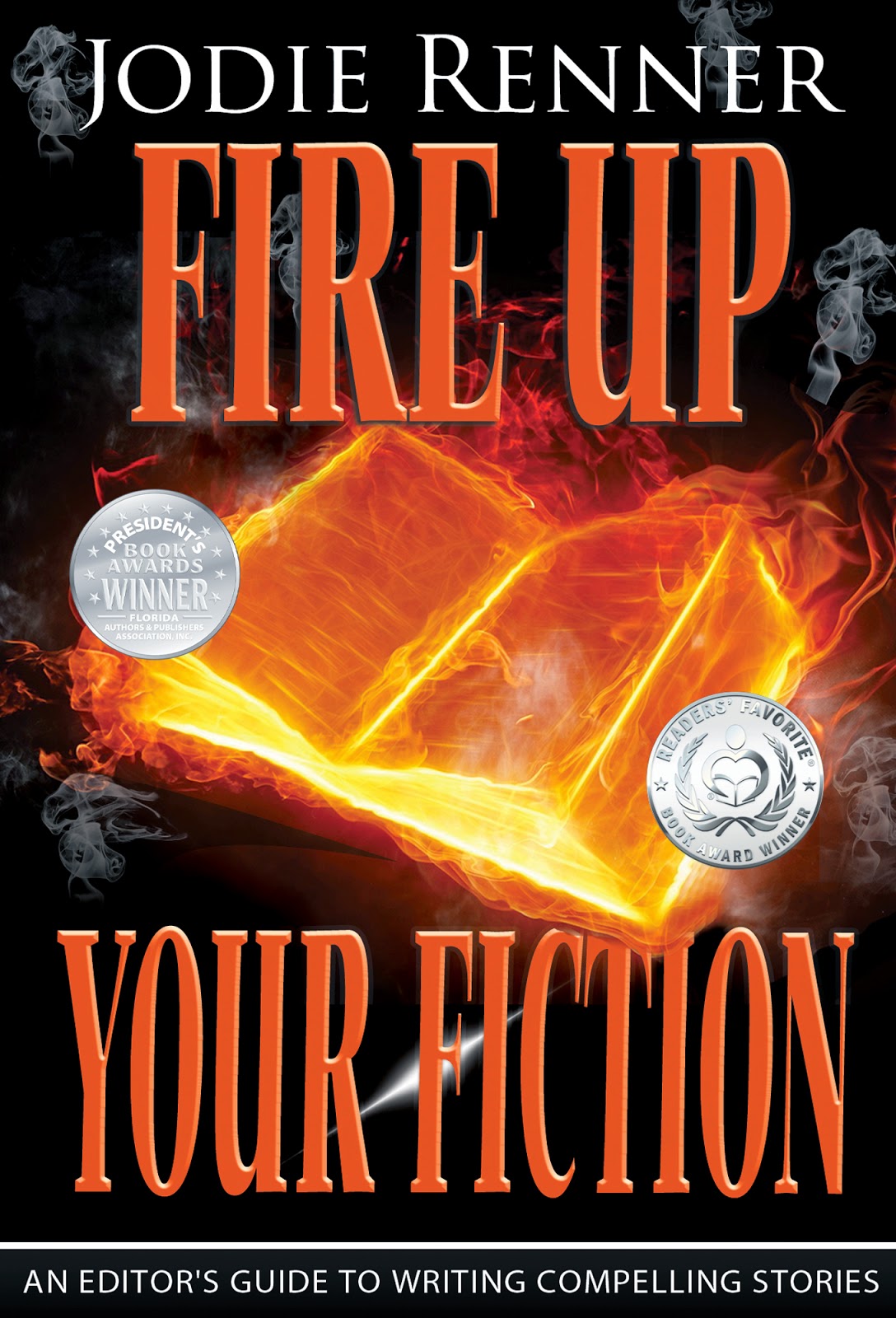
by Jodie Renner, editor and author
No, I’m not talking about the fashion police coming after you. I’m talking about those little errors and bad habits that creep into your manuscript, weaken your message, and add up to an overall feeling of amateurish writing.
The good news is that, unlike the more critical creative flow of story plot and character ideas, these little bad habits are easy to correct, resulting in a much more polished, compelling manuscript.
Here are some of those nasty little weeds to find and yank out of your literary garden, to be replaced with unique, striking blooms that will be the envy of the neighborhood:
1.
Take out wishy-washy qualifiers like
quite, sort of, almost, kind of, a bit, pretty, somewhat, rather, usually, basically, generally, probably, mostly, really, etc. Forget “He was quite brave,” or “She was pretty intelligent” or “It was almost scary,” or “Nala could kind of feel a sense of foreboding.” These qualifiers dilute your message, reduce the impact, and make the imagery weaker. Take them out. Even
very is to be avoided – it’s like you’re saying the word after it needs reinforcing. “She was beautiful” packs more punch than “She was very beautiful.”
2.
Avoid –ing verbs wherever possible. Use –ed verbs instead – they’re stronger and more immediate. “He was racing” is weaker than “He raced.” “They searched the house” is more immediate than “They were searching the house.” Rewrite -ing verbs whenever you can, and you’ll strengthen your writing and increase its power.
3.
Show us, don’t tell us how your characters are feeling. Avoid statements like “She was depressed,” “He found that funny,” or “The little girl felt sad.” Show these emotions by their actions, words, and body language: “Eyes downcast, shoulders slumped, head down, she refused to answer as she pushed her food around the plate.”
4.
Avoid colorless, overused verbs like
walked, ran, went, saw, talked, ate, did, got, put, took, turned. Get out your thesaurus (or use the MS Word one. Hint: look up the present tense: walk, run, eat, say, etc.) to find more expressive, powerful verbs instead, like
crept, loped, stumbled, stomped, glimpsed, noticed, observed, witnessed, spied, grunted, whimpered, devoured, consumed, gobbled, wolfed, munched, bolted, raged, or grabbed.
5.
Keep adverbs to a minimum. Instead of propping up a boring, anemic verb with an adverb, look for strong, descriptive, powerful verbs. Instead of “He walked slowly” go for “He plodded” or “He trudged” or “He dawdled.” Instead of “She ate hungrily” say “She devoured the bag of chips,” or “She wolfed down the pizza.” Instead of “They talked quickly,” say “They babbled.”
6.
Use adjectives sparingly and consciously. Instead of stringing a bunch of adjectives in front of an ordinary, overused noun, find a more precise, expressive noun to show rather than tell. Overuse of adjectives can also turn your writing into “purple prose” that is melodramatic and overly “flowery.”
7.
Dialogue tags – Stick with the basic
he said and
she said (or
asked) wherever possible, rather than “he emphasized” or “she reiterated” or “Mark conjectured" or "Lisa questioned,” etc. These kinds of words stand out, so they take the reader out of the story, whereas “said” is almost invisible. However, I like dialogue tags that describe
how something is said, as in
he shouted, she murmured, he grumbled, she whispered, he stuttered, she muttered, he yelled. You can often eliminate the dialogue tag altogether and just use an action beat instead: He picked up the phone. “That’s it. I’m calling the cops.”
8.
Describe the stimulus, then the response: When writing an action scene, make sure your sentence structure mimics the order of the actions. The reader pictures the actions in the order that she reads them, so it’s confusing to read about the reaction before finding out what caused it. So describe the action first, then the reaction: Instead of “She screamed when the door slammed on her finger,” write: “The door slammed on her finger and she screamed.” (or “causing her to scream,” or whatever.)
9.
Avoid the passive voice: For greater impact, when describing an action, start with the doer, then describe what he did, rather than the other way around. Use the more direct active voice wherever possible, for more impact. Instead of “The house was taped off by the police,” write “The police taped off the house.” Also, avoid empty phrases like “There is”, “There was,” “It’s,” “It was.” Jump right in with what you’re actually talking about.
10.
Avoid negative constructions wherever possible – they can be confusing to the reader. Instead of “I didn’t disagree with him,” say “I agreed with him.”
11.
Avoid frequent repetition of the same word or forms of the same word. If you’ve already used a certain noun or verb in a paragraph or section, go to your thesaurus to find a different way to express that idea when you mention it again. Also, avoid repetition of the same imagery. Whether you’re describing the setting, the weather, or the hero or heroine, vary your wording.
12.
Avoid formal sentences and pretentious language. Rather than impressing your readers, ornate, fancy words can just end up alienating them. As Jessica Page Morrell says in
Thanks, But This Isn’t for Us, “if a reader is constantly consulting a dictionary when reading your prose, you’re dragging him from the story.” As Morrell points out, “Simple words are close to our hearts and easily understood.... simpler words are unpretentious, yet contain power and grace….Pompous words are alienating, boring, and outdated.”
13.
Avoid being overly wordy. Don’t clutter up your sentences with a lot of extra little words. For example, instead of writing
in the vicinity of, just write
near. Instead of
as a consequence of, just write
because. Instead of
a large percentage of, just use
many. Instead of
in the direction of, use
toward. Instead of “The sword that he was holding was knocked to the ground,” just say “His sword was knocked to the ground.” Extra words drain life from your work. The fewer words used to express an idea, the more punch it has.


 Both are on sale at Amazon, and you don’t need to own a Kindle to buy and read Kindle e-books – you can download them to your PC, Mac, tablet or smartphone. Style that Sizzles will be out in paperback soon.

 Both are on sale at Amazon, and you don’t need to own a Kindle to buy and read Kindle e-books – you can download them to your PC, Mac, tablet or smartphone. Style that Sizzles will be out in paperback soon.