Sunday, November 14, 2010

POINT OF VIEW - HEAD-HOPPING

Deep Point of View or How to Avoid Head-Hopping      

by Jodie Renner, editor and author, www.JodieRenner.com

The issue of point of view (POV) or viewpoint can be a difficult one for new novelists to get a handle on, but it simply refers to the character through whose perspective the story events are told. We see, hear, smell, feel and experience events as that character would—with no additional information provided “from above” by the author.

In other words, if you’re writing a romance, and you’re in the heroine’s point of view (which you should be most of the time, as it’s her story) you’re not going to mention her blue eyes or long, blond hair unless she’s looking at herself in a mirror – and that one’s been overdone. (Besides, how many of us consciously think about our eye or hair color when we’re looking in the mirror?) At this point in the story, you’re seeing the world through the heroine’s eyes, so you see and hear only what she would see and hear. If she’s talking to someone else, you’re probably not going to mention her freckles or her tousled hair, unless she’s wondering if she looks okay. (Or you could have her sister, bff or the hero mention them.)

Need to tell what your hero is thinking in the middle of a scene that’s in the POV of your heroine? Tell your readers this by what the heroine is perceiving: his facial expressions, movements, attitude, body language, tone of voice and what he says—or leaves out.

As Jack M. Bickham says, “You’ll never have problems with the technique of viewpoint again if you simply follow this advice: “Figure out whose story it is. Get inside that character—and stay there.” Of course, you don’t have to stay in your protagonist’s point of view for the whole story, but well over half the story should be from the main character’s POV, so that the reader can identify with him/her and begin to care what happens to him/her.

As Bickham explains, “I’m sure you realize why fiction is told from a viewpoint, a character inside the story. It’s because each of us lives our real life from a single viewpoint – our own – and none other, ever. The fiction writer wants her story to be as convincing and lifelike as possible. So she sets things up so that readers will experience the story just like they experience real life: from one viewpoint inside the action.”

If your fiction is to be effective and your lead character is to come alive and matter to the reader, you’ll need to accomplish this by showing all the action from inside the head and heart – the thoughts, senses and emotions – of the person you have chosen as the viewpoint character.

To quote Bickham again, “In a novel, there may be several viewpoints, but one must clearly dominate… It’s a fatal error to let your viewpoint jump around from character to character, with no viewpoint clearly dominating…. To put this in other words: even in a novel of 100,000 words, well over 50 percent – probably closer to 70 percent – should be clearly and rigidly in the viewpoint of the main character. That character’s thoughts, feelings, perceptions and intentions should unmistakably dominate the action.”

So, in order to draw the reader in and grab him emotionally, every story must have a clearly dominant viewpoint character. When we see the story through his eyes, reacting as he does, it’s like we’re in the story.

But how do we as authors go about this? Let’s suppose you’re writing a story about Jason, and you have decided that he is the viewpoint character. How do you make sure that your handling of his viewpoint is as powerful as it can possibly be?

The first thing you need to do is imagine the setting, people and events as they would be perceived by Jason, and only by him. As you write the story, you the writer must become Jason. You see what he sees, and nothing more. You know what he knows, and nothing more. When Jason walks into a room, for example, you do not imagine how the room looks from some god-like authorial stance high above the room, or as a movie camera might see it; you see it only as Jason sees it, walking in.

And of course include his reactions to the other people in the room. Show Jason’s feelings (and only his) about what and who he’s seeing, and his reactions to the situation. Instead of saying “the room was stuffy,” say “Jason felt the stuffy heat of the room close around him.” By using words like “Jason felt” and “he knew,” you’re helping the reader get inside Jason’s head and identify with him, which is vital if you want your reader to care about your protagonist and get engaged in your story.

But you need to go even further – you need to describe what he’s seeing and feeling by using words and expressions that he would normally use. If your character is a blue-collar worker and high-school dropout, you’re not going to describe the scene or his reactions in highly educated, articulate, flowery terms.

It’s also important to be vigilant that your viewpoint doesn’t slip, so you’re suddenly giving someone else’s opinion about Jason, or telling about something that’s happening in the kitchen, when Jason is in the living room. You can let the reader know other people’s reactions to Jason by what Jason perceives – he sees their looks and body language, hears their words and tone of voice, etc.

If you’re writing a romance, and you’re in the heroine’s point of view, and the hero is angry, you will show his thoughts and reactions, not from inside him (“That jerk! he thought, I’ll show him!”) but by what the heroine is seeing and perceiving – his tense posture, hunched shoulders, clenched fists, furrowed brows, set mouth, clipped tone of voice, angry words, etc.

The general rule of thumb is “one scene, one viewpoint.” Or even better, wait for a new chapter to change the point of view to someone else’s. If you change the viewpoint within a scene, it’s best to do it only once, and leave a blank space before you start the next person’s point of view. Ping-ponging back and forth can be jarring and confusing to the reader. This is what’s referred to as “head-hopping.”

So why is it so important to avoid switching viewpoints (head-hopping) within scenes?

According to Cynthia VanRooy, “When a reader becomes emotionally engaged in a book, he or she enters into the story. The writer has hypnotized the reader into participating in the illusion of the fictional world. The reader understands the book world isn’t real, but in order to fully enjoy the story, he or she chooses to temporarily pretend otherwise, or to suspend their disbelief. […]

“Every time you shift the reader from one character to another, they are jarred out of their suspension of disbelief and reminded they aren’t actually living in the fictional world you’ve created, they’re only reading a story. Do that often enough and they’ll stop reading your story. Scene changes or new chapters are the best and least disruptive places to change POV.

“…Deep POV gives the reader a chance to really identify with a character, something you aim for as an author. Even Nora Roberts, famous for her frequent changes in POV, lets the reader stay in one character long enough to become thoroughly hooked.”

Self-editing tip to avoid head-hopping or a meandering viewpoint:

A quick way to check whose POV you’re in is to get out the markers and choose a different color for each of your main characters. Pick your protagonist’s color, then start highlighting sentences that describe scenes, people and perceptions strictly from his POV. Do the same for other characters, with their color. When you’re done, you should have paragraphs, and preferably scenes, of only one color. If you have another color creeping into that scene, see if you can rewrite those sentences from the dominating character’s POV. If you have a number of colors within one scene, you’ve got some revisions to do. And as Stephen King says, “Writing is rewriting.” Keep on writing!

By Jodie Renner, November 2010

Resources: The 38 Most Common Fiction Writing Mistakes (And How to Avoid Them) by Jack M. Bickham; “POV or: Whose Head Am I in, Anyway?” by Cynthia VanRooy http://www.cynthiavanrooy.com/.


Saturday, November 13, 2010

GREAT FIRST LINES IN FICTION

As a follow-up to my article on grabbing the reader with a compelling first page, entitled "Act First, Explain Later", here are some memorable first lines (and first paragraphs) of novels, starting with a few recent bestsellers, then going back to some classics:


“I’d never given much thought to how I would die—though I’d had reason enough in the last few months—but even if I had, I would not have imagined it like this.” – Stephenie Meyer, Twilight


“Nat Greco felt like an A cup in a double-D bra.” – Lisa Scottoline, Daddy’s Girl


“Cooper Sullivan’s life, as he’d known it, was over.” – Nora Roberts, Black Hills


“When the doorbell rings at three in the morning, it's never good news.” – Anthony Horowitz, Storm Breaker


“It wasn’t a very likely place for disappearances, at least at first glance.” – Diana Gabaldon, Outlander


“Happily unaware that he’d be dead in twenty-three minutes, Henry W. Wyley imagined pinching the nicely rounded rump of the young blonde who was directly in his line of sight.” – Nora Roberts, Three Fates


“Mr. and Mrs. Dursley, of number four, Privet Drive, were proud to say that they were perfectly normal, thank you very much. They were the last people you’d expect to be involved in anything strange or mysterious, because they just didn’t hold with such nonsense.” – J. K. Rowling, Harry Potter and the Sorcerer’s Stone


“Lolita, light of my life, fire of my loins.” – Vladimir Nabokov, Lolita (1955)


“It was a bright cold day in April, and the clocks were striking thirteen.” – George Orwell, 1984 (1949)


“You don't know about me without you have read a book by the name of The Adventures of Tom Sawyer; but that ain't no matter.” – Mark Twain, Adventures of Huckleberry Finn (1885)


“Inspector Salvo Montalbano could immediately tell that it was not going to be his day the moment he opened the shutters of his bedroom window.” – Andrea Camilleri, The Voice of the Violin


“If I am out of my mind, it's all right with me, thought Moses Herzog.” – Saul Bellow, Herzog (1964)


“If you really want to hear about it, the first thing you'll probably want to know is where I was born, and what my lousy childhood was like, and how my parents were occupied and all before they had me, and all that David Copperfield kind of crap, but I don't feel like going into it, if you want to know the truth.” – J. D. Salinger, The Catcher in the Rye (1951)


“You better not never tell nobody but God.” – Alice Walker, The Color Purple (1982)


“Through the fence, between the curling flower spaces, I could see them hitting.” – William Faulkner, The Sound and the Fury (1929)


“There was a desert wind blowing that night. It was one of those hot, dry Santa Anas that come down through the mountain passes and curl your hair and make your nerves jump and your skin itch. On nights like that every booze party ends in a fight. Meek little wives feel the edge of the carving knife and study their husbands' necks. Anything can happen. You can even get a full glass of beer at a cocktail lounge.” – Raymond Chandler, Red Wind


“Mother died today.” – Albert Camus, The Stranger (1942; trans. Stuart Gilbert)


“The sky above the port was the color of television, tuned to a dead channel.” – William Gibson, Neuromancer (1984)


“When I finally caught up with Abraham Trahearne, he was drinking beer with an alcoholic bulldog named Fireball Roberts in a ramshackle joint outside of Sonoma, California, drinking the heart right out of a fine spring afternoon.” – James Crumley, The Last Good Kiss


"They're out there. Black boys in white suits up before me to commit sex acts in the hall and get it mopped up before I can catch them." – Ken Kesey, One Flew Over the Cuckoo’s Nest


“I am a sick man . . . I am a wicked man. An unattractive man, I think my liver hurts.”
– Fyodor Dostoyevsky, Notes From The Underground


“As Gregor Samsa awoke one morning from uneasy dreams he found himself transformed in his bed into a gigantic insect.” – Franz Kafka, The Metamorphosis


“On the morning of her ninth birthday, the day after Madam Francoise Derbanne slapped her, Suzette peed on the rosebushes.” – Lalita Tademy, Cane River


“Eunice Parchman killed the Coverdale family because she could not read or write.”
– Ruth Rendell, A Judgement in Stone


“They shoot the white girl first.” – Toni Morrison, Paradise (1998)


“There was a boy called Eustace Clarence Scrubb, and he almost deserved it.” – C. S. Lewis, The Voyage of the Dawn Treader (1952)


“He should never have taken that shortcut.” – Michael Crichton, Timeline


“I don’t think my stepfather much minded dying. That he almost took me with him wasn’t really his fault.” – Dick Francis, To the Hilt


“The second time Ian Dunne came into my life, I was trapped under a pile of bodies, behind a sheet of plate glass.” –Lee Nichols, Hand Me Down


“The night of my mother's funeral, Linda Dawson cried on my shoulder, put her tongue in my mouth and asked me to find her husband.” – Declan Hughes, The Wrong Kind of Blood


“He was an old man who fished alone in a skiff in the Gulf Stream and he had gone eighty-four days now without taking a fish.” – Ernest Hemingway, The Old Man and the Sea (1952)


“It was the day my grandmother exploded.” – Iain M. Banks, The Crow Road (1992)


“Three days ago Emily Thompson had been Southside’s heir apparent. Every soldier in the city had been hers to command. Now the guards outside her door were the only people she had seen since her arrest.” – Sean Stewart, The Night Watch


“He hardly felt the hit, but he heard it. The muffled roar shook the stick slightly, and he looked out to see the end of his right wing shatter and flake away.” – William Diehl, Thai Horse


“I was born twice: first, as a baby girl, on a remarkably smogless Detroit day in January of 1960; and then again, as a teenage boy, in an emergency room near Petoskey, Michigan, in August of 1974.” – Jeffrey Eugenides, Middlesex (2002)


“We started dying before the snow, and like the snow, we continued to fall.” – Louise Erdrich, Tracks (1988)


“It was a pleasure to burn.” – Ray Bradbury, Fahrenheit 451 (1953)


“The gale tore at him and he felt its bite deep within and he knew that if they did not make landfall in three days they would all be dead. Too many deaths on this voyage, he thought, I’m Pilot-Major of a dead fleet.” – James Clavell, Shogun


“A story has no beginning or end; arbitrarily one chooses that moment of experience from which to look back or from which to look ahead.” – Graham Greene, The End of the Affair (1951)


“I have never begun a novel with more misgiving.” – W. Somerset Maugham, The Razor’s Edge (1944)


“Once upon a time, there was a woman who discovered she had turned into the wrong person.” –Anne Tyler, Back When We Were Grownups (2001)


“The human race, to which so many of my readers belong, has been playing at children's games from the beginning, and will probably do it till the end, which is a nuisance for the few people who grow up.” – G. K. Chesterton, The Napoleon of Notting Hill (1904)


“I woke this morning with a stranger in my bed. The head of blond hair beside me was decidedly not my husband’s. I did not know whether to be shocked or amused.” – Tracy Chevalier, Falling Angels


“When I finally caught up with Abraham Trahearne, he was drinking beer with an alcoholic bulldog named Fireball Roberts in a ramshackle joint just outside of Sonoma, California, drinking the heart right out of a fine spring afternoon.” – James Crumley, The Last Good Kiss (1978)


“You weren’t supposed to have favorite children. If there was one thing Margaret Porter knew, it was that nothing could divide a family faster than showing favoritism, even in the most minor circumstances.” – Luanne Rice, Dance with Me


“In my younger and more vulnerable years my father gave me some advice that I've been turning over in my mind ever since.” – F. Scott Fitzgerald, The Great Gatsby (1925)


"To be born again," sang Gibreel Farishta tumbling from the heavens, "first you have to die." —Salman Rushdie, The Satanic Verses (1988)


“It was a queer, sultry summer, the summer they electrocuted the Rosenbergs, and I didn't know what I was doing in New York.” – Sylvia Plath, The Bell Jar (1963)


“Most really pretty girls have pretty ugly feet, and so does Mindy Metalman, Lenore notices, all of a sudden.” – David Foster Wallace, The Broom of the System (1987)


“Francis Marion Tarwater's uncle had been dead for only half a day when the boy got too drunk to finish digging his grave and a Negro named Buford Munson, who had come to get a jug filled, had to finish it and drag the body from the breakfast table where it was still sitting and bury it in a decent and Christian way, with the sign of its Saviour at the head of the grave and enough dirt on top to keep the dogs from digging it up.” – Flannery O'Connor, The Violent Bear it Away (1960)


“Granted: I am an inmate of a mental hospital; my keeper is watching me, he never lets me out of his sight; there's a peephole in the door, and my keeper's eye is the shade of brown that can never see through a blue-eyed type like me.” – Günter Grass, The Tin Drum (1959; trans. Ralph Manheim)


“When Dick Gibson was a little boy he was not Dick Gibson.” – Stanley Elkin, The Dick Gibson Show (1971)


“He was an inch, perhaps two, under six feet, powerfully built, and he advanced straight at you with a slight stoop of the shoulders, head forward, and a fixed from-under stare which made you think of a charging bull.” – Joseph Conrad, Lord Jim (1900)


“The past is a foreign country; they do things differently there.” – L. P. Hartley, The Go-Between (1953)

“Justice?—You get justice in the next world, in this world you have the law.” – William Gaddis, A Frolic of His Own (1994)


“Vaughan died yesterday in his last car-crash.” – J. G. Ballard, Crash (1973)


"He—for there could be no doubt of his sex, though the fashion of the time did something to disguise it—was in the act of slicing at the head of a Moor which swung from the rafters."
– Virginia Wolff, Orlando


“Five weeks after Kirsten Waller's body was found in a clifftop cottage in Cornwall, Grace Hobden cleared away the lunch, checked to make sure her three children were playing on the climbing frame at the bottom of the garden, then went indoors to murder her husband. Paul Hobden, a large, blubbery whale of a man, was sleeping off the effects of a boozy lunch. In the corner of the room, a black and while film involving much swash and buckle was chattering away on the TV. While Douglas Fairbanks Jr swished his sword with laughing, lethal accuracy, Grace Hobden picked up a Sabatier filleting knife from the rack in her kitchen, went into the living room and, without hesitating for a moment, plunged the blade into the soft mound of her husband's chest.”
– Joanna Hines, The Murder Bird


“I write this sitting in the kitchen sink.” – Dodie Smith, I Capture the Castle (1948)


"When your mama was the geek, my dreamlets," Papa would say, "she made the nipping off of noggins such a crystal mystery that the hens themselves yearned toward her, waltzing around her, hypnotized with longing." – Katherine Dunn, Geek Love (1983)


“It was just noon that Sunday morning when the sheriff reached the jail with Lucas Beauchamp though the whole town (the whole county too for that matter) had known since the night before that Lucas had killed a white man.” —William Faulkner, Intruder in the Dust (1948)


“Of all the things that drive men to sea, the most common disaster, I've come to learn, is women.” —Charles Johnson, Middle Passage (1990)


“I am an American, Chicago born—Chicago, that somber city—and go at things as I have taught myself, free-style, and will make the record in my own way: first to knock, first admitted; sometimes an innocent knock, sometimes a not so innocent.” – Saul Bellow, The Adventures of Augie March (1953)


“In the town, there were two mutes and they were always together.” – Carson McCullers, The Heart is a Lonely Hunter (1940)


“They say when trouble comes, close ranks, and so the white people did.” – Jean Rhys, Wide Sargasso Sea (1966)


“The cold passed reluctantly from the earth, and the retiring fogs revealed an army stretched out on the hills, resting.” – Stephen Crane, The Red Badge of Courage (1895)


“Many years later, as he faced the firing squad, Colonel Aureliano Buendía was to remember that distant afternoon when his father took him to discover ice.” – Gabriel García Márquez, One Hundred Years of Solitude


“It is a truth universally acknowledged, that a single man in possession of a good fortune, must be in want of a wife.” – Jane Austen, Pride & Prejudice


“All this happened, more or less.” – Kurt Vonnegut, Slaughterhouse-Five


- compiled by Jodie Renner, November 2010, http://www.jodierennerediting.com/

Monday, October 11, 2010

The All-Important First Chapter

Here's an excellent article on writing a compelling first chapter that also gives the reader a good idea of what to expect as far as your genre, style and content - a chapter that's a promise of what's to come.

This article, by Valerie Kemp, appears today on the blog of Nathan Bransford, Literary Agent. Check it out at: http://blog.nathanbransford.com/

Saturday, October 2, 2010

14 TIPS FOR BREAKING INTO THE ROMANCE GENRE

by Jodie Renner, editor and author  

Romance novels outsell all other genres, making up about 40% of all fiction sold in North America. If you’re an aspiring writer trying to break into the romance genre, here are some tips to help get you on the road to publication.

1. Know the genre. Romance has its own set of rules. If you’re writing a romance, your plot has to revolve around the romantic relationship between your two main characters: a likeable heroine and a strong, charismatic hero; you need a happily-ever-after (HEA) ending; and your subplots must support the central love story.

2. Familiarize yourself with the market. Read a lot of recently published romance novels in a series, category, or subgenre you’d like to write; for example, contemporary romance, historical romance, romantic suspense, sweet romance, inspirational romance, paranormal romance, erotic romance, Western romance, romantic comedy, or young adult romance.

3. Read the publishers' submission guidelines. Check Harlequin’s guidelines for writers of romance at www.eHarlequin.com, as well as those of other publishers who specialize in or accept romance novels. You can do a Google search to find them. For example, here's where you'll find the guidelines from Carina Press: http://carinapress.com/blog/submission-guidelines/#romance.

4. Join a writers’ group, either local or online, such as the Romance Writers of America, or your local chapter of the RWA.

5. Read some good books about writing romance. Two books I highly recommend are: On Writing Romance, by Leigh Michaels, and The Everything Guide to Writing a Romance Novel, by Christie Craig and Faye Hughes. For more books on the craft of writing romance, see my list of resources below.

6. Know your readership. More than 90 percent of regular readers of romance novels are women. Figure out a subgenre you’d be comfortable writing in that appeals to a target group of mostly women.

7. Develop two interesting main characters. Your protagonists need to be charismatic and appealing; likeable but with some insecurities and flaws. Don’t make them too perfect – perfect is boring! The hero and heroine need to have inner conflicts and insecurities, etc., but don’t give them major character flaws or annoying habits that will turn off your reader. And make sure they’re both worthy of the other’s love. They both need to have enough going for them (not needy or users or whiners, etc.) and be basically good inside and “keepers,” otherwise your reader won’t root for them or care what happens to them.

8. Bring them together quickly. Introduce your heroine in the first paragraph. Put her in a scene with inner conflict. Introduce your hero before the end of Chapter One. Make them attracted to each other, but put a roadblock in their way. As Dawn Arkin says in her article “Romance 101” on Fiction Factor, “The main characters should meet as soon as possible and find themselves in conflict with each other right off the bat. Their first meeting should be explosive emotionally. It should make them be attracted to, and hate, each other from the beginning.”

9. Make something interesting happen to them, with plenty of inner conflict. Your storyline should have some original elements, and must of course include plenty of conflict that is emotional and character-driven. A good villain helps with that essential conflict. But remember that, unlike action-adventure or suspense novels, which rely heavily on external conflict, internal conflict is the main focus for romances. Two or three conflicts over the span of the novel work best. Include emotional highs and lows.

10. Tell us how they're feeling. Romance novels need emotion, and lots of it. “Emotion,” stresses McGregor. “Don’t back away from it, because these stories need it. To me, romances are character stories. They may have a complex plot, but it's the characters the readers want to love and get involved with.”

11. Include natural-sounding dialogue. Each character should use slightly different pet words and phrases. To guard against your dialogue sounding stilted, use lots of contractions, incomplete sentences, one-word answers, silences, and body language. Women tend to speak in more complete sentences than men do, and they express their feelings more.

12. Bring them together at the end. The romance genre calls for a Happily Ever After ending. Your readers demand an emotionally satisfying conclusion – not necessarily wedding bells, but a positive, uplifting ending with a promise of lasting love and happiness.

13. Revise, revise, revise! Now that you've written your first draft, time to go in and polish it up. Tighten up the language, use all senses, deepen your characters, and add some more conflict and intrigue.

14. Get a second opinion by an expert. To increase your chances of getting published, hire a freelance editor who's familiar with the genre (like me) to go over it and look for inconsistencies, plot holes, stilted dialogue, head-hopping, etc., and generally polish it until it shines!

Some excellent resource books on writing romance novels: On Writing Romance – How to Craft a Novel That Sells, by Leigh Michaels; The Everything Guide to Writing a Romance Novel, by Christie Craig and Faye Hughes; and Writing a Romance Novel for Dummies by Leslie Wainger.


Friday, October 1, 2010

Top 25 Reasons Your Submissions Are Rejected

Here's a great post that appeared on Blood-Red Pencil a few days ago, by Heidi Thomas. Excellent points for any author trying to get published!

http://bloodredpencil.blogspot.com/2010/09/sept-2-top-25-reasons-your-submissions.html

Monday, September 27, 2010

STYLE BLUNDERS IN FICTION

by Jodie Renner, editor and author 

No, I’m not talking about the fashion police coming after you. I’m talking about those little errors and bad habits that creep into your manuscript, weaken your message, and add up to an overall feeling of amateurish writing.

The good news is that, unlike the more critical creative flow of story plot and character ideas, these little bad habits are easy to correct, resulting in a much more polished, compelling manuscript.

Here are some of those nasty little weeds to find and yank out of your literary garden, to be replaced with unique, striking blooms that will be the envy of the neighborhood:

1. Take out wishy-washy qualifiers like quite, sort of, almost, kind of, a bit, pretty, somewhat, rather, usually, basically, generally, probably, mostly, really, etc. Forget “He was quite brave,” or “She was pretty intelligent” or “It was almost scary,” or “Nala could kind of feel a sense of foreboding.” These qualifiers dilute your message, reduce the impact, and make the imagery weaker. Take them out. Even very is to be avoided – it’s like you’re saying the word after it needs reinforcing. “She was beautiful” packs more punch than “She was very beautiful.”

2. Avoid –ing verbs wherever possible. Use –ed verbs instead – they’re stronger and more immediate. “He was racing” is weaker than “He raced.” “They searched the house” is more immediate than “They were searching the house.” Rewrite -ing verbs whenever you can, and you’ll strengthen your writing and increase its power.

3. Show us, don’t tell us how your characters are feeling. Avoid statements like “She was depressed,” “He found that funny,” or “The little girl felt sad.” Show these emotions by their actions, words, and body language: “Eyes downcast, shoulders slumped, head down, she refused to answer as she pushed her food around the plate.”

4. Avoid colorless, overused verbs like walked, ran, went, saw, talked, ate, did, got, put, took, turned. Get out your thesaurus (or use the MS Word one. Hint: look up the present tense: walk, run, eat, say, etc.) to find more expressive, powerful verbs instead, like crept, loped, stumbled, stomped, glimpsed, noticed, observed, witnessed, spied, grunted, whimpered, devoured, consumed, gobbled, wolfed, munched, bolted, raged, or grabbed.

5. Keep adverbs to a minimum. Instead of propping up a boring, anemic verb with an adverb, look for strong, descriptive, powerful verbs. Instead of “He walked slowly” go for “He plodded” or “He trudged” or “He dawdled.” Instead of “She ate hungrily” say “She devoured the bag of chips,” or “She wolfed down the pizza.” Instead of “They talked quickly,” say “They babbled.”

6. Use adjectives sparingly and consciously. Instead of stringing a bunch of adjectives in front of an ordinary, overused noun, find a more precise, expressive noun to show rather than tell. Overuse of adjectives can also turn your writing into “purple prose” that is melodramatic and overly “flowery.”

7. Dialogue tags – Stick with the basic he said and she said (or asked) wherever possible, rather than “he emphasized” or “she reiterated” or “Mark conjectured" or "Lisa questioned,” etc. These kinds of words stand out, so they take the reader out of the story, whereas “said” is almost invisible. However, I like dialogue tags that describe how something is said, as in he shouted, she murmured, he grumbled, she whispered, he stuttered, she muttered, he yelled. You can often eliminate the dialogue tag altogether and just use an action beat instead: He picked up the phone. “That’s it. I’m calling the cops.”

8. Describe the stimulus, then the response: When writing an action scene, make sure your sentence structure mimics the order of the actions. The reader pictures the actions in the order that she reads them, so it’s confusing to read about the reaction before finding out what caused it. So describe the action first, then the reaction: Instead of “She screamed when the door slammed on her finger,” write: “The door slammed on her finger and she screamed.” (or “causing her to scream,” or whatever.)

9. Avoid the passive voice: For greater impact, when describing an action, start with the doer, then describe what he did, rather than the other way around. Use the more direct active voice wherever possible, for more impact. Instead of “The house was taped off by the police,” write “The police taped off the house.” Also, avoid empty phrases like “There is”, “There was,” “It’s,” “It was.” Jump right in with what you’re actually talking about.

10. Avoid negative constructions wherever possible – they can be confusing to the reader. Instead of “I didn’t disagree with him,” say “I agreed with him.”

11. Avoid frequent repetition of the same word or forms of the same word. If you’ve already used a certain noun or verb in a paragraph or section, go to your thesaurus to find a different way to express that idea when you mention it again. Also, avoid repetition of the same imagery. Whether you’re describing the setting, the weather, or the hero or heroine, vary your wording.

12. Avoid formal sentences and pretentious language. Rather than impressing your readers, ornate, fancy words can just end up alienating them. As Jessica Page Morrell says in Thanks, But This Isn’t for Us, “if a reader is constantly consulting a dictionary when reading your prose, you’re dragging him from the story.” As Morrell points out, “Simple words are close to our hearts and easily understood.... simpler words are unpretentious, yet contain power and grace….Pompous words are alienating, boring, and outdated.”

13. Avoid being overly wordy. Don’t clutter up your sentences with a lot of extra little words. For example, instead of writing in the vicinity of, just write near. Instead of as a consequence of, just write because. Instead of a large percentage of, just use many. Instead of in the direction of, use toward. Instead of “The sword that he was holding was knocked to the ground,” just say “His sword was knocked to the ground.” Extra words drain life from your work. The fewer words used to express an idea, the more punch it has.


Thursday, September 16, 2010

GENRES IN FICTION

FICTION CATEGORIES OR GENRES

What is genre fiction? Examples of genres in fiction are westerns, romance, thrillers, fantasy, science fiction, action-adventure, horror, and mysteries. If you’re writing a novel and want to get it published by a traditional publisher, it’s important to know which category it will most easily fall into. It’s more likely to be accepted by agents and publishers that way, as then they can package it to highlight the genre, and the bookstores will know which section to display it in. So if you’re writing a historical western romance with mysterious elements, you’ll probably have trouble getting it published. It’s important to make sure one genre predominates over the others, so publishers and booksellers will know how to market and shelve it.

According to Wikipedia, “All fiction is essentially generic, but genre fiction is overtly and intentionally so, signaling its generic identity in the clearest possible terms. A horror novel, for example, makes it clear through its cover design, its blurb, the comments printed on the cover from other novelists, and so on, that it is a horror novel; and it will be shelved in the appropriate place in bookstores.”

Genre fiction is often used interchangeably with the term “popular fiction,” and generally distinguished from “literary fiction.”

Most fiction writing, especially of novel length, does not conform exactly to the conventions of a genre. In fact, there’s actually no consensus as to the exact definitions or conventions of any of the genres of fiction. As Wikipedia states, “Writers, publishers, marketers, booksellers, libraries, academics, critics, and even readers all may have different ways of classifying fiction, and any of these classifications might be termed a genre. […] …the term genre remains amorphous, and the assigning of works to genres is to some extent arbitrary and subjective.”

Genre and the marketing of fiction

In the publishing industry, the term “category fiction” is often used as a synonym for genre fiction, with the categories serving as the familiar shelf headings within the fiction section of a bookstore, such as romance, western, sci-fi, or mystery.

“The uncategorized section [in bookstores] is known in the industry as ‘general fiction,’ but in fact many of the titles in this usually large section are often themselves genre novels that have been placed in the general section because booksellers believe they will appeal, due to their high quality or other special characteristics, to a wider audience than merely the readers of that genre.” (Wikipedia)

Genre fiction and literary fiction

According to Wikipedia, “the term ‘genre fiction’ is sometimes used as a pejorative antonym of literary fiction, which is presumed to have greater artistic merit and higher cultural value. In this view, by comparison with literary fiction, genre fiction is thought to be formulaic, commercial, sensational, melodramatic, and sentimental. By extension, the readers of genre fiction—the mass audience—are supposed to have less educated taste in literature than readers of literary fiction. Genre fiction is then, essentially, thought to be the literature that appeals to the mass market.

“But from another point of view, literary fiction itself is simply another category or genre. That is, it can be thought of as having conventions of its own, such as use of an elevated, poetic, or idiosyncratic prose style; or defying readers’ plot expectations; or making use of particular theoretical or philosophical ideas as well as having a niche audience, ‘generic’ packaging and ‘superstar’ authors. The publishing industry itself treats literary fiction as one category among others.

“In addition, it can be argued that all novels, no matter how ‘literary,’ also fall within the bounds of one or more genres. Thus Jane Austen’s Pride and Prejudice is a romance; Fyodor Dostoevsky’s Crime and Punishment is a psychological thriller; and James Joyce’s A Portrait of the Artist as a Young Man is a coming-of-age story. These novels would usually be stocked in the general or possibly the classics section of a bookstore. Indeed, many works now regarded as literary classics were originally written as genre novels.”

LIST OF GENRES

As noted, there are many different ways of labeling and defining fiction genres. Following are some of the main genres as they are used in contemporary publishing. Note that these genres also exist within other age categories besides adults, such as young adult (YA) fiction, middle-school fiction and children’s fiction.

Romance – Romance is currently the largest and best-selling fiction genre in North America. It has produced a wide array of subgenres, the majority of which feature the mutual attraction and love of a man and a woman as the main plot, and have a happy ending. This genre, much like fantasy fiction, is broad enough in definition that it is easily and commonly seen combined with other genres, such as comedy, fantasy fiction, realistic fiction, or action-adventure. Publishers of romance novels have their own series or categories, such as contemporary romance, historical romance, inspirational romance, romantic suspense, western romance, erotic romance, paranormal romance, etc.

Action-adventure – Action-adventure fiction, traditionally (but not exclusively) aimed at male readers, features physical action and violence, often around a quest or military-style mission set in exotic or forbidding locales such as jungles, deserts, or mountains.

Crime – Crime fiction stories, centered on criminal enterprise, are told from the point of view of the perpetrators. They range in tone from lighthearted "caper" stories to darker plots involving organized crime or incarcerated convicts.

Mystery/Detective – Detective fiction has become synonymous with Mystery. These stories relate the solving of a crime, usually one or more murders, by a protagonist who may or may not be a professional investigator. This large, popular genre has many subgenres, reflecting differences in tone, character, and it always contains criminal and detective settings.

Mystery fiction involves stories in which characters try to discover a vital piece of information which is kept hidden until the climax. The standard novel stocked in the mystery section of bookstores is a whodunit. A few other types of mystery novels are Cozy Mysteries (where a group of people who are very unlikely to be mixed up in a crime become involved – these are usually not gory) or Hard-Boiled Mysteries (where the detective/private eye is very tough and unsentimental).

Suspense/Thrillers - use suspense, tension and excitement as the main elements. The primary subgenres of thrillers are: mystery, crime and psychological thrillers, as well as romantic suspense. “Thrillers are mostly characterized by an atmosphere of menace, violence, crime and murder by showing society as dark, corrupt and dangerous, though they often feature a happy ending in which the villains are killed or arrested. …A thriller is villain-driven plot, whereby he presents obstacles that the hero must overcome.” (Wikipedia)

Horror –Horror fiction aims to evoke some combination of fear, fascination, and revulsion in its readers. This genre, like others, continues to develop, recently moving away from stories with a religious or supernatural basis to ones making use of medical or psychological ideologies.

Fantasy – Fantasy fiction features stories set in fanciful, invented worlds, an alternate and more fanciful version of our own world, or in a legendary, mythic past. Fantasy fiction stories generally involve magic, mystical elements, or supernatural creatures. The genre's relatively loose definition means it includes a large number of works in styles ranging from pseudo-mythological epics to more deliberately modern works, and includes works which also fall under other genres, such as horror fiction, comedy, action-adventure or romance. Some works generally classified as fantasy fiction also include elements of science fiction, and with many works revolving around psychics, ghosts, etc. being easily classified as either, some bookstores and critics tend to categorize the two genres together as “speculative fiction.”

Science fiction – Science fiction is defined more by setting details than by other story elements. Science fiction by definition includes extrapolated or theoretical future science and technology as a major component, and is often set on other planets, in outer space, or on a future version of Earth. Within these setting details, however, the conventions of almost any other genre may be used, including comedy, action-adventure and mystery. A sub-genre of science fiction is alternate history where, for some specific reason, the history of the novel deviates from the history of our world. Both alternate history and science fiction are often referred to alongside fantasy fiction, magical realism and some horror fiction under the umbrella term “speculative fiction.”

Paranormal/Supernatural – Books like Stephenie Meyer’s Twilight series have made this genre (sub-genre?) very popular in recent years. Paranormal romance has definitely become a huge seller, with its hunky vampires and werewolves. This sub-genre could fit under fantasy or romance.

According to Wikipedia, “Paranormal romance is a literary subgenre of the romance novel. A type of speculative fiction, paranormal romance focuses on romance and includes elements beyond the range of scientific explanation, blending together themes from the genres of traditional fantasy, science fiction, or horror. Paranormal romance may range from traditional category romances with a paranormal setting to stories where the main emphasis is on a science fiction or fantasy-based plot with a romantic subplot. Common hallmarks are romantic relationships between humans and vampires, shapeshifters, or fantastical beings (the Fae, Elves, etc.). …paranormal romances can also include characters with psychic abilities, like telekinesis or telepathy.

“Paranormal romance has its roots in Gothic fiction. Its most recent revival has been spurred by turn-of-the-century technology, e.g. the internet and electronic publishing. Paranormal romances are one of the fastest growing trends in the romance genre.” (Wikipedia)

Erotica – "A development in contemporary erotica has been that, contrary to some previous views that it was mainly a male interest, many women readers are aroused by it, whether it be traditional or tailor-made women's erotica. Romantic novels are sometimes marketed as erotica—-or vice versa—-as "mainstream" romance in recent decades has begun to exhibit blatant descriptions of sex. Erotic Romance is a relatively new genre of romance with an erotic theme and very explicit love scenes, but with a romance at the heart of the story. Erotic fantasy is a subgenre of fantasy fiction and utilizes erotica in a fantasy setting. These stories can essentially cover any of the other subgenres of fantasy, such as high fantasy, contemporary fantasy, or even historical fantasy." (Wikipedia)

"Online bookstores purvey a range of erotic writing. Whereas once access to online erotic fiction was largely restricted to membership or pay sites, in recent years a marked increase in the number of community based, not-for-profit or free access websites has led to an explosion in the level of popularity of this genre." (Wikipedia)

Western – Western fiction is defined primarily by being set in the American West in the second half of the 19th century, and secondarily by featuring heroes who are rugged, individualistic horsemen (cowboys). Other genres, such as romance, have subgenres that make use of the Western setting. You can, for example, have a romantic western or a western (American) romance.

Literary fiction – Literary fiction is a term in common usage since around 1970 to distinguish so-called “serious” fiction (that is, work with claims to literary merit) from other types of genre fiction. In broad terms, literary fiction focuses more on style, psychological depth, and character, whereas mainstream commercial fiction (the “page-turner”) focuses more on narrative and plot.

by Jodie Renner, http://www.jodierennerediting.com/

TYPICAL LENGTHS OF FICTIONAL WORKS

Fiction Classifications by Length  

by Jodie Renner, editor and author

You start writing what you think is going to be a short story. Then it starts growing. Soon it’s in that fuzzy area between a short story and a novel. You don’t really want to spend the time and effort to turn it into a novel. What is it called now, and is there a market for these in-between fiction works? Thanks to e-publishing, the answer is yes! Although e-publishers typically don’t want to tackle the longest novel forms, they’re often open to anything from flash fiction or a “short short” through a “novelette” to a novel size of manuscript.

The following list of typical lengths of fictional works is adapted from “How Long Should Your Story Be?” an article by Lee Masterson about approximate guidelines for story lengths, which appears in much greater detail on the website Fiction Factor, The Online Magazine for Fiction Writers, at www.fictionfactor.com.

Micro-Fiction – up to 100 words
- “This very abbreviated story is often difficult to write, and even harder to write well, but the markets for micro fiction are becoming increasingly popular in recent times.”

Flash Fiction or Short Short – 100–1,000 words
- The length of story often found in glossy magazines. “Very popular, quick and easy to write, and easier to sell!”

Short Story – 1,000–7,500 words.
- The “regular” short story, usually found in periodicals or anthology collections. Contests usually cap it at about 2,500 words. Check their submission guidelines.

Novelette – 7,500–20,000 words
- Can be a difficult length to sell to a print publisher. It’s too long for most publishers to insert comfortably into a magazine, yet too short for a novel. Better for e-publishing.

Novella – 20,000–50,000 words
- A popular length for the e-publishing market.

Novel – 50,000 –110,000 words
- However, most print publishers seem to prefer a minimum word count for a novel of around 70,000 – 90,000 words, except for YA (young adult) fiction, which is typically (but not always) shorter. Due to budget constraints, publishers are increasingly hesitant to take on fiction over 110,000 words.

Epic or Super Novel – Over 110,000 words
- This category is mostly for established authors who already have a contract with a traditional publisher.

Here’s another general guideline I happened on online for fiction classifications by length. Notice the slight variation from the list above in the typical word length of the different categories.

Super Novel: 120,000+ words    
Novel: 80,00-120,000 words
Young Adult Novel: 30,00-70,000 words
Novella: 15,000-30,000 words
Short Story: up to 15,000 words
Flash Fiction: up to 1,000 words
Micro Fiction: up to 300 words

(www.WritersLiterary.com)

As Lee Masterson cautions us, “Remember, these word- and page-counts are only estimated guides. Use your own common sense, and, where possible, check the guidelines of the publication you intend to submit your work to. Most publishers accepting shorter works will post their maximum preferred lengths, and novels are generally considered on the strength of the story itself, not on how many words you have squeezed into each chapter.”

Sunday, September 5, 2010

CREATING COMPELLING CHARACTERS

by Jodie Renner, editor and author

“The first thing that makes a reader read a book is the characters.” – John Gardner

“Living, vibrating human beings are still the secret and magic formula of
great and enduring fiction.” Lajos Egri


You can have a great premise and riveting plot, but if your characters are weak, boring, or undeveloped, your book will be quickly rejected by agents and acquisition editors. As Elizabeth Lyon points out, “Characterization is the bedrock of fiction and the reason most people read it. What endures in our hearts and minds over time is the heroes, heroines, and villains. Less often do we recall their plots. The fiction writer’s greatest challenge is character development.” (A Writer’s Guide to Fiction)

You should spend as much or more time on developing your characters as on creating an interesting plot. As Ingermanson and Economy so aptly put it, “If you want to write truly memorable fiction, your best bet is to start with a wonderful character, one who leaps off the page and into your reader’s mind. A great character feels completely real, with a past, a present, and a future….

Fiction writers spend enormous amounts of time developing and getting to know their characters, imagining complicated life histories and digging deep to find plausible motivations. This is not wasted time! If you don’t know your characters, then your readers won’t either.”
(Randy Ingermanson and Peter Economy, Writing Fiction for Dummies)

Unpublished authors very often have written a good story, but neglected to develop their characters sufficiently. Elizabeth Lyon tells us: “I have seen a nearly universal phenomenon in the manuscripts I work on: Almost every novel that is finished in the eyes of the writer still needs work on characterization. …the following components of characterization are frequently missing or underdeveloped: Backstory wound, universal need, personal yearning, strength and weakness….
It’s common for plotting to eclipse character development. Most published authors have gone back in revision to ‘layer it in’.”
(Elizabeth Lyon, Manuscript Makeover)

Your protagonist needs to be likeable, charismatic, and complex enough to be interesting. He/she needs emotional depth and a few flaws and insecurities. And he/she needs to be able to draw on inner strengths and resources to take on adversity and overcome odds. If your character is annoying, boring, too perfect, or a wimp, you’re dead in the water. –And don’t make your villains 100% evil, either!

No annoying protagonists, please!

Your main character can and should have a few faults, but overall, she needs to be sympathetic and likeable – not whiney, ditzy, cold, or annoying. Your reader wants to be able to identify immediately with your lead character. If the reader doesn’t care about your protagonist and what happens to him/her within the first few pages, she will put down the book and go on to another one. As James Scott Bell says, in fiction, “readers will respond only if they are connected, bonded in a way to the lead character.”

In his Revision Checklist section, James Scott Bell has these questions to ask yourself about your protagonist:

“Is my Lead worth following for a whole novel? Why?  

How can I make my Lead ‘jump off the page’ more?

Will readers bond with my Lead because he…
… cares for someone other than himself?
… is funny, irreverent, or a rebel with a cause?
… is competent at something?
… is an underdog facing long odds without giving up?
… has a dream or desire readers can relate to?
… has undeserved misfortune, but doesn’t whine about it?
… is in jeopardy or danger?”

- James Scott Bell, Revision and Self-Editing

Make sure your main character fits at least several of the above situations.

A perfect character is insufferable.

Don’t make your main character too good to be true. Nobody likes a "goody-goody two-shoes." As Mittelmark and Newman so aptly put it, “Perfect people are boring. Perfect people are obnoxious because they’re better than us. Perfect people are, above all, too good to be true.
“Protagonists should only be as nice as everyday people are in real life. Making them nicer than the average reader will earn the reader’s loathing, or make her laugh in disbelief.
“An unprincipled gold digger who gives twenty dollars to a beggar is enchanting. A crusading human rights lawyer who volunteers at an animal shelter and also pauses on his way to court to give twenty dollars to a beggar makes us gag.”

(Howard Mittelmark and Sandra Newman, How Not to Write a Novel)

Develop those cardboard characters!

To avoid flat, superficial characters, you need to create an interesting backstory for each of them, including their secret fears, insecurities, and desires, as well as their strengths and triumphs in life.

As Randy Ingermanson says, “Characters are the most important part of any novel, and the time you invest in designing them up front will pay off ten-fold when you start writing. For each of your major characters, take an hour and write a one-page summary sheet that tells:

• The character’s name
• A one-sentence summary of the character's storyline
• The character’s motivation (what does he/she want abstractly?)
• The character’s story goal (what does he/she want concretely?)
• The character’s conflict (what prevents him/her from reaching this goal?)
• The character’s epiphany (what will he/she learn, how will he/she change?
• A one-paragraph summary of the character's storyline

From: http://www.advancedfictionwriting.com/index.php:

It’s also important to get to know your character’s fears or insecurities, secrets, attitudes, quirks, talents, likes and dislikes.

Elizabeth Lyon gives some specific advice for deepening your characters:

“Diagnosis #1 [Problem]: Underdeveloped characterization that produces inadequate depth, dimensionality, believability, or interest; in other words, flat, boring characters.
Treatment#1: …Check and revise for these key areas of character development: a clear story yearning, a traumatic past and a near past; a prominent and heroic strength and primary weakness; a host of unique personality traits, habits, likes, dislikes, talents, hobbies, attitudes, and quirks; strong emotions and motives; fears and secrets, and one or several contradictions that can be explained.”

“Diagnosis #3: Insufficient relationship, chemistry, contrast, or conflict between characters.
Treatment #3: Increase the relatedness of your characters, and you raise the level of emotions and potential of conflict. Think Peyton Place, where everybody is involved in everybody else’s business….Make your characters essential in each other’s worlds.”

 (Elizabeth Lyon, A Writer’s Guide to Fiction)

In addition, a sure-fire way to deepen your characters is to have them react more to events. Show how they’re feeling, through their words, actions, and body language. An emotionally flat character is boring.

Your protagonist needs charisma:

“GRIT, WIT, AND IT.” – That’s James Scott Bell’s answer to the question “What makes a great Lead character?” Here are a few of his points about each of these essential attributes:

GRIT – “Let me lead off with the one unbreakable rule for major characters in fiction: No wimps!
A wimp is someone who just takes it. Who reacts (barely) rather than acts. While a character may start out as a wimp, very early on he must develop real grit. He must do something. He must have forward motion. Grit is guts in action.”

If your character starts out as a wimp, don’t go on for too long about it, or you’ll turn your readers off and they’ll put down the book in disgust. No one wants to read about someone with a million different phobias or who’s wallowing in self-pity or afraid to make a move to improve their life. As Bell says, “Know your character’s inner lion. What is it that will make her roar and fight? Bring that aspect to the surface early in your story and you won’t be hampered by the wimp factor.”

WIT – Wit can rescue a character from a moment that can become just maudlin self-pity, or be overly sentimental, almost sappy, and will enliven even a negative character. As Bell says,
“Find an instance when your character can gently make fun of himself. Work that into a scene early in the book. This makes for a great first impression on the reader.” Or
“Look closely at your dialogue and tweak some lines to lightly deflate moments that might be too sentimental.”

IT – “It” means “personal magnetism – sex appeal as well as a quality that invites admiration (or envy) among others. Someone who walks into a room and draws all the attention has ‘It’.” (Bell)
Bell gives several suggestions for making sure your lead character has “it”, including:
“Work into your novel an early scene where another character is drawn to your Lead character. This can be because of sex appeal, power, or fascination. It can be subtle or overt. But this will set It in the minds of the readers.”

And don’t forget to give your main character plenty of attitude!

No wimps, please!

“Fiction writers too often forget that interesting characters are almost always characters who are active—risk-takers—highly motivated toward a goal. Many a story has been wrecked at the outset because the writer chose to write about the wrong kind of person—a character of the type we sometimes call a wimp.”
(Jack M. Bickham, The 38 Most Common Fiction Writing Mistakes (And How to Avoid Them))

As Jessica Page Morrell says in her excellent book, Thanks, But This Isn’t For Us, in the chapter “Never Write About Wimps: Creating Potent and Memorable Characters”:

“Your characters can be neurotic or despicable, vain or shallow, but they must always be vivid, fascinating, and believable, and their actions, decisions, and motives must propel the story to an inevitable conclusion.

The biggest buzz kill a writer hears is when a reader pronounces that his protagonist is bland, boring, or predictable.”
“… to carry a story, a protagonist must be compelling and memorable.”

Morrell goes on to ask the question, Is your protagonist a Hero or Zero?

“Manuscripts that feature a wimp are easy to spot and, happily, easy to fix. Usually the writer simply doesn’t realize that his character is a dishrag type because he modeled the character after a real person or he doesn’t realize that fictional characters differ from us mere mortals.”
So don’t model your hero after someone you know. He needs to be stronger, braver, more resourceful and more intelligent. As Morrell puts it, “fictional characters venture into physical and emotional territory where most of us would fear to tread.”

In conclusion, make sure your protagonists aren’t boring, perfect, annoying, or wimpy. Give them charisma, flaws, likeable traits, and above-average moral and physical strength and inner resources.

© Copyright Jodie Renner, September, 2010 


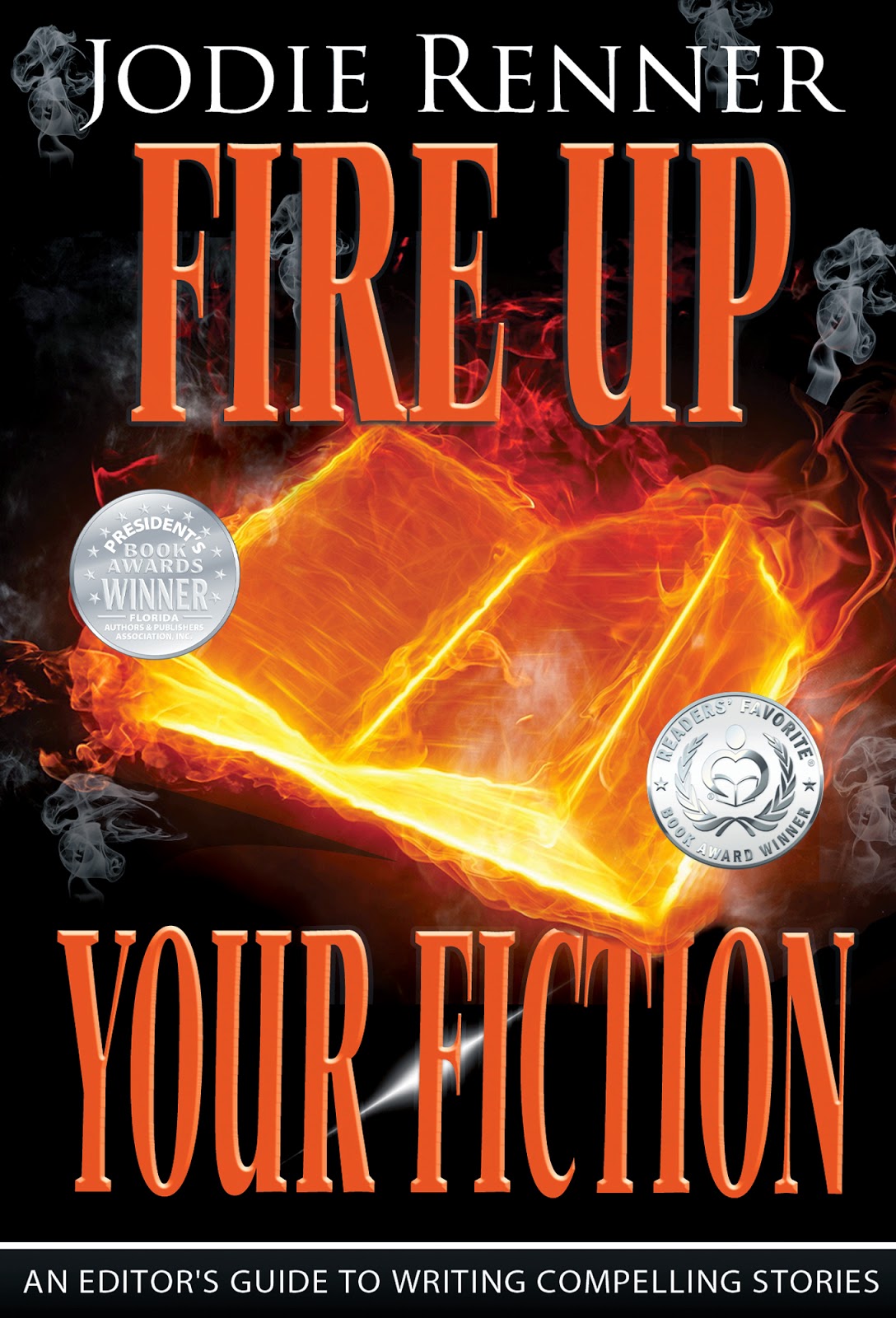
Jodie Renner is a freelance fiction editor and the award-winning author of three craft-of-writing guides in her series An Editor’s Guide to Writing Compelling Fiction: Captivate Your Readers, Fire up Your Fiction, and Writing a Killer Thriller. She has also published two clickable time-saving e-resources to date: Quick Clicks: Spelling List and Quick Clicks: Word Usage. You can find Jodie at www.JodieRenner.com, www.JodieRennerEditing.com, at The Kill Zone blog alternate Mondays, and on Facebook, Twitter, and Google+.