Showing posts with label Captivate Your Readers. Show all posts

Saturday, September 19, 2020

Don't Stop the Story to Introduce Each Character!

by Jodie Renner, editor & author

Want to write popular fiction that captivates your readers and sells well, with great reviews? It's all about fiction-writing techniques that will enthrall the reader, rather than turning them off.

Entice your readers, don’t bore them.

Imagine you’ve just met someone for the first time, and after saying hello, they corral you and go into a long monologue about their childhood, upbringing, education, careers, relationships, plans, etc. You keep nodding as you glance around furtively, trying to figure out how to extricate yourself from this self-centered boor. You don’t even know this person, so why would you care about all these details at this point?

Or have you ever had a friend go into great long detail about someone you don’t know, an acquaintance they recently ran into? Unless it’s a really fascinating story with a point, I zone out. Who cares? Give me a good reason to care, and feed me any relevant details in interesting tidbits, please!

In my editing of novels, I’ll often see a new character come on scene, then the author feels they need to stop the action to introduce that person to the readers. So they write paragraphs or even pages of background on the character, in one long expository lump. New writers often don’t realize they’ve just brought the story to a skidding halt to explain things the readers don’t necessarily need to know, certainly not to that detail, at that point. And it’s telling, not showing, which doesn’t engage readers. In fact, they’ll probably skim through it, and maybe even find something else to do instead.   

Don’t start with your character alone, musing or reminiscing.

Another related technique I find less than compelling is starting with the character on the way to something eventful, and as they’re traveling, they’re recollecting past or recent events in lengthy detail. It’s much more engaging to start with the protagonist interacting with others, with some tension and attitude involved. Then work in any necessary backstory info bit by bit as the story progresses, through dialogue, brief recollections or references, hints and innuendo, or short flashbacks in real time. And through reactions and observations by other characters.

Rein in Those Backstory Dumps!

Contrary to what a lot of aspiring authors seem to think, readers really don’t need a lot of detailed info right away on characters, even your protagonist. Instead, it’s best to introduce the character little by little, in a natural, organic way, as you would meet new people in real life. You might form an immediate physical impression, especially if you find them attractive or repugnant. You notice whether they’re tall or short, well-groomed or scruffy, timid or overbearing, friendly or cold, intelligent or dull, charismatic or shy.

If you’re interested in them, if you find them intriguing, you pay attention to them, ask them questions, and maybe ask others about them. You gather info on them gradually, forming and revising impressions as you go along, with lots of unanswered questions. Maybe you hear gossip and wonder how much of it is actually true. Through conversation and observation, you formulate impressions of them based on what they (or others) say, as well as their attitude, personality, gestures, expressions, body language, tone of voice, and actions.

Involve and engage the readers.

It’s also important to remember that readers like to be involved as active participants, not as passive receptors of dumps of information. Finding out about someone bit by bit, trying to figure out who they are and what makes them tick, what secrets they’re hiding, is a stimulating, fun challenge and adds to the intrigue.

Unlike nonfiction, where readers read for information, in fiction, readers want to be immersed in your story world, almost as if they’re a character there themselves. So be sure to entice readers to get actively engaged in trying to figure out the characters, their motivations and relationships, and whether they’re to be trusted or not.

Let the readers get to know your characters gradually, just like they would in real-life.

For ideas on how to approach introducing your characters to the reader in your fiction, think about a gathering where you’re just observing for a while, trying to get your bearings, maybe waiting for some friends to arrive. You look around at who’s there, listening in to snippets of conversation. A few people interest you, so you move closer to them, trying not to be obvious. You might pick up on glances, smiles, frowns, rolling of eyes, and other facial expressions. You read their body language and that of others interacting with them.

Perhaps you decide to strike up a conversation with one or two who look interesting. You find out about their personality and attitudes through their words, tone of voice, inflection, facial expressions, body language, and the topics they jump on and others they avoid. Then, if they interest you, you might start asking them or others about their job or personal situation and get filled in on a few details – colored of course by the attitudes and biases of the speaker. Maybe you hear a bit of gossip here and there.

That’s the best way to introduce your characters in your fiction, too. Not as the author intruding to present us with a pile of character history (backstory) in a lump, but as the characters interacting with each other, with questions and answers, allusions to past issues and secrets. Even having your character thinking about what they’ve been through isn’t that compelling, so keep it to small chunks at a time, and be sure to have some emotions involved with the reminiscing – regret, worry, guilt, etc.

So rather than stopping to give us the low-down on each character as he comes on the scene, just start with him interacting, and let tidbits of info about him come out little by little, like in real life. Let the readers be active participants, drawing their own conclusions, based on how the characters are acting and interacting.   

Reveal juicy details, little by little, to tantalize readers.

And don’t forget, the most interesting characters have secrets, and readers love juicy gossip and intrigue! Just drop little hints here and there – don’t spill too much at any one time. Give us an intriguing character in action, then reveal him little by little, layer by layer, just like in real life!

Readers and authors, do you have any observations or advice to offer on dealing with character backstory in fiction?

Click HERE for options to receive email alerts of new posts published on this blog.

Jodie Renner is a freelance fiction editor and the award-winning author of three craft-of-writing guides in her series An Editor’s Guide to Writing Compelling FictionWRITING A KILLER THRILLER, FIRE UP YOUR FICTION, and CAPTIVATE YOUR READERS, as well as two clickable time-saving e-resources, QUICK CLICKS: Spelling List and QUICKCLICKS: Word Usage. She has also organized two anthologies for charity: VOICES FROM THE VALLEYS – Stories and Poems about Life in BC’s Interior, and CHILDHOOD REGAINED – Stories of Hope for Asian Child WorkersYou can find Jodie on her Amazon Author Page, at www.JodieRenner.com, and on Facebook. 

Sunday, May 31, 2020

LET YOUR CHARACTERS TELL THE STORY


by Jodie Renner, editor & author  

With all the high-quality, exciting fiction being published these days, it’s absolutely critical to captivate readers right away and keep them eagerly turning the pages of your story.
 The most effective way to really engage readers emotionally and bond them to your character is by using deep point of view to get up close and personal with your character, and at the same time, creating an authentic, compelling voice for your story, a fresh, original tone and style.
How do you do that?  First, create a strong, charismatic main character, then let that character share his or her story directly with us, with no intermediary -- or as little other narration as possible. 
The best way to create a compelling "voice" for your story is through the words, thoughts, attitudes, and reactions of your main character.   
Try to become your character(s) for the story. Make a conscious effort not to intrude as the author (or a neutral narrator) to tell readers anything or explain or describe things.  
Let the POV character for the scene show the setting, reveal other characters, and build the story world in his or her own unique voice, with attitude, using words and phrasing that are natural to their own personality and mood and their personal reaction to the situation at that moment.
Rather than writing neutral narration, take a tip from first-person POV and keep not only the dialogue, but all of the narration (observations and explanations) for each scene firmly in the viewpoint of the main character for that scene, colored by his or her background, personality, attitudes, and current feelings (emotional and physical).
Here are some concrete tips for engaging readers and creating a strong voice in third-person point of view (“he” or “she” instead of “I”):  
~ Start with a compelling character that readers will identify with and root for.
Your main character needs to be charismatic and sympathetic enough to carry the whole novel, so it’s critical to take the time to first create a protagonist who’s intriguing and multi-dimensional, with lots of personality and openness; fairly strong views; and some baggage, secrets, vulnerability, and inner conflict. Then be sure to show his world and the events unfolding around him through his eyes, ears, and feelings, not the author’s, or that of an omniscient narrator.
~ Make sure the dialogue and thoughts are unique to that character.
Read your dialogue out loud to make sure it sounds like that character would actually talk, given their personality, upbringing, education, and social standing, as well as the current situation, how they feel about it, and who they’re conversing with. (We usually speak differently in a formal situation or to a professional than to a close friend or family member.)
~ Write the narration from the character’s point of view, too.
Take it one step further and stay in your character’s POV for the observations, descriptions, and explanations, too, not just the dialogue and any inner thoughts and reactions. It’s your character who’s moving through that world, reacting to what’s around him. Don’t describe the surroundings and what’s going on from a distant, neutral, authorial point of view – show the character’s world directly through her observations, colored by her personality, mood, and comfort level.
~ Don’t intrude as the author to explain things to the readers.
Even technical and other explanations should be presented (briefly) through the characters, perhaps in a sparky dialogue with disagreement and attitude.
Be on the lookout for where you step in as the author to blandly and dispassionately explain things to the readers, as if it’s nonfiction. Besides being a less engaging read, that approach yanks us out of the character’s mindset and world – and out of the fictive dream.    
Remember – show, don’t tell!
TIPS FOR KEEPING NARRATION AND DESCRIPTION IN THE VIEWPOINT CHARACTER'S VOICE:
Here are a few little techniques for livening up information-sharing and imparting it with attitude, from the viewpoint of the POV character involved.
~ Use stream-of-consciousness journaling.
To bring out the character’s personality in the parts where he’s thinking or planning or worrying or ruminating, not just when he is interacting with others, do some stream-of-consciousness journaling by him. Have him ranting in a personal diary about the people around him, what’s going on, etc. Also show his deepest fears here. Then use this wording to show his personality more in the scenes.
~ Write the scene in first-person first, then switch it back.
Write a whole scene, or even a chapter or two, in first-person narration/POV (“I”) to get the rhythm and flow of that person’s language patterns and attitudes, then switch it to third-person.
~ Write with attitude!
To bring the setting, scene, and characters to life, deliver those details through the viewpoint of the main character for that scene, in their voice and wording, with strong views and a controversial mindset that projects their current mood, physical and emotional reactions, and general attitude.
~ Impart info through lively dialogue.
Rather than intruding as the author to explain something to the readers, have characters arguing about it, or use a spirited question-and-answer dialogue exchange to inform the readers naturally, through character interaction.
~ Role-play.    
Read your dialogue and narration out loud to make sure it sounds natural and authentic to your characters’ backgrounds and personalities.
To summarize, for an engaging “voice” in third-person, be sure to use deep point of view and stay in the POV character’s head in the narration, too. In a nutshell, bring your fiction to life by stepping back as the author and letting the characters tell the story.   
Readers - feel free to share in the comment section below a passage from a story you've read -- or written -- depicting a scene shown through the eyes, ears, attitude, and current mood of the character.
For more detail on getting readers up close and personal with your protagonist, see my articles on point of view, here on this blog: POV 101, POV 102, POV 103, and Quick Tips for Avoiding Viewpoint Gaffes.

Click HERE for options to receive email alerts of new posts published on this blog.

For more techniques and examples for bringing your fiction to life and engaging your readers, see Jodie’s book, Captivate Your Readers – An Editor’s Guide to Writing Compelling Fiction.

Jodie Renner is a freelance fiction editor and the award-winning author of three craft-of-writing guides in her series An Editor’s Guide to Writing Compelling FictionWRITING A KILLER THRILLER, FIRE UP YOUR FICTION, and CAPTIVATE YOUR READERS, as well as two clickable time-saving e-resources, QUICK CLICKS: Spelling List and QUICK CLICKS: Word Usage. She has also organized two anthologies for charity: VOICES FROM THE VALLEYS – Stories and Poems about Life in BC’s Interior, and CHILDHOOD REGAINED – Stories of Hope for Asian Child WorkersYou can find Jodie on her Amazon Author Page, at www.JodieRenner.com, and on Facebook. 

Friday, October 18, 2019

7 Tips for Evolving from Nonfiction Writing to Engaging Storytelling

by Jodie Renner, editor & author 
   

Are you already pretty confident with writing articles, blog posts, essays, term papers, or business reports? Maybe you've even written a nonfiction book or two? Congratulations! Now you're thinking of trying your hand at writing stories or a novel. Sounds great. So making the transition to creating engaging fiction that sells should be no big deal, right?

Not.

There’s actually a significant learning curve to recognizing and mastering the essential elements of writing fiction that captivates readers, sells well, and garners glowing reviews.

As an independent editor specializing in popular, fast-paced fiction, I often receive manuscripts from professionals and others who write a lot of nonfiction and are attaching a draft of a novel or short story. They often assume that since they’re used to writing, the transition to fiction will be easy.

Not so.

Nonfiction writers and first-time novelists often don’t realize the importance of issues they’re simply not aware of, so they ask me for “just a light copyedit.” When I start reading their manuscript, I often notice right away the story seems to lack sparkle. It doesn’t engage me or make me want to keep reading.

The characters often seem bland, lacking in charisma, worries, and secrets; the main dilemma isn't serious enough to make readers worry about the protagonist (which is essential), and there's not enough tension and intrigue.

The writers, although accomplished in their field, have little or no concept of the critical aspects of point of view and showing instead of telling.

Other issues I see are writing that is just too “correct” and distant for storytelling, with stilted dialogue, too-frequent author intrusions, and bland, neutral narration. Finally, the writing often meanders along at too leisurely a pace, lacking sufficient conflict, tension, intrigue, and general zing.

The following tips, for anyone wanting to master the art of storytelling, will help you bring your characters and story world to life by loosening up your language, getting up close and personal with your characters, letting them tell the story, and showing their emotions and reactions.

Of course, you’ll need to start with a fascinating main character with a driving goal who has a daunting dilemma or encounters a serious obstacle, critical problem, or formidable adversary. Add in a memorable setting, some interesting supporting characters, and some conflict and intrigue. Maybe a love interest.

Here are seven essential style elements for a successful transition from informative, fact-based writing to entertaining, compelling storytelling:

1. Get into your character’s head – and stay there.

Start right out in the point of view of your protagonist and show the events through his eyes, with his internal reactions. Forget omniscient point of view – it’s no longer in favor, and for very good reason. Readers want to get “up close and personal” with the main character, so they can become emotionally engaged and drawn into the story.

Show your character’s thoughts, perceptions, and inner reactions to what’s going on right away, so readers can identify with her and bond with her. Don’t head-hop to other characters’ thoughts within a scene. To get into the head of others, like the antagonist or love interest, give them their own viewpoint scenes.

2. Stay out of the story as the author.

Let the characters tell the story, in a natural way that is authentic to the story world you’re creating. This will keep the readers immersed in the fictive dream. Don’t interrupt the story by stepping in as the author to explain things to the readers. In other words, avoid info dumps and other author intrusions.

3. Make sure your story has plenty of conflict and tension
  
Conflict is what drives fiction forward. No conflict = no story. Not enough conflict and tension = boring. Every scene should have some conflict and a change. Every page should have some tension, even if it’s just an undercurrent of unease, disagreement, or resentment.

4. Loosen up your language.

Again, “let the characters tell the story.” Forget perfect English, complete sentences, convoluted phrasing, or fancy-schmancy vocabulary. Use direct language and strong imagery, in the character’s thoughts, colored by their personality, education, background and attitudes. In other words, stay in your character’s mood and voice, using words and phrasing they would use, which also fit the overall tone of the story, rather than a more correct, neutral language.

5. Show, don’t tell.

Don’t step in as the author to tell your readers about your characters or their background or to relate something that happened. And don’t have one character tell another about a critical event that occurred offstage. Show important scenes in real time, with action and dialogue.

Also, to bring your characters alive, be sure to show their emotions, internal and external reactions, and physical sensations. Are they hot, cold, exhausted, hungry, tense, worried, scared, elated?

Evoke all or most of the five senses. Don’t just show what the character is seeing. What is she hearing, smelling, feeling? Even tasting?

6. Use snappy dialogue.

Dialogue needs lots of tension and attitude. Be sure your dialogue doesn’t all sound the same – like it’s the author speaking. Each character’s words and speech patterns need to match their personality and background.

Avoid complete sentences and perfect English in dialogue
. Use frequent partial sentences, one- or two-word questions and answers, evasive replies, abrupt changes of topic, and silences. Read your dialogue out loud, perhaps role-playing with someone else, to make sure it sounds natural and authentic.

Also, skip the “Hi, how are you?” and other blah-blah lead-up and filler. Cut to the chase in your
dialogue.

7. Even your narration should not be neutral.

Avoid bland, authorial narration.

Any backstory should be the character’s thoughts, in their words, colored by their feelings about it. And keep it to a minimum, preferably with flashbacks in real time. Even your description, exposition, and narration should not be neutral – these are really the POV character’s observations, and should reveal their personality, goals, attitude and mood.

Click HERE for options to receive email alerts of new posts published on this blog.


Jodie Renner is a freelance fiction editor and the award-winning author of three craft-of-writing guides in her series An Editor’s Guide to Writing Compelling FictionWRITING A KILLER THRILLER, FIRE UP YOUR FICTION, and CAPTIVATE YOUR READERS, as well as two clickable time-saving e-resources, QUICK CLICKS: Spelling List and QUICK CLICKS: Word Usage. She has also organized two anthologies for charity: VOICES FROM THE VALLEYS – Stories and Poems about Life in BC’s Interior, and CHILDHOOD REGAINED – Stories of Hope for Asian Child WorkersYou can find Jodie on her Amazon Author Page, at www.JodieRenner.com, and on Facebook. 

Wednesday, December 30, 2015

Year-End Reflections and Aspirations of a Fiction Editor and Writing Coach


HAPPY NEW YEAR, writers! May all your hopes and aspirations reach fruition in 2016!

As I have in the past, I hope to continue in the upcoming year to help writers sharpen their skills and reach their publication goals through my editor's guides to writing compelling fiction, as well as my clickable e-resource guides, blog posts, and workshops -- and of course my editing of novels and short stories.

If you're looking to hone your craft at writing and also network with other writers, editors, agents, and publishers, my New Year's gift to you is a very comprehensive list of Writers' Conferences and Book Festivals in North America in 2016, just below this blog post. Or click here to view the list, organized by month, with links to their websites.

And here's a list, with active links, of my most popular tips for writing compelling fiction: Links to Jodie Renner's Top Craft of Writing Posts.

2015 was a very productive year for me -- in fact, a little too busy, for someone who is supposed to be retired and slowing down!

On February 28, I published my third writing guide, CAPTIVATE YOUR READERS - An Editor's Guide to Writing Compelling Fiction. This book is all about engaging readers emotionally and keeping them eagerly turning the pages of your fiction using techniques such as deep point of view, avoiding author intrusions, and showing instead of telling. It has already won two book awards plus an Honorable Mention. You can check it out on Amazon HERE.

And here's my Amazon Author Page, in case you're interested in my two other writing guides; two handy, clickable resources for writers, editors, and students; and the regional anthology I organized and edited and published on Nov. 24, 2015.

In April 2015 (for the second time in a year!), I moved to a new town closer to my family, which I love. Think I'll put down roots here in beautiful Penticton, BC, situated between two lakes, with mountains on the other two sides - and mild winters, for Canada! I'm a member of the local writers' group, Penticton Writers and Publishers, and am on the organizing committee for a writers' conference here in April, the Okanagan Valley Writers' Festival, April 8-10, 2016.

Penticton, BC, Canada; photo by Doug McLauchlan

I've continued to edit novels for my clients around the world (but mainly in the U.S.), which I find very rewarding, both because of the opportunity to work with talented authors to polish their exciting stories, and for the warm, long-lasting relationships that are created as a result of long-term collaborations.

I also presented writing workshops at several conferences in 2015, including, in January, at bestselling author Steven James' Troubleshooting Your Novel workshops in Nashville, at Word on the Lake Writers' Festival in Salmon Arm, BC, in May, and at When Words Collide in Calgary, Alberta, in August. And I've been busy judging short stories for various contests and anthologies, including again this year for Writer's Digest's Popular Fiction Awards.

After being an active blogger, publishing my tips on writing compelling fiction first on Crime Fiction Collective for three years, then for two and a half years every second Monday on the award-winning The Kill Zone blog (both blogs mainly aimed at writers and readers of mysteries and thrillers), I decided to step down from regular blogging to focus my energies more locally, with occasional posts here on my own blog.

In 2015, I again served as a fiction judge for short stories for Writer's Digest's Popular Fiction Awards. My category was thrillers, and I received about 245 short stories, which I had to narrow down to my top 10 choices, in order. That was a huge job, but I'm confident that the final 10 I chose were the most exciting and well-written stories in that category.

This year I've also been busy organizing and editing two anthologies for charity, with more to come in the future.

Because I was so delighted to be back in beautiful British Columbia, on Canada's West Coast after an extended absence, I decided to organize a high-quality anthology of stories and poems that typify and celebrate life in BC. This ended up to be a huge undertaking, reaching out to writers around the province and reading, then choosing, and editing their submissions. Many of the stories went back and forth several times during the editing process. Then I had to decide how the contributions would be organized and format the book. It was a wonderful opportunity to meet talented writers in BC and collaborate with them to produce a polished product that would also benefit a very worthy charity, Doctors Without Borders.

On November 24, we proudly released VOICES FROM THE VALLEYS - Stories & Poems about Life in BC's Interior.  Within 3 weeks, we were sold out of the first printing of 400 copies! We're on the second printing now, and I've already sent our first monetary donation to Doctors Without Borders.

At 107,000 words long and 308 pages, this high-quality anthology includes fiction, true stories, and poetry by 51 contributors, organized by region of the interior of BC, as well as drawings and both colour and black-and-white photos of BC.

The e-book version is without the images but contains a few extra stories and poems that I couldn't fit into the print version.

For more on this fabulous celebration of life in British Columbia, Canada, plus a link to a PDF of excerpts from the book, click HERE.


I'm also in the process of organizing and editing CHILDHOOD REGAINED - Stories of Hope for Asian Child Workers. This collection of short stories, aimed at readers age 12 and up, is about children working in difficult conditions in South Asia - India, Nepal, Pakistan, and Bangladesh. It's meant to raise awareness of the conditions these children are living under and to raise money to help eradicate child labor in Asia. It will be released in spring 2016, and we're still trying to find the best charity for it. The proceeds will definitely go to a charity aimed at helping third-world children. likely Save the Children.

For 2016, I'm thrilled to have been invited to present again at Word on the Lake Writers Festival in May in Salmon Arm, BC, where I will join esteemed Canadian writers such as Arthur Slade, Alan Twigg of BC BookWorld, Robert J Sawyer, and Richard Wagamese.

I'll also be presenting two workshops at the Okanagan Valley Writers Festival, April 8-10, and will be judging short stories for the Federation of BC Writers' contest, Literary Writes 2016. I also plan to continue editing novels and producing anthologies in 2016 and beyond.

What about you? How was your 2015? Please share any writing-related news in the comments below. How about 2016? What are your writing, editing, and publishing goals for the year to come? Let us know in the comments below.

Thanks!

Jodie Renner is a freelance fiction editor and the award-winning author of three craft-of-writing guides in her series An Editor’s Guide to Writing Compelling Fiction: Captivate Your Readers, Fire up Your Fiction, and Writing a Killer Thriller. She has also published two clickable time-saving e-resources to date: Quick Clicks: Spelling List and Quick Clicks: Word Usage. Jodie recently organized and edited a BC-wide anthology of stories and poetry for Doctors Without Borders, called Voices from the Valleys, and is working on a second anthology, Childhood Regained, to help reduce child labor in Asia. You can find Jodie at www.JodieRenner.com, www.JodieRennerEditing.com, and on Facebook, Twitter, and Google+. Click HERE to sign up for Jodie’s occasional newsletter.

Monday, March 9, 2015

Links to Recent Articles of Jodie's on Other Blogs

Since the release on February 28 of my latest writing guide, Captivate Your Readers, I've been busy with a blog book tour, posting articles with tips on writing and promoting your fiction.

Here's a list of some of my recent articles on other blogs, plus an interview of me and a review of my new book. Please click on the title to go to the post.

Tuesday, March 10: Review of Captivate Your Readers on U Self-Publish website.

Monday, March 9: "Create a Fascinating, Believable Antagonist" on The Kill Zone blog


Sunday, March 8: "How to Write a Prize-Worthy Short Story" on Anne R. Allen's award-winning blog


Friday., March 6: "Learn How to Captivate Your Readers with Jodie Renner" on Read, Write, Muse blog


Thurs., March 5 - "Book Giveaway Promos Compared: Goodreads, Rafflecopter, and the New Amazon Giveaway" on Janice Hardy's Fiction University blog


Monday, Mar. 2, 2015 - "Use Attitude When Introducing Characters" on Elizabeth Spann Craig's blog


Feb. 23: "Make Sure Your Characters Act in Character" on The Kill Zone blog.


Feb. 17: "Avoid Overwriting - Subtle is More Sophisticated" on Janice Hardy's Fiction University


Feb. 9: Indie BookContests 2015 on The Kill Zone blog


Feb. 5: "How to Slash Your Word Count by 20-40% - and tighten your story without losing any of the good stuff" on Janice Hardy's Fiction University


 And finally, the very popular list of Writers' Conferences & Book Festivals in 2015

Do you have any craft-of-writing or publishing or marketing topics you'd like me to write about? Let me know in the comments below. Thanks!

Besides blogging at The Kill Zone Blog and elsewhere, Jodie Renner is a freelance fiction editor and the award-winning author of three craft-of-writing guides in her series An Editor’s Guide to Writing Compelling Fiction: Fire up Your Fiction, Writing a Killer Thriller, and Captivate Your Readers. She has also published two clickable time-saving e-resources to date: Quick Clicks: Spelling List – Commonly Misspelled Words at Your Fingertips and Quick Clicks: Word Usage – Style and Usage Tips for Busy Writers and Editors. You can find Jodie at www.JodieRenner.com, www.JodieRennerEditing.com, and on Facebook and Twitter.

Saturday, February 28, 2015

CAPTIVATE YOUR READERS is out!


Great news! My third editor's guide to writing compelling fiction, CAPTIVATE YOUR READERS, is finally out!

You can find it in trade paperback and e-book form at all Amazon sites, including these:


It will soon be available in print at many independent bookstores and libraries.

Here's a bit about the book:

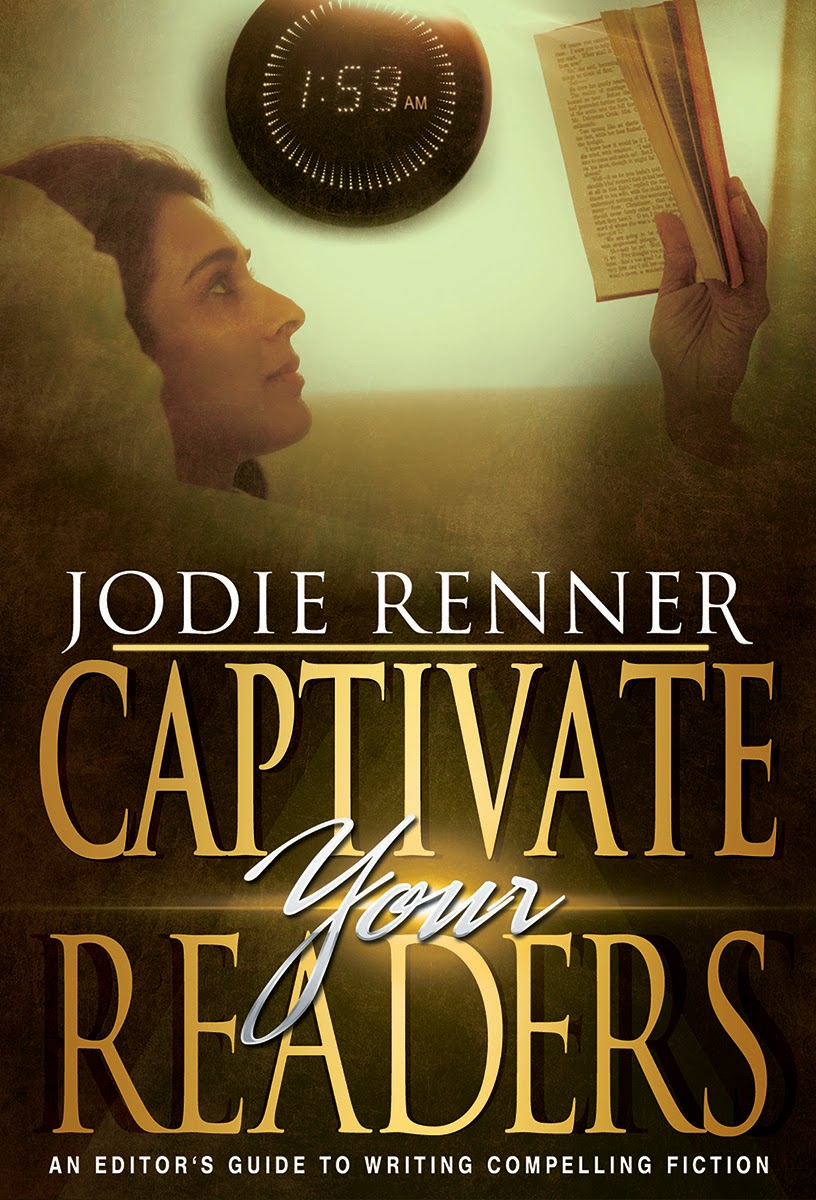
Captivate Your Readers - An Editor's Guide to Writing Compelling Fiction, by Jodie Renner

This third guide to writing compelling fiction by respected editor and award-winning author Jodie Renner provides concrete advice for captivating readers and immersing them in your story world. It’s all about engaging readers through techniques such as using deep point of view, showing instead of telling, avoiding author intrusions, writing riveting dialogue, and basically stepping back and letting the characters tell the story.

Today’s readers want to lose themselves in an absorbing story. Renner shows you how to provide the immediacy and emotional involvement readers crave in fiction, the direct, close connection to the characters and their world. And she does it in her usual highly accessible, reader-friendly style, with plenty of subheadings, concrete tips and examples.

This book is available in both e-book form and print, through all Amazon websites, and also in print through Red Tuque Books in Penticton, BC. Available soon in print at many independent bookstores and libraries. 

“Jodie’s books are packed with practical writing and editing advice. Get ready to improve your manuscript today.”
– Steven James, author of Story Trumps Structure: How to Write Unforgettable Fiction by Breaking the Rules

“Want to write solid, marketable fiction? Read this book. Regardless of your experience level, CAPTIVATE YOUR READERS gives you clear and concise tools that will help you create a believable story world and spin a good yarn.” 
– DP Lyle, award-winning author of the Dub Walker and Samantha Cody thriller series

“Jodie Renner nails it! Captivate Your Readers should be at the top of every new and experienced writer’s arsenal, as well as a preferred resource for every teacher of writing. Her no-nonsense, easy-to-understand approach is perfect. Bravo, Jodie Renner!”
– Lynn Sholes, bestselling author of the Cotten Stone series and The Shield


Jodie Renner is a freelance fiction editor and the award-winning author of three craft-of-writing guides in her series An Editor’s Guide to Writing Compelling Fiction: Fire up Your Fiction, Writing a Killer Thriller, and Captivate Your Readers. She has also published two clickable time-saving e-resources to date: Quick Clicks: Spelling List and Quick Clicks: Word Usage. You can find Jodie at www.JodieRenner.com, www.JodieRennerEditing.com, at The Kill Zone blog alternate Mondays, and on Facebook, Twitter, and Google+.

Wednesday, August 13, 2014

Spark up Your Story - Adding Tension, Suspense, & Intrigue – Handout

by Jodie Renner, editor & author

This is the HANDOUT for my 50-minute workshop, "Spark up Your Story - Adding Tension, Suspense, and Intrigue" at When Words Collide conference in Calgary, Aug. 8-10, 2014.

All genres of fiction, not just thrillers, suspense novels, and action-adventures, need tension, suspense, and intrigue to keep readers eagerly turning the pages. And of course, you’ll need to ratchet up the tension and suspense a lot more if you’re writing a fast-paced, nail-biting page-turner. 

A. Some “big-picture” techniques for adding suspense, tension, and intrigue:

~ First, make your readers care about your protagonist by creating a likeable, appealing, strong, smart and resourceful but vulnerable character, with some inner conflict, regrets, and secrets. If readers haven’t bonded with your character, they won’t care what happens to him. 

~ Put your character in motion right away. Start right out in the head and body of your main character, in an active scene with others, with some discord and tension.

~ Get up close and personal. Use deep point of view (first-person or close third person) to get us into the head and body of your main character. This makes readers care about the character and worry about him. A worried reader is an engaged reader.

~ Challenge your protagonist. Now that your readers care about your main character, insert a major threat, challenge, or dilemma within the first chapter or two that won’t be resolved until the end. Create an over-riding sentence about this to keep in mind as you’re writing your story: 

“Will (name) survive/stop/find/overcome (ordeal/person/difficulty/threat) on time?” 

~ Create a cunning antagonist. Your villain needs to be as clever, determined and resourceful as your protagonist – or even more so. Make him or her a serious force to be reckoned with!

~ Create a mood of unease by showing the main character feeling apprehensive about something or someone or by showing some of the bad guy’s thoughts and intentions. For a thriller, establish a sense of urgency, a tense mood, and generally fast pacing.

~ Show, don’t tell. Show all your critical scenes in real time as they’re happening, with action, reaction, and dialogue. Show your main character’s inner feelings and physical and emotional reactions. Don’t have one character tell another about an important event or scene.

~ Use multiple viewpoints, especially that of the villain. For increased anxiety and suspense, get us into the head of your antagonist from time to time. This way the readers find out critical information the heroine doesn’t know, things we want to warn her about!

~ Keep the story momentum moving forward. Don’t get bogged down in backstory or exposition. Keep the action moving ahead, especially in the first chapter. Then work in background details and other info little by little, on an “as-needed” basis only, through dialogue or flashbacks – not as the author telling the readers. 

~ Every scene needs conflict and a change. There should be something unresolved in every scene. Your character enters the scene with an objective or goal (agenda), but she encounters obstacles in the scene, so she is thwarted in her efforts to reach her goal. But circumstances or the character have changed by the end of the scene.

~ Put tension on every page. Every page needs some tension, even if it's just disagreement, resentment, doubt, or questioning simmering below the surface.

~ Vary the tension. But of course, you can’t keep up tension nonstop, as it’s tiring for readers and will eventually numb them. It’s best to intersperse tense, nail-biting scenes with a few less tense ones.

~ Add in tough choices and moral dilemmas. Devise ongoing difficult decisions and inner conflict for your lead character. Besides making your plot more suspenseful, this will also make your protagonist more complex, vulnerable, and intriguing.

~ Withhold information. Don’t tell your readers too much too soon. Dole out critical information little by little, through dialogue, thoughts, and brief flashbacks, to tantalize readers and keep them wondering. 

~ Delay answers to critical plot questions. Look for places in your story where you’ve answered readers’ questions too soon, so have missed a prime spot to increase tension and suspense. Draw out the time before answering that question. In the meantime, hint at it from time to time to remind readers of its importance.

~ Use foreshadowing to incite curiosity. Tease the readers with innuendos. Drop subtle hints of troubles to come. Hint at the main character’s past secrets. What is the character worried about or afraid might happen? Capitalize on this.

~ Add in some revelations and epiphanies to put a twist on things and reward readers for their interest and involvement.

~ Use the setting to establish the mood and create suspense. This is the equivalent of ominous music, harsh lighting, strange camera angles, or nasty weather in a scary movie. 

~ Make use of compelling, vivid sensory imagery to take us right there, with the protagonist, vividly experiencing and reacting to whoever/whatever is challenging or threatening him. 

~ Use brief flashbacks at key moments to reveal your main character’s childhood traumas, unpleasant events, secrets, emotional baggage, hangups, dysfunctional family, etc. 

~ Keep hampering your hero or heroine throughout the novel to increase worry, tension, and suspense. Stir in some of these ingredients: a ticking clock, obstacles, chases, traps, restrictions, handicaps, injuries, bad luck, etc.

~ Keep raising the stakes. Keep asking yourself, “How can I make things worse for the protagonist?” As the challenges get more difficult and the obstacles more insurmountable, readers worry more and suspense grows.

~ Plan a few plot twists. Readers are surprised and delighted when the events take a turn they never expected. Don’t let your readers become complacent, thinking it’s easy to figure out the ending, or they may stop reading.

See Jodie’s book Writing a Killer Thriller for a lot more detail on each of the points mentioned above.

B. Revision stage:

Amp up, condense, or delete any scenes that lag, and tighten up your writing. Now go back and make sure every scene and paragraph drives the story forward. Make every chapter, scene, page, paragraph, sentence, and word count! 


 See Jodie's Fire up Your Fiction for lots of concrete tips with examples for tightening your writing and revising your novel or short story to make it more compelling.

Also, see Jodie's Captivate Your Readers for more great tips!

Jodie Renner is a freelance fiction editor and the award-winning author of three craft-of-writing guides in her series An Editor’s Guide to Writing Compelling FictionFIRE UP YOUR FICTION,  CAPTIVATE YOUR READERS, and WRITING A KILLER THRILLER, as well as two clickable time-saving e-resources, QUICK CLICKS: Spelling List and QUICK CLICKS: Word Usage. She has also organized two anthologies for charity: VOICES FROM THE VALLEYS – Stories and Poems about Life in BC’s Interior, and CHILDHOOD REGAINED – Stories of Hope for Asian Child WorkersYou can find Jodie on her Amazon Author Page, at www.JodieRenner.com, and on Facebook.